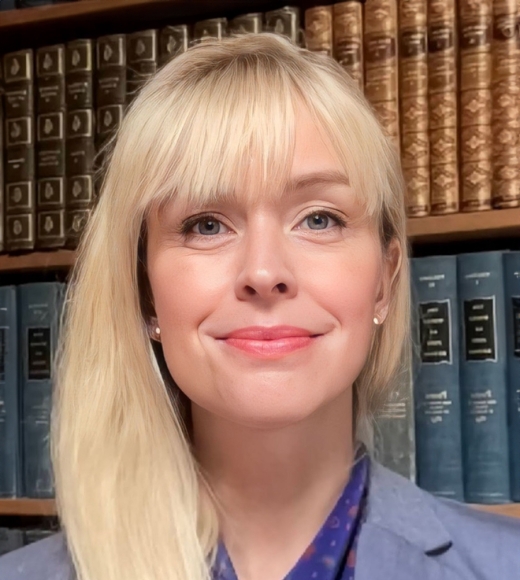
Sarah Polcz
3
APPEARANCES
2
PODCASTS
Nov 5, 2026

Sarah PolczGUEST
The impact that AI is going to have on Probably almost every sphere of human life has really become clear in the last few years.
Sarah PolczGUEST
And not only in terms of will it create new wealth inequalities, new classes of billionaires, impact particular sectors where we might expect mass job loss.
Sarah PolczGUEST
We might say theft, borrowing on a completely unprecedented scale of the human works, texts and images that we've all created as part of our human culture.
Sarah PolczGUEST
And the value that's been extracted from these was positioned so far to be captured almost exclusively by the tech sector.
Sarah PolczGUEST
So we were really thinking, what kind of approaches might allow us to tackle some of these differing questions in one particular policy proposal.

Rich FordHOST
Let's talk a little bit more about why you think the public deserves a share in AI companies, because I'm sure you've heard some pushback from perhaps people working at AI companies about that idea.


Sam SederHOST
Does it – Is my characterization of it correct? A and B, does the bill have the same impact if it's 40 percent or why not? We take 51 percent.
Sarah PolczGUEST
Sure, and I want to say first that I am not part of the Sanders campaign, so I can't speak for Senator Sanders.
Sarah PolczGUEST
What I can say is that in the article, the proposal that Jeremy, Professor Barefront, and I put forth, we actually didn't specify the rate.
Sarah PolczGUEST
um but the rate is a political choice and it certainly works at lower rates we would love to see state versions of the bill potentially at different rates you might imagine that there are reasons why people might want to advance a state bill that didn't have voting rights it was more of a passive stake in the companies um so that's that's something that can be altered i do think that it's certainly very powerful without being 50 i think that there's There are political reasons why one might want 50%.
Sam SederHOST
whether it grows or, um, uh, that's not the fight, but rather how do we, um, constrain it in a way, in a way that it's working for the benefit of, uh, all of the people as opposed to the, to the owners.

Sarah PolczGUEST
The impact that AI is going to have on probably almost every sphere of human life has really become clear in the last few years, and not only in terms of will it create new wealth inequalities, new classes of billionaires, impact particular sectors where we might expect mass job loss.
Sarah PolczGUEST
There's been, we might say, theft, borrowing on a completely unprecedented scale of the human works, texts, and images that we've all created as part of our human culture, and the value that's been extracted from these is positioned so far to be captured almost excl- exclusively by the tech sector.
Sarah PolczGUEST
So we were really thinking what kind of approaches might allow us to tackle some of these differing questions in, in one particular policy proposal.
Rich FordHOST
Um, let's talk a little bit more about why you think the public deserves a share in AI companies, because I'm sure [laughs] you've heard some pushback from perhaps people working at AI companies about that idea.
Sarah PolczGUEST
Well, the bill hasn't come out yet, but less pushback from AI as opposed to AI t- or tech sector, as opposed to, say, the journalists at Wall Street Journal or the corners that you might expect.
Sarah PolczGUEST
And where I think education around how AI works can potentially have a role here is that AI is very different from, say, the dot-com boom or the way that Google Search was created.
Sarah PolczGUEST
What AI has in common with other innovations is that, of course, it leverages prior knowledge and science, but we don't normally think that that entitles the public necessarily to an equity share.