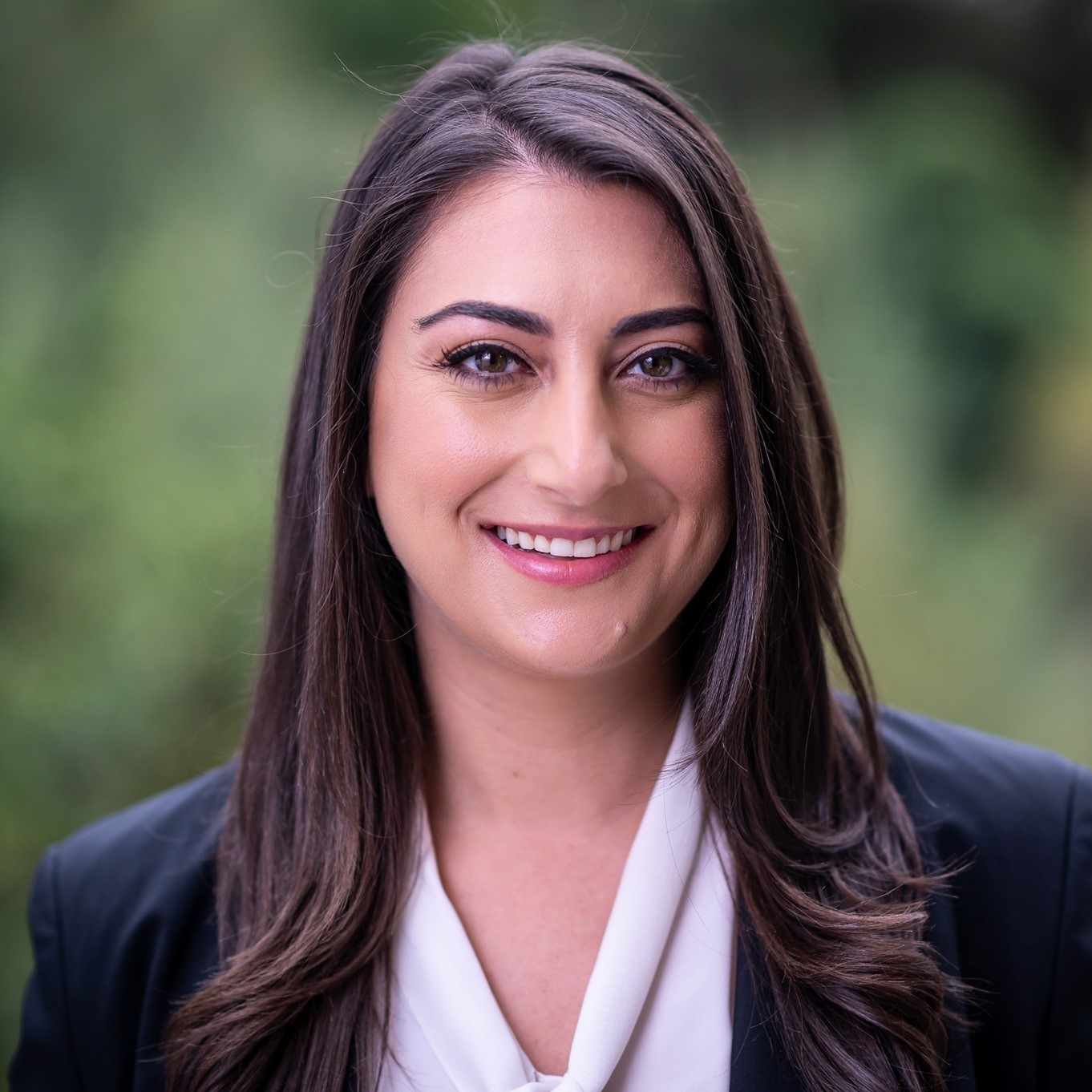
Sarah Jacobs
7
APPEARANCES
7
PODCASTS
Sep 2, 2026


Alex WittHOST
That said, are you seeing increased ICE activity near San Diego and the environs area there?

Sarah JacobsGUEST
Obviously, San Diego is a border community, so everything that happens on immigration and border at the national level impacts us very directly.
Sarah JacobsGUEST
And, you know, one of the things that's most frustrating is that Almost none of the people that they're picking up have criminal backgrounds.
Alex WittHOST
Is Congress going to investigate all these alleged issues? And where do you start? What do you hope to


Rebecca SananèsHOST
So tell us about the decision, what it protects, why you did this in the context of this anniversary.
Sarah JacobsGUEST
And I remember being just so like viscerally angry that these nine justices thought they knew more about like my body and my health care than I did.
Sarah JacobsGUEST
And so we started working on a number of different pieces of legislation to try and address this.
Sarah JacobsGUEST
And one of them is this right to contraception, because as you might have seen in the actual Dobbs decision, they mentioned the justices mentioned the other things they thought should be overturned and Griswold, the right to contraception.
12 MINS LATER


Samantha GeeCORRESPONDENT
That and post-traumatic stress disorder, which rears its head whenever there's a rain warning.
Samantha GeeCORRESPONDENT
Since then, she's joined up with the local civil defence planning team and was among those at a community-led workshop in Tapuera to talk about flood resilience.

Moshe WainunuHOST
What difference do you think it would make to have more young people in Congress, more young moms in Congress? Uh, what impact do you think that might have on policy?
Sarah JacobsGUEST
We don't agree on a lot of things, but there are a lot of things we agree on, in part because we are young women, right? So, she cares a lot about increasing access to fertility treatment for service members, for instance.
Sarah JacobsGUEST
So do I. That's something I'm working a lot on, uh, in the Armed Services Committee.
Sarah JacobsGUEST
We're working together on, you know, beauty products and food safety, right? Just, like, some things that maybe some of our colleagues don't understand or don't care about because they're older, um, but that we really do.
Moshe WainunuHOST
Uh, are there other things, now that you have a few terms under your belt, uh, that you think can be done realistically, uh, to get good people with, uh, good ideas in there, uh, who are under the age of 65?


Max RushdenHOST
Whenever we do this story, or stories about climate change, we will get messages like, "What's the point of me keeping this football kit for a year when, I don't know, India is burning this amount of fossil fuels," or, you know, you, Max, fly from Australia to the UK. I- I mean, and- and- and my understanding is that nobody is perfect, right? That is, no one... You don't have to be perfect to- to care about the climate.
Sarah JacobsGUEST
No, I mean, absolutely. And if we all waited until we were all squeaky clean on all this stuff, nothing would happen. Um, it's, you know, it's an un- it's an understandable anxiety, and- and often, it does feel so overwhelming where you've got these huge forces at play. But, you know, there is actually... There's multiple impacts that we can have, um, as fans and individuals, um, that actually can help impact that as well. So there's obviously the- the stuff that we do in our individual lives. And actually, there's evidence to show that what we do as households and individuals can account for up to, you know, 25, 30% of carbon emissions. So, you know, that- that is in itself significant. But if you think about, I mean, obviously using football, if you think about clubs, um, and how they're, you know, the actions that they're taking, what's going to help influence their decisions? Obviously, there are big commercial questions here but, you know, if you're a brand sponsor, if you're a club, if you're hearing and seeing that your fans really care about this and want their clubs to be, you know, having that really strong sustainability strategy in place, taking really positive action, showing leadership on this as an issue, that's gonna be really influential. And similarly, you thinking about the decisions made by political leaders, by business leaders, by visibly demonstrating that, you know, voters, that consumers really want to s- care about this as an issue. You know, this is, this is our future, this is our sport. Um, that again, can be really influential in creating an enabling environment for those much stronger, more ambitious decisions on climate. So, it's very understandable. You know, we- we're not in a great place, there's a huge amount that needs to be done, but we all have agency. And it's by creating these massive moments that actually you feel, you know, you feel that momentum, you s- you see what progress is possible. And that can inspire further change.
Max RushdenHOST
For people who are listening, like as twofold. One, the people who are genuinely engaged by this and care, what can they do? And for people who just... You know, people are time-poor, have lots of things to worry about. The news is pretty tough at the moment, and I know like climate change just doesn't feel quite as real for a lot of people as other serious things in the news. Like what, what would you say to them?
Sarah JacobsGUEST
Think again through that lens of football, every time, you know, that... the match is called off because the pitch is flooded or it's frozen. You know, we saw so many games postponed due to the big storms at the start of this year. Sometimes it's not immediate that you make that connection that actually this is due to extreme... more regular extreme weather events, um, caused by climate change. So I think it's firstly, you know, just hearing, talking about stuff with your... with, you know, your friends, your family, whatever, um, around football and, and noticing. But people are time-poor, but there are really easy things you can do. So on a very practical level, you know, digging out whatever the sportswear or clothes that you've got in the back of a cupboard. Definitely don't take it to chuck it away, but donate it to your local charity shop. Salvation Army is the... Green Football's Great Save partner, and if you do it with them, hop onto greenfootball.org, scan the QR code, there are prizes to be won. (laughs) So that's always a hopefully a good incentive. Um, but there's loads more. You know, we're selling, um... again, partnering with eBay and, um, just by selling your, your clothes on, again, it goes to someone who needs it. You make a bit of money. Learning how to repair. There's a really great, um, outfit that, again, we're working with called We Fix Kits. We've got... Check out the YouTube channel, but, you know, if you've got a kit where you've got a name on the back that you really don't want there anymore, or you've got kids and the younger child needs to inherit it from the older child, but, you know, they've obviously (laughs) got different names, um, there's actually really easy ways, things that you can do to take those names off, get... put the new names on, get your sewing kit out. All of this does make a genuine difference. It might feel small, um, but as we've said, you know, it is saving on carbon, it's saving waste. And if we're thinking about that times the millions of fans that are across the UK, that's really making a big difference.


Allison GillHOST
Right, 'cause of what happened to Raffensperger and Rusty Bowers and other people who defied him, right?
Sarah JacobsGUEST
Absolutely. I, but I think... You know, I have to work with these people so I try and attempt to have the most generous interpretation of people's behavior, and if I'm giving them the most generous interpretation, whether they, you know, deserve it or not, their constituents voted for Donald Trump, right? Their constituents, a lot of polling shows, are actually really happy with what's happening right now, because even if they don't like everything that's going on, they like that something is happening. They felt like nothing changed, nothing happened under the Democrats and at least something is happening. And so that's why a big part of this and what I really emphasize with folks is that we need to change public opinion and we need public pressure because until these folks start hearing from their own constituents, they're not gonna change their behavior, and that means we need to really humanize this issue and talk about what it really means on a human impact, not like our institutions, our democracy. Those of us who care about that already agree with this, right? But to bring more people into the fold, to bring more people into the coalition, we need to be talking about the real human impact, the real human stories. And then, when people who voted for Trump realize that his policies are hurting them, we have to not tell them, "I told you so." We have to welcome them into the coalition because we are gonna need everybody to push back, especially people who live in these Republican districts. And look, like, mea culpa on Democrats' part, we did not do a good enough job of distinguishing ourselves as the party wanting to make things better, right?
Allison GillHOST
Right. And interesting timing for Justice Roberts to come out and rebuke the idea of the impeachment of this specific judge, uh, Judge Boasberg, but without naming any names. So, (laughs) we've, we've already seen him and Amy Coney Barrett side with the liberal justices a few times already against this administration. Maybe that'll continue. Maybe this is a sign of that. But regardless, we are now looking at people who may or may not, uh, be gang members or even, you know, illegal migrants being imprisoned in CICOT in El Salvador. But we're also looking at the same thing in Guantanamo, and you just visited Guantanamo Bay. Can you talk a little bit about that?
Sarah JacobsGUEST
Yep. So last week, I went on a bipartisan oversight, uh, trip to Guantanamo Bay to see what they are doing, um, with immigrant detention there. You know, what we saw was that it is not... It doesn't make any operational sense. The entire point of it is because Donald Trump likes the optics of saying he sent immigrants to a site off the coast of Florida with a horrific history of human rights abuses, waterboarding, and sleep deprivation. Like, the history and the optics are why Donald Trump chose to do this, not any actual reason we need to do it, because actually, it makes no sense. It cost $16 million dollars already. They only had 225 beds. There was no workable plan to get to the 30,000 beds that Donald Trump says he wants. When I was there, there were only 41 immigrants there and thousands of service members and, and military personnel. We had service members literally guarding empty tents because the tents were not usable, um, per DHS regulation. And so I, you know, I'm not surprised that after our visit, the Trump administration actually took all of the immigrants who were there and brought them back to the continental United States. Because on a bipartisan basis, it was clear that this was very expensive and there was no operational reason for the cost or the cruelty of this.


Sarah JacobsGUEST
So we weren't able to speak to any of the migrants, but we did see the living conditions of the high-threat migrants who were in Camp VI, one of the facilities that had previously been used for detainees from the War on Terror.
Sarah JacobsGUEST
Uh, we were able to see some of the, you know, access they had to phones and, and other things like that.
Sarah JacobsGUEST
Um, we weren't able to see where, uh, the lower threat migrants were being held, um, but we did see the tents that DOD set up to the cost of about $3.1 million that had no ability to be used because they did not meet DHS standards, and you had, you had service members literally guarding these empty tents that, that couldn't be used.
Sarah JacobsGUEST
So it w- it was a very eye-opening experience, uh, and we were able to see where some of the higher threat migrants were being held.
28:39
Uh, is, is there anything, uh, that can possibly be saved, uh, in, in what's going on at USAID at this point?