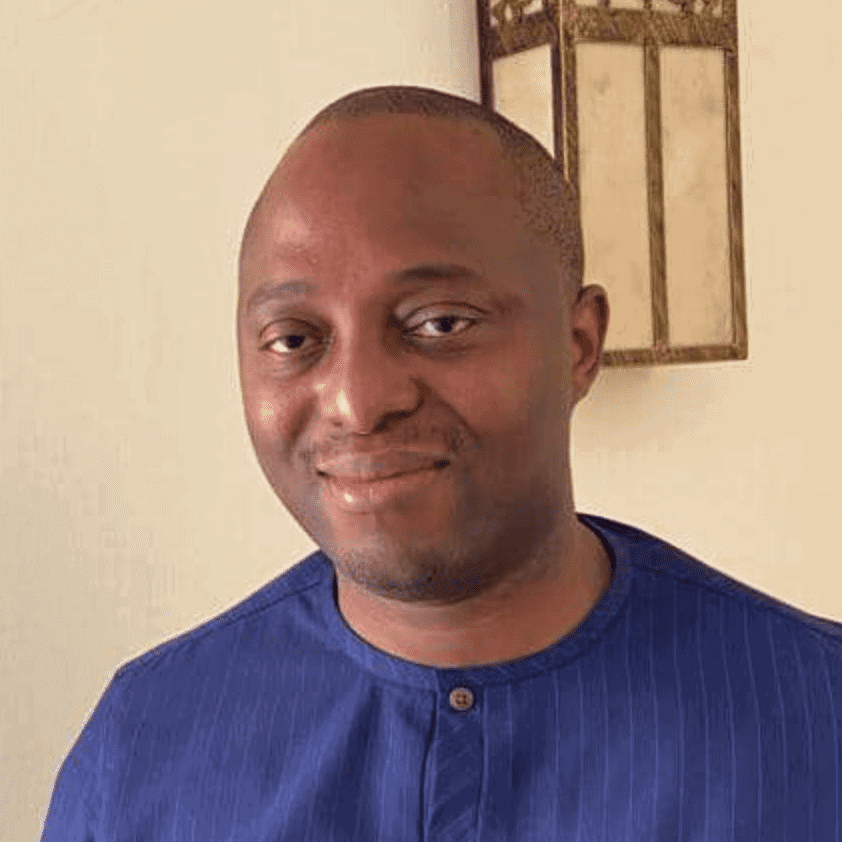
Samuel Atiku
Research Data and Systems Manager at Aston University and Nigerian fiscal-governance expert, formerly Head of Research at BudgIT and a guest analyst on SBM Intelligence's "The Week Ahead" podcast.
6
APPEARANCES
1
PODCASTS
Sep 24, 2026

3:39

How are they going to integrate them into their society? But overall, I know it's a mouthful of questions, but overall, what's your thoughts on this policy? Should it stop? Or do you think it's midway, accept and then benefit?

Samuel AtikuGUEST
I think I'll try to articulate this using about, I'll do it maybe in five points.
Samuel AtikuGUEST
I think the first thing to kick off with is the concept of sovereignty and responsibility.
Samuel AtikuGUEST
As long as you're a country, you have the responsibility of taking care of your own nationals, regardless of what has happened.
Samuel AtikuGUEST
So if you are returning someone from a country and the person is a national of your country, I think common sense and then the fundamental premise around law requires you to be responsible for your citizen, meaning that you take them in.
Samuel AtikuGUEST
Why is the U.S. struggling to deport people to their own countries mainly because number one majority of these people are not documented and so the US cannot really pinpoint to say this is the country they come from And that's the core thing.
10 MINS LATER
14:32
What do you think informed the CBN to change their direction to reduce the rate? Do you think that this will have a significant impact on the Nigerian economy in terms of borrowing and other things? Do you see them lowering it further? Or do you think it may rise again? I mean, depending...
2:21
What's the impact of the restrictions? What led to this, you know, lift of the ban? And how, most importantly, how will this ban affect Nigeria's international trade?
Samuel AtikuGUEST
I think to start with, yeah, I think it's important to start with this, yes, that the U.S. did not prohibit Nigeria's exports or they imposed some blanket ban on Nigerian ports.
Samuel AtikuGUEST
I think sometimes in June of 2024, the U.S. Coast Guard, they presume and they believe that the security arrangement we have in our ports is is not strong enough.
Samuel AtikuGUEST
So, essentially, if a vessel, for instance, if a ship is saying it's coming from South Africa, And it's traveling to the U.S. And then for some reason, the ship actually bought in Nigerian ports.
Samuel AtikuGUEST
When it gets to Nigerian ports, maybe it'll float some goods or it picks up some goods before heading to the U.S.
9 MINS LATER
12:31
So if you're having investors complain and say, oh, no, we don't want these taxes, how can we balance it? And why are we having this complaint right now?
3:09
And is this going to affect our relationship with the US that, I mean, we've been having, especially after the US has been intervening in the security challenge facing Nigeria?
Samuel AtikuGUEST
I mean, it's a, I would like to call it trying to rationalize where we are heading to.
Samuel AtikuGUEST
I think it's something we can just look at the, we can look at the rear view mirror and look potentially at the impact that this could have one way or the other in terms of our socioeconomy, in terms of social organization, and other things.
Samuel AtikuGUEST
It's simply just look at federal support, the central government support to Nigeria.
21 MINS LATER
24:51
Is this something that is positive for the DRC and for other African countries that have lithium? Do you think it's also good for Congo as now they can benefit from their resources as opposed to having illegal mining miners that take these resources still, but then the country doesn't benefit from it.
2:20
Why do you think that we're seeing this contrasting performance from both these entities? And what do you think is their effect on the Nigerian economy?
Samuel AtikuGUEST
I think it's clear that Nigeria is collecting more from trade, but it doesn't actually mean that the economy is anything healthier.
Samuel AtikuGUEST
If you look closely at the custom figure, I think it points strongly to the fact that the Lagos Free Trade Zone Command I think they generated about 408 billion, right, between January and June.
Samuel AtikuGUEST
I think the key nuance inside that we could hold on here is very straightforward.
16 MINS LATER
19:13
So what efforts do you think the continent as a whole can do to ensure that we tackle terrorism head on?
2:10
What are your thoughts on this? Do you think Africa needs to step away from using foreign currency and try to create our own unified currency? And do you think more countries are going to also adopt using the Chinese yuan when they have trade with China? Is it a good thing or it's a bad thing for us?
Samuel AtikuGUEST
My belief, I believe that currency that you're using should ideally reflect your trading relationship.
Samuel AtikuGUEST
So if Nigeria have a strong relationship, for instance, with South Africa, why do we have to go through a third party to consummate trade between ourselves? I think so there's always a strong commercial case Whether we like it or not, in recent times, when it comes to the yuan, there's a strong commercial case.
Samuel AtikuGUEST
And the way you think about this is to think about, if you look closely at the trade between China and Africa, it's approaching almost $348 billion.
Samuel AtikuGUEST
$348 billion when you look at the direct trading goods between Africa and China.
13 MINS LATER
16:33
Although it hasn't been finalized into law what are your thoughts do you think that this is landmark for the country and if passed this is going to be a real massive change for the security architecture of the country where we're going to see states being able to take hold of the security of their states Do you think states have that capacity? How are they going to build it? What are your suggestions to state governments now that this already is in process? Should they start strategizing on how they're going to implement their state police architecture before the bill even passes so that once it comes, they are ready to hit the ground running as well? It would be good to hear your thoughts on those.
3:56
If more kids stay back home because of this crisis, what can the government do to prevent this and to ensure trust with parents to bring their kids back to school as well? And how can they stop kidnappings in school? What measures do you think the government must take to stop this menace?
Samuel AtikuGUEST
The security situation in Nigeria seems to be deteriorating, and then there seems not to be ideas, and then if ideas are on the table in terms of implementation, there seems not to be hand in sight.
Samuel AtikuGUEST
If you remember, I think we should need to go memory lane, 2014. after the Chibok school girls adoption, the government then, in 2014, came up with the Safe Schools Initiative.
Samuel AtikuGUEST
We're going to improve school security across the country through the implementation of certain things.
25 MINS LATER