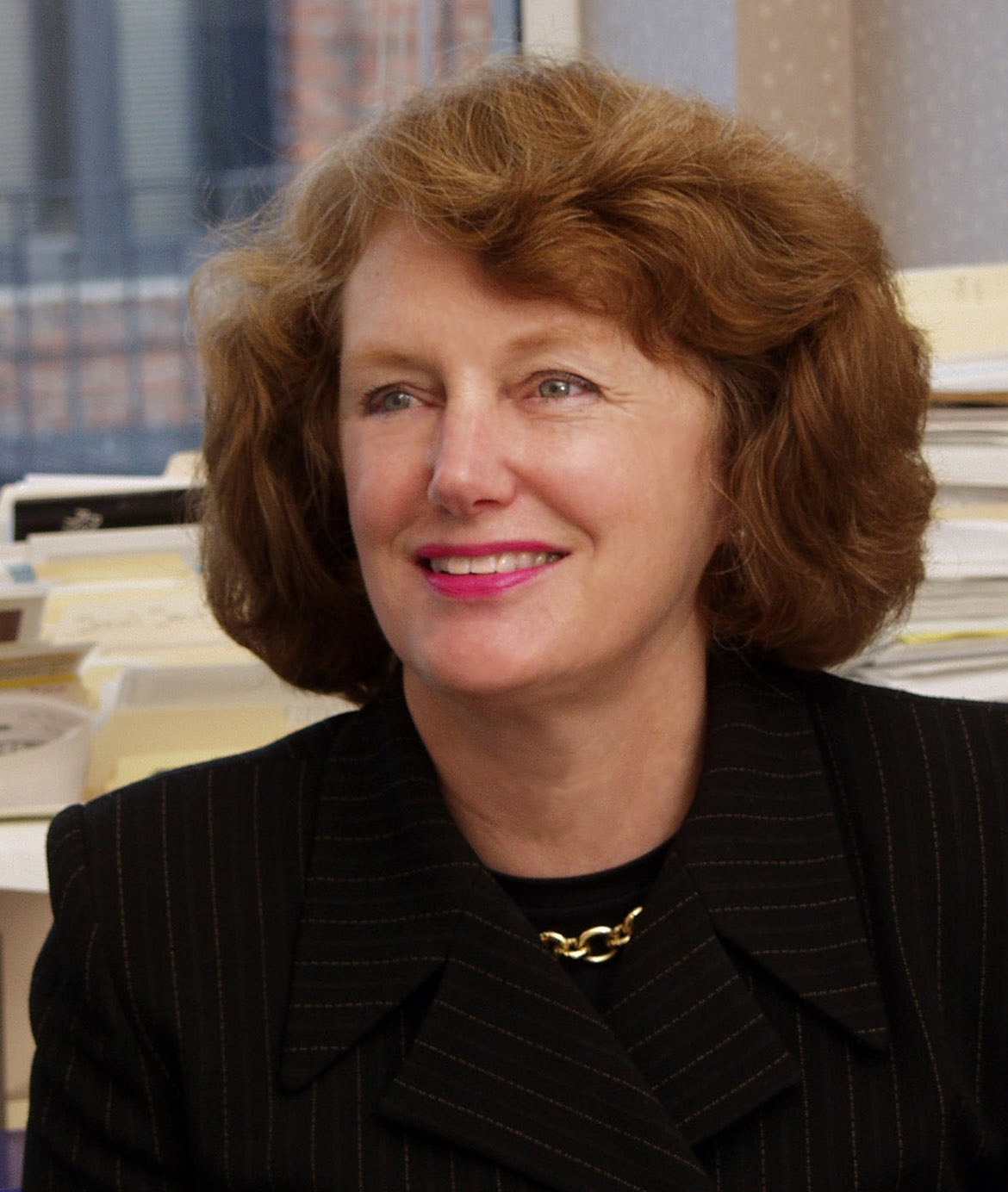
Sally Pipes
American journalist
3
APPEARANCES
3
PODCASTS
Sep 21, 2026


Tudor DixonHOST
I- in a s- healthcare system like that, if your child just gets sick, like the average sickness, strep throat, which my daughter got strep throat all the time when she was young and y- and it had to be treated immediately, what ha- do p- do pediatricians have availability, or are kids waiting, too? How does that work?

Sally PipesGUEST
Everyone is waiting, and the thing is that here in America, um, if you have health coverage, you call your...
Sally PipesGUEST
You don't, you don't have to call your, um, primary care doctor to see if you can get an appointment with a pediatrician.
Sally PipesGUEST
So in Canada, in order to get an appointment with a pediatrician, you first have to go through your general practitioner, your primary care doctor, who then determines whether you're going to get an appointment with a, uh, a specialist and who.
Sally PipesGUEST
We call our specialist right away, my dermatologist, my, you know, heart doctor, everything.
Sally PipesGUEST
But there you have to go through a system of, of gate control, and, you know, if your primary care doctor is not, you know, the, up to date on the most, the latest stuff, um, chances are hi- the specialists who are in his realm will not be the greatest either.
Sally PipesGUEST
So people have to realize, you know, that when the waiting time from seeing a primary care doctor to treatment by a specialist, i- the 28.6 weeks also means you've gotta get the appointment with the primary care doc, and then, you know, get the appointment with the specialist, and then you get treated.
22 MINS LATER
Tudor DixonHOST
But is there a way for Republicans to say there can be reform and, and still have private health insurance?

Sally PipesGUEST
And the thing is that here in America, if you have health coverage, you don't have to call your primary care doctor to see if you can get an appointment with a pediatrician.
Sally PipesGUEST
So in Canada, in order to get an appointment with a pediatrician, you first have to go through your general practitioner, your primary care doctor, who then determines whether you're going to get an appointment with a specialist and We call our specialist right away, my dermatologist, my heart doctor, everything.
Sally PipesGUEST
And if your primary care doctor is not up to date on the latest stuff, chances are the specialists who are in his realm will not be the greatest either.
Sally PipesGUEST
So people have to realize that the waiting time from seeing a primary care doctor to treatment by a specialist is The 28.6 weeks also means you've got to get the appointment with the primary care doc and then get the appointment with a specialist and then you get treated.
22 MINS LATER
Tudor DixonHOST
But is there a way for Republicans to say there can be reform? and still have private health insurance?


Kim StrasselHOST
They are all true. They are all true. Everyone would benefit from reading more Sally Pipes. I want to dig into the state of our current healthcare system and what challenges Donald Trump faces there, also what opportunities for change under DOGE and a Republican Congress. But first, and, and a way of getting into that, uh, you have a new book out, The World's Medicine Chest, which tells the story about how America became the leader in biopharmaceutical innovation. This is obviously a big piece of this healthcare puzzle, the question of drugs and drug innovation, but also drug pricing. Tell us how we did become the leader, first of all.
Sally PipesGUEST
Well, back in the early days, in the 1700s, 1800s, early 1900s, all of the new drugs and vaccines were developed in Europe. Penicillin, the Bayer aspirin, the smallpox vaccine came, all of those were developed in Europe. There were very few drugs, even through the 1980s, that were developed in the United States. But by 2004, all of the countries in Europe had price controls on pharmaceuticals because they got moved into single payer or universal coverage systems, and in order to control cost, they had to put price controls on drugs. So it gave the United States, which didn't have price controls on drugs and still had a relatively free market healthcare system, the opportunity to move into the space of doing research and development, innovation in drugs. And so today, 80% of the new drugs that come to market are developed in the United States. And when you think about the drug companies in Novartis, Roche, AstraZeneca, GlaxoSmithKline, those were all big names in Europe, where these drugs were developed early on, but they have all moved their manufacturing facilities to the United States because we don't have price controls, or we didn't until starting next year under IRA. So, you know, it costs about 2.6 billion dollars from when you first register your research to getting that drug to the market through all the trials, and only about 12% of drugs make it, and it takes about 10 to 12 years to go through that whole process. So we are now the leader and we want to keep that because all of the new vaccines for cancer, for ovarian cancer, that are being developed, colon cancer, all of these things, so we want to keep this market open. Because as I say about the Canadian healthcare system, Canada, which has a single payer system, people have an escape valve. They come to the United States. Where will the pharmaceutical companies go if they're pushed out of the market, and who's going to be hurt by that? And it'll be we, the patients, because we won't have the access to new vaccines, treatments, drugs, et cetera.
9 MINS LATER
Kim StrasselHOST
Yeah. What I worry about, too, I mean, this is a very important issue. And we need to just get it right, and if he had the right message, it would be something that he would be dealing with alongside everything else. But it's blowing up into a diversion, and as you and I know, there are so many issues that need to be addressed in the healthcare system. And I worry that this is such a preoccupation with him that, uh, not a lot of manpower and time is going to go to some of these other huge opportunities. Let's talk about one of those. I know that you have written some things recently about the opportunities DOJ has, and Congress, Republicans, and tackling some waste and fraud. Republicans right now are having a debate about going after fraud and costs in the Medicaid program. I know that you have talked about that program and how ripe it is for some reform. Give us a little idea of what they could find in there, and how they could make it better.
Sally PipesGUEST
Right. And isn't DOJ a great term? I mean, who would've thought that President Trump would've set up a DOJ committee, you know, right off the bat? So I think it's very exciting. It's never happened before. And certainly fraud, abuse, and malfeasance in Medicare and Medicaid are huge. I mean, we know that in Medicaid, because during the Affordable Care Act, of course, states were required to expand their Medicaid programs. Those are the programs for low-income Americans and pregnant women and people with disabilities, Medicare being the program for our seniors. But under Medicaid, under Obamacare, it was fortunate though that the Supreme Court said the states cannot be mandated to expand their programs in Medicaid. But as you know, most of them have. And under the expansion, it used to be the feds paid between 50 and 75% of the cost of Medicaid in the state, and the states picked up the rest. But then, under Obamacare, the feds are now paying 90%. Then we had COVID, and what we found was they expanded it so that many more people could sign up for Medicaid. They didn't have to prove eligibility. And we have now, it's been proved, 18 million people are on Medicaid, and they are illegally on Medicaid. They're enrolled and it's illegal. And they were supposed to make this change at the end of 2023 to stop this allowing anybody to be on the program and not have to prove eligibility. So the cost, just last year, of the, um, improper payments and fraud was $31.1 billion. And Brian Blase at Paragon has just said over the decade, 1.1 trillion. We could eliminate so much federal debt by getting rid of fraud and abuse. We're not talking about getting rid of Medicaid to help the very people that need it. And with all these people in California, the illegal immigrants being able to be on the program, those people that really can't find a doctor... Uh, they can't find doctors because the doctors don't wanna take Medicaid patients for the most part because the reimbursement rates are so low. You have a total of 80 million people in this country on Medicaid today, and there aren't enough doctors to take them. So, let's get the fraud and abuse out of the program and let the very people that really need it get the Medicaid coverage. And there's so many people as well, Kim, that should be at work, and they won't take a pay increase because they don't wanna go off Medicaid. And so many people, you know, they should really be working building up their lifestyle as part of our economy.