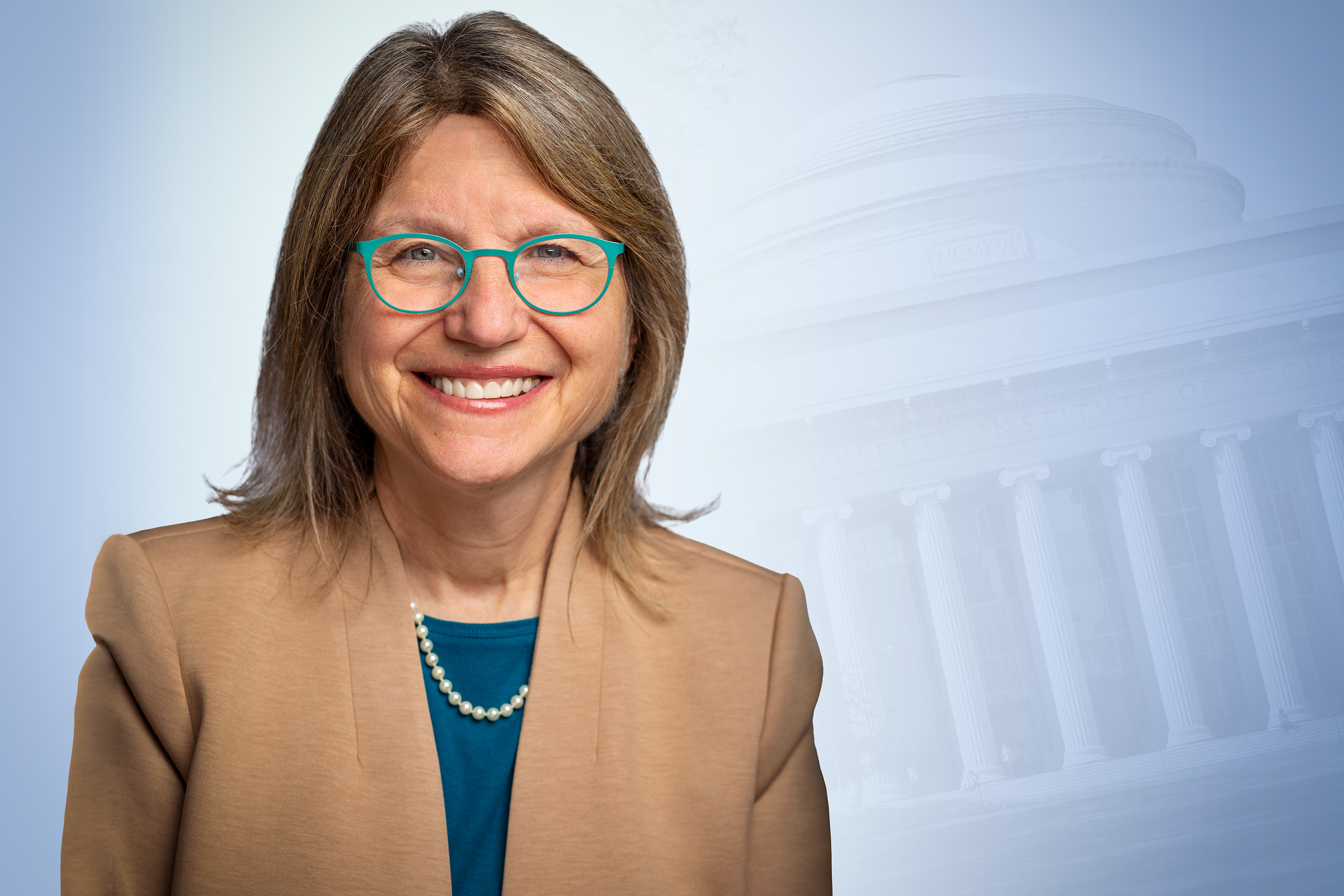
Sally Kornbluth
President of the Massachusetts Institute of Technology
5
APPEARANCES
3
PODCASTS
Aug 1, 2026


Sally KornbluthGUEST
It's much more efficient computing, much more sensitive sensing of things like molecules in the blood, like viewing from a canopy what's happening underneath.

Sally KornbluthGUEST
Yeah, I mean, basically, uh, it's the early days of Cris- CRISPR therapy and, uh, David Liu at the Broad Institute is doing a lot of this pioneering work.
Sally KornbluthGUEST
And in the case of KJ, there was a metabolic error that caused ammonia to build up in the liver, and you could, um, supply a CRISPR technology which basically will fix a gene or knock out a gene depending on what you're doing, and fix the error.
Sally KornbluthGUEST
And now that baby's gonna live a normal life because it's able to metabolize in a way that it wasn't prior to the gene repair.
Sally KornbluthGUEST
And actually, there's, um, some really exciting work now going on with the Broad Children Hos- Children's Hospital, others, um, to try to make that more generalizable.
Sally KornbluthGUEST
There are a lot of rare diseases that could be, uh, repaired with CRISPR technology.
8 MINS LATER
Sally KornbluthGUEST
What I do know, what I do know is, look, it's the future in so many things.


Terry GertonHOST
From your perspective there at MIT, what is it about that system that makes it work so well?
Sally KornbluthGUEST
Well, you know, research in this country is really done in three places, universities, national labs and industry.
Sally KornbluthGUEST
And the reason that the partnership between the federal government and universities has worked so well is that universities tackle problems that take long-term commitment.
Sally KornbluthGUEST
And basically, it allows very basic fundamental curiosity-driven research to be done in a way that allows us to simply understand how things work.
Sally KornbluthGUEST
Now, the reason that's important is that the discoveries that lead to improvements in everyday life that we enjoy, whether it be medical treatments or communications networks or new technologies, all of these things began with very basic research in universities with scientists trying to understand the world around them.
Sally KornbluthGUEST
Now, Industry does a lot for this country in terms of bringing discoveries to market.
Terry GertonHOST
Talk to me a little bit more about the balance between U.S. students, international students, and what you're seeing on the ground right now.
Terry GertonHOST
From your perspective there at MIT, what is it about that system that makes it work so well?
Sally KornbluthGUEST
Well, you know, research in this country is really done in three places, universities, national labs, and industry.
Sally KornbluthGUEST
And the reason that the partnership between the federal government and universities has worked so well is that universities tackle problems that take long-term commitment and protected from short-term pressures of politics and profits.
Sally KornbluthGUEST
And basically it allows very basic fundamental curiosity-driven research to be done in a way that allows us to simply understand how things work.
Sally KornbluthGUEST
Now, the reason that's important is that the discoveries that lead to improvements in everyday life that we enjoy, whether it be medical treatments or communications networks or new technologies, all of these things began with very basic research in universities with scientists trying to understand the world around them.
Sally KornbluthGUEST
Now, Industry does a lot for this country in terms of bringing discoveries to market.
Sally KornbluthGUEST
We partner with industry quite a lot, but they don't have the time or the patience for the long road that it takes to bring things to fruition.
Terry GertonHOST
Talk to me a little bit more about the balance between U.S. students, international students, and what you're seeing on the ground right now.


Sally KornbluthGUEST
And I think one thing we did for quite a long time was to be very quiet about it.
Sally KornbluthGUEST
I mean, you know, I wasn't about to start like showing up on TV shows and I was just very clear with our community.
Sally KornbluthGUEST
But the other thing in terms of our board or corporation being supportive, That is actually the pivotal moment in terms of me surviving at MIT.
11 MINS LATER