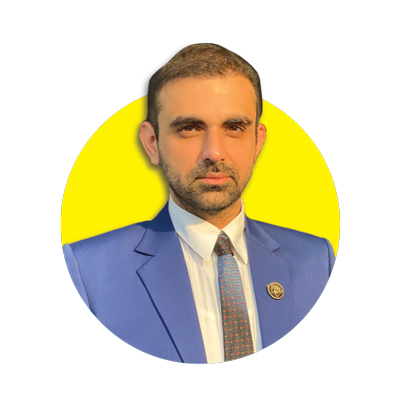
Saeed Khan
Dermatologist ‧ Imran Ahmad Khan's father
12
APPEARANCES
1
PODCASTS
Oct 9, 2026


Saeed KhanGUEST
Well, I mean, unfortunately, uh, Jamie, there really is either no normalcy, uh, in the future, or just because of how long the conflict has occurred, uh, in, uh, Gaza and now in the West Bank, uh, it is a new normal or the only normal that they've really known.
Saeed KhanGUEST
Uh, as Howie said, that you have the situation of, uh, thankfully no further rocket attacks on Israel, but that has not stopped over the last three years, despite the fact of a so-called ceasefire when it comes to Gaza.
Saeed KhanGUEST
And if one takes a look at the images now that have been opened up by Google Maps, uh, it is absolute devastation.
Saeed KhanGUEST
Uh, there really aren't any schools except in tents, uh, because, uh, the Israelis bombed everything.
Saeed KhanGUEST
Well, I mean, unfortunately, uh, Jamie, there really is either no normalcy, uh, in the future, or just because of how long the conflict has occurred, uh, in, uh, Gaza and now in the West Bank, uh, it is a new normal or the only normal that they've really known.
Saeed KhanGUEST
Uh, as Howie said, that you have the situation of, uh, thankfully no further rocket attacks on Israel, but that has not stopped over the last three years, despite the fact of a so-called ceasefire when it comes to Gaza.
Saeed KhanGUEST
And if one takes a look at the images now that have been opened up by Google Maps, uh, it is absolute devastation.
Saeed KhanGUEST
Uh, there really aren't any schools except in tents, uh, because, uh, the Israelis bombed everything.
Saeed KhanGUEST
Well, I mean, unfortunately, uh, Jamie, there really is either no normalcy, uh, in the future, or just because of how long the conflict has occurred, uh, in, uh, Gaza and now in the West Bank, uh, it is a new normal or the only normal that they've really known.
Saeed KhanGUEST
Uh, as Howie said, that you have the situation of, uh, thankfully no further rocket attacks on Israel, but that has not stopped over the last three years, despite the fact of a so-called ceasefire when it comes to Gaza.
Saeed KhanGUEST
And if one takes a look at the images now that have been opened up by Google Maps, uh, it is absolute devastation.
Saeed KhanGUEST
Uh, there really aren't any schools except in tents, uh, because, uh, the Israelis bombed everything.
Saeed KhanGUEST
Well, first of all, it was a little bit audacious because this occurred at the United Nations and it is UN week with the opening of the UN General Assembly and President Trump had announced last year the creation of the board of this board of peace as really an alternative to the United Nations claiming that he wanted to bypass that international body create his own subgroup of as you said 28 countries to go ahead and try to do something regarding gaza so the optics were very unusual but also i thought what was quite telling was uh the numbers that that had been cited 2.45 billion uh for six months in the medium term about 35 billion and then overall over 10 years looking at at least 75 billion to rebuild gaza and just to give uh the audience a little bit of a perspective sofi stadium in los angeles costs 5.5 billion to build.
Saeed KhanGUEST
I mean, I suppose it's something for a population that's devastated and living really intense in Gaza, but the numbers really don't add up to the level of destruction and devastation that have to then be addressed and with the rebuilding

Chris RenwickHOST
So there are still some hurdles here before that money can start to be used towards the rebuilding of Gaza.
Saeed KhanGUEST
And I think that this is, again, one of the sad ironies that the Board of Peace was constructed ostensibly by President Trump indicting the United Nations for its ineffectiveness.
Saeed KhanGUEST
And now coming up on the one year anniversary of the Board of Peace, the same indictment, I suppose, can be made against the Board of Peace that it has been ineffective to stop the violence.
Saeed KhanGUEST
Well, first of all, it was a little bit audacious because, uh, this, uh, occurred at the United Nations, and, uh, it is UN week with the opening of the UN General Assembly.
Saeed KhanGUEST
And President Trump had, uh, announced last year the creation of the board of, uh, uh, this Board of Peace, uh, as really an alternative to the United Nations, claiming that he wanted to bypass, uh, that international body, create his own subgroup of, as you said, 28 countries to, uh, go ahead and, uh, try to do something regarding, uh, Gaza.
Saeed KhanGUEST
So the optics were very unusual, but also I thought what was quite telling was, uh, the numbers that, uh, that had been cited, 2.45 billion, uh, for six months, in the medium term about 35 billion, and then overall over 10 years, looking at at least 75 billion to rebuild Gaza.
Saeed KhanGUEST
And so just to give, uh, uh, the audience a little bit of a perspective, SoFi Stadium in Los Angeles cost 5.5 billion to build.
Saeed KhanGUEST
Uh, I mean, I suppose it's something for a population that's devastated and living, uh, really in tents, uh, in, uh, in Gaza.
Chris RenwickHOST
So th- there are still some hurdles here before that money can start to be used towards the, the rebuilding of Gaza.
Chris RenwickHOST
If they feel like America has pulled back willingly, what would that do for the tenor of the region?
Saeed KhanGUEST
Remember, the United States has had a presence there really predating the revolution in Iran in 1979 because of oil.
Saeed KhanGUEST
This is, of course, a very strategically important region of the world when it comes to oil, even though the United States itself does not really import that much from the region anymore, if any.
Saeed KhanGUEST
But as far as the Gulf states where the United States has had and remains right now a military presence places like bahrain which is the headquarters to the u.s fifth fleet centcom is located in qatar major strategic military sites in kuwait in saudi arabia in the united arab emirates and even in jordan the deal has always been that the united states would have these ostensibly to protect these gulf states either from some kinds of rebellion or from iran Those countries have paid very handsomely for the U.S. military presence to be there.
Saeed KhanGUEST
But the return on investment over the last six months has shown has been pretty poor and in fact has arguably put those countries in greater harm's way because the United States was essentially unable to protect them from Iran's attack.
Saeed KhanGUEST
Uh, so what you have here is if you look at the, uh, the 10-point, uh, ceasefire, which of course expired 60 days on that on Monday, uh, one of the, uh, provisions that the United States had agreed to was that, uh, Iran would have control over the Strait of Hormuz, uh, but then that there would also be some kind of negotiation for safe passage of, of vessels through this.
Saeed KhanGUEST
One of the things that it seems that, uh, the pr- the Trump administration is not really comprehending or unwilling to comprehend is the fact that, uh, Iranian and Omani territorial waters actually come together in the Strait of Hormuz.
Saeed KhanGUEST
We've got a body of water closer to home called the Detroit River, but the Detroit River is actually also a strait.
Saeed KhanGUEST
And if you think about it, there really is no international waters between the Canadian side and the American side.
Saeed KhanGUEST
Uh, you go on the Gordie Howe Bridge, and you'll see that the Canadian and the, uh, American flags are right next to each other at midpoint.
Chris RenwickHOST
So you're saying that, that that waterway is not technically international waters, that there isn't any international waterway there?
Chris RenwickHOST
Could Oman actually be undermining the talks or maybe just pursuing a different diplomatic solution that Washington doesn't like? I will go with B on that one.
Saeed KhanGUEST
So what you have here is if you look at the 10-point ceasefire, which of course expired 60 days on that on Monday, one of the provisions that the United States had agreed to was that Iran would have control over the Strait of Hormuz, but then that there would also be some kind of negotiation for safe passage of vessels through this.
Saeed KhanGUEST
One of the things that it seems that the Trump administration is not really comprehending or unwilling to comprehend is the fact that Iranian and Omani territorial waters actually come together in the Strait of Hormuz.
Saeed KhanGUEST
We've got a body of water closer to home called the Detroit River, but the Detroit River is actually also a strait.
Saeed KhanGUEST
And if you think about it, there really is no international waters between the Canadian side and the American side.

Lloyd JacksonHOST
So you're saying that that waterway is not technically international waters, that there isn't any international waterway there?
Saeed KhanGUEST
And I think that I share Lloyd's confusion and concern when it comes to the grammar of and the language that's been used, particularly by the president.
Saeed KhanGUEST
But in that, I would actually argue that we have a little bit more flexibility and hope.
Saeed KhanGUEST
The president may go ahead and be rather blustery with his rhetoric, but as you said, mediators are still meeting.
Saeed KhanGUEST
There is no, I suppose, end to the ceasefire as we understand it in a broader sense.
Chris RenwickHOST
Is there any sense that some of the rhetoric coming from the regime is breaking through to some of those people?
Saeed KhanGUEST
And I think that I share Lloyd's confusion and concern when it comes to the grammar and the language that's been used, particularly by the president.
Saeed KhanGUEST
But in that, I would actually argue that we have a little bit more flexibility and hope.
Saeed KhanGUEST
The president may go ahead and be rather blustery with his rhetoric, but as you said, mediators are still meeting.
Saeed KhanGUEST
There is no, I suppose, end to the ceasefire as we understand it in a broader sense.
Chris RenwickHOST
Is there any sense that some of the rhetoric coming from the regime is breaking through to some of those people?
Chris RenwickHOST
But now reopening these frozen assets, what does that provide for Iran at this point?
Saeed KhanGUEST
Remember that in the 2015 Joint Comprehensive Plan of Action, also known as the Iran nuclear deal that came about during the Obama administration, which the first Trump administration revoked or pulled the United States out of, there was going to be the release of $150 billion in Iranian assets that have been frozen for the last 47 years in foreign banks, including those in the United States.
Saeed KhanGUEST
There was every likelihood that that money was going to go into rebuilding the infrastructure of a country that's been under sanctions for 47 years.
Saeed KhanGUEST
Back in 2015, reports showed that Iran had a 900 commercial aircraft deficit for its aviation sector.
Saeed KhanGUEST
There's only two major companies in the world that make the jets that would go ahead and supply Iran.
Chris RenwickHOST
Does this actually further the notion of Iran not having a nuclear weapon or nuclear capabilities?
Chris RenwickHOST
But now reopening these frozen assets, what does that provide for Iran at this point?
Saeed KhanGUEST
Remember that in the 2015 Joint Comprehensive Plan of Action, also known as the Iran nuclear deal that came about during the Obama administration, which the first Trump administration revoked or pulled the United States out of, there was going to be the release of $150 billion in Iranian assets that have been frozen for the last 47 years in foreign banks, including those in the United States.
Saeed KhanGUEST
There was every likelihood that that money was going to go into rebuilding the infrastructure of a country that's been under sanctions for 47 years.
Saeed KhanGUEST
Back in 2015, reports showed that Iran had a 900 commercial aircraft deficit for its aviation sector.
Saeed KhanGUEST
There's only two major companies in the world that make the jets that would go ahead and supply Iran.
Chris RenwickHOST
So does this actually further the notion of of Iran not having a nuclear weapon or nuclear capabilities?