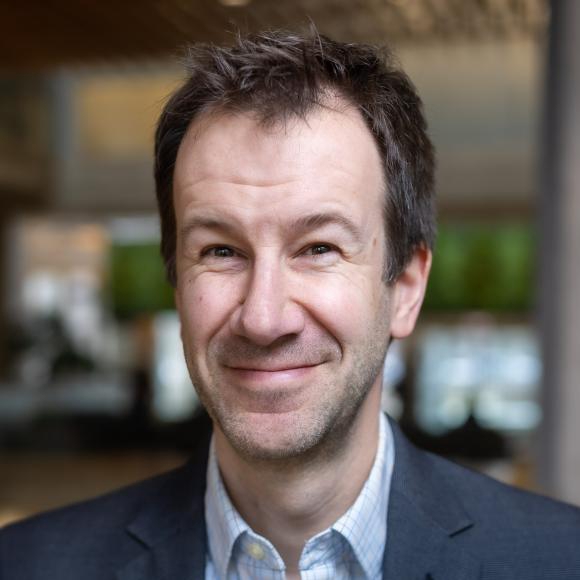
Ryan Kellogg
Energy economist and Ralph and Mary Otis Isham Professor at the University of Chicago's Harris School of Public Policy, where he is Deputy Dean for Academic Programs and an EPIC scholar.
3
APPEARANCES
2
PODCASTS
Oct 22, 2026


Ryan KelloggGUEST
economics actually lands on, I would call it an all of the above strategy for reasons that are not actually terribly obvious ex ante.
Ryan KelloggGUEST
Like if you think about the simplest possible model you could think of about the economics of climate change and reducing emissions, like the sort of model you would teach undergraduates in a intro to microeconomics class.
Ryan KelloggGUEST
That model would point to saying that really all you need to do here to deal with this problem, the fact that burning fossil fuels to get the energy that people need releases these emissions that cause climate change.
Ryan KelloggGUEST
That is basically you need to price carbon, probably do it on the demand side, not the supply side.
13 MINS LATER

Sanjay PatnaikCORRESPONDENT
Is that something that is feasible, that is realistic, that is a good use of taxpayer money? At the very least, it's something we should be thinking

Rebecca WolfMODERATOR
And so I was wondering if you could talk about how this blockade or Iran blocking the Strait of Hormuz, how that's affecting global supply and more just not just the general global supply, but who is it affecting most?
Ryan KelloggGUEST
So I too was sitting here in this room about two months ago having a very similar conversation the last time the United States struck a country that it was politically at odds with that also happened to be a producer of oil.
Ryan KelloggGUEST
And during that Venezuela conversation, which I suspect some of you were at, I think the point I really stress in that conversation is that from the perspective of oil prices and oil markets, The Venezuela raid was kind of a nothing burger.
22 MINS LATER
Rebecca WolfMODERATOR
Yeah.
Rebecca WolfeMODERATOR
And what, what, what would you-- What do we think is gonna happen there?
Ryan KelloggGUEST
It seems like the number one thing Trump seems to be talking about now with respect to Venezuela and what's next seems to be oil.
14 MINS LATER
Rebecca WolfeMODERATOR
Oh, right.