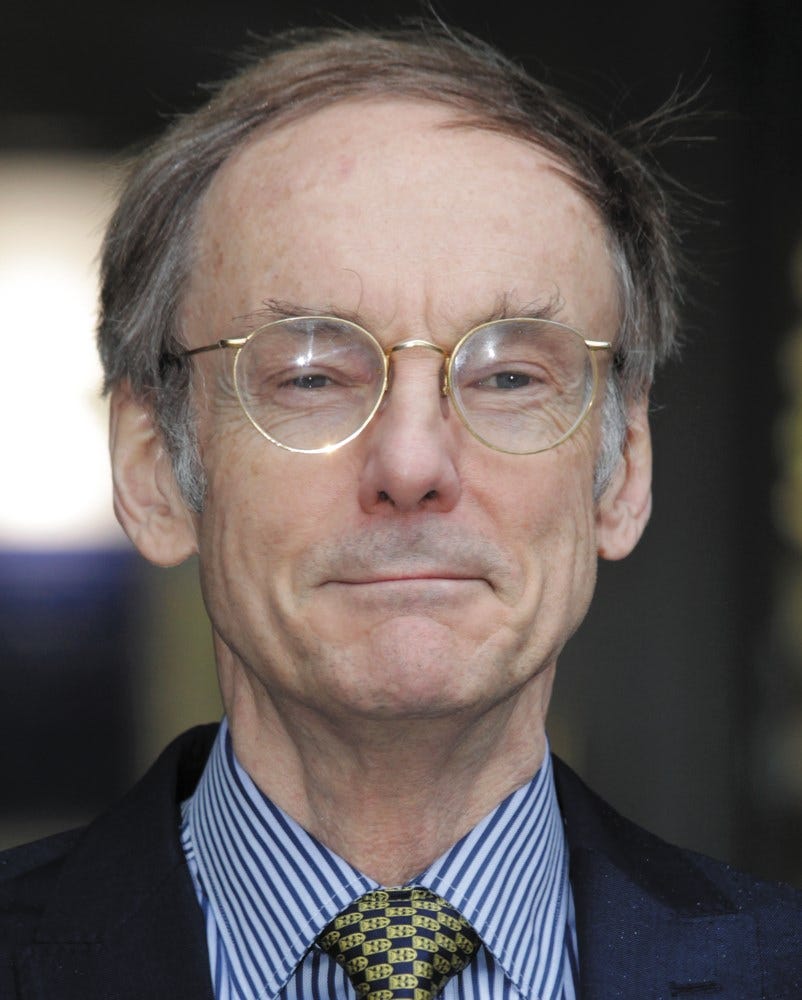
Roy Taylor
Physician and diabetologist
4
APPEARANCES
3
PODCASTS
Sep 20, 2026


Roy TaylorGUEST
And so these insulin producing cells are struggling for quite a long period of time.
Roy TaylorGUEST
So What's causing type 2 diabetes? It's carrying around more fat than the individual can cope with.


Simon HillHOST
So if, if someone's not familiar with the direct trial, what's the synopsis of this? What type of study was it? What was the dietary intervention? And then perhaps we can get into how the results have kind of changed from year two to year five.
Roy TaylorGUEST
The direct trial was designed to test whether we could actually have a clinically useful weight loss program run by family doctors, run in primary care, that would build upon what we already knew.
Roy TaylorGUEST
We knew type 2 diabetes was reversible by m- major weight loss, and we also knew from a second study that it would stay away provided weight loss was maintained, and we knew it affected short-term diabetes.
Roy TaylorGUEST
So we designed a randomized study, which meant that people at random were allocated either to healthy eating, just the best guidance of the time, or to rapid weight loss, followed by advice as to how to keep the weight down.
Roy TaylorGUEST
And we showed indeed in the first year that with the weight loss diet, almost fifty percent of people were in remission, forty-six percent striking finding, and the weight loss at one year was ten kilograms.
Roy TaylorGUEST
And at two years it was about eight point six kilograms and the proportion of remissions had fallen.
Roy TaylorGUEST
But what happened after that? And we now have five-year data, which is really very exciting to see what's happened to these people who are managed in these two different ways.
15 MINS LATER
Simon HillHOST
But in terms of their effect on the underlying disease and, and blood glucose control, how do you, how do you compare these interventions?
Roy TaylorGUEST
The twin cycle hypothesis was my attempt to put together all the observations on how the body actually worked, how the body dealt with food and metabolism, and what went wrong in type 2 diabetes.
Roy TaylorGUEST
So over the years, we'd learned firstly that muscle was very resistant to insulin, and using MRI techniques, advanced MRI techniques, we could measure the glycogen in muscle and, in fact, use this to show that people who had normal, uh, insulin sensitivity in muscle stored a lot of their food as muscle glycogen within the first five hours after eating.
Roy TaylorGUEST
Whereas people who had low sensitivity to insulin in muscle, so-called insulin resistance, those people stored almost none.
Roy TaylorGUEST
And from other work, we knew that the only way that that glucose would be handled, it's not being stored properly, the only way it could be handled would be for the body to turn it into fat.
27 MINS LATER
Simon HillHOST
And I guess given the importance of skeletal muscle in glucose homeostasis, I wondered if you'd ever considered, um, the inevitable kind of muscle loss that, that comes with losing a significant amount of body weight, particularly if you're not doing resistance training concurrently.

Ray GutierrezHOST
Sir, can you please tell the, the, our audience who and, uh, who are you, what you do?
Roy TaylorGUEST
Colonel Chief Roy Taylor, Doctor of Criminal Justice, Colonel United States Army Military Police Corps, and an active chief of police, and I've been in law enforcement for the past 45 years, and a chief of police in federal, state, local, and now private law enforcement agencies for the past 31 years.
Roy TaylorGUEST
In addition, I use my knowledge and skills and training and education, uh, as a police procedure expert in federal court, and mostly, uh, testify on 1983 cases, which means a federal civil rights violation.
Roy TaylorGUEST
What's the job of a police officer? To be a servant to the public 24 hours a day.
Roy TaylorGUEST
We like for our officers to look sharp in their uniform, but that's really where the commonality ends.