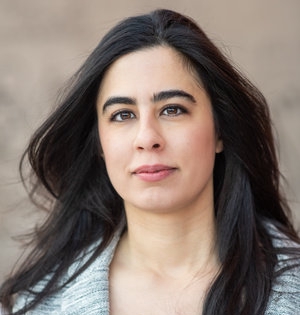
Roxane Khamsi
Award-winning science journalist and contributing writer at The Atlantic; author of "Beyond Inheritance: Our Ever-Mutating Cells and a New Understanding of Health"
3
APPEARANCES
3
PODCASTS
Jul 14, 2026


Roxane KhamsiGUEST
So in the book, I mention how when scientists got this new sequencing technology called single-cell sequencing technology, which has really opened up our ability to see the body as a landscape of different mutation, right? And first thing they did is they looked at the eyelid because they figured eyelid gets a lot of sunlight, sunlight causes mutation, and as some people might know, there's a, you know, these eye lifts that people get, the blepharoplasties, where they take some of their eye tissue away to make themselves look rejuvenated.
Roxane KhamsiGUEST
So they took some of that discarded tissue, and they found, yes, there's an abundance of mutation happening as people go through every day of their life in the skin of their eyelid.
Roxane KhamsiGUEST
But what's even more interesting is that then they looked at the esophagus, and the esophagus had even more mutation.
12 MINS LATER

Roxane KhamsiGUEST
This happened about 13 years ago, and, um, her mother when she was pregnant, they said, "We have to monitor you pretty closely towards this end of this pregnancy.
Roxane KhamsiGUEST
We're not sure this baby's heart is functioning properly." And so she had an emergency C-section towards the end of her pregnancy, and when Astraea was born, um, her parents didn't even see her immediately.
Roxane KhamsiGUEST
She was whisked away to the neonatal intensive care unit, and there she had a heart attack.
Roxane KhamsiGUEST
Um, doctors thought she had something called long QT syndrome, which was at the time thought to be an inherited disorder only.
7 MINS LATER

Bob McDonaldHOST
What are some of the more interesting ways scientists are trying to correct these genetic mutations that happen throughout our lives?


Roxane KhamsiGUEST
But these kids were doing fine, and the doctors in New York couldn't understand it.
Roxane KhamsiGUEST
Then they decided to look at the DNA of these boys more closely, and what they found out is that in addition to having the inherited disorder, so the mutation that would've caused their immune systems to malfunction, they actually had second corrective mutations that were actually allowing their imm- immune systems to function well.
Roxane KhamsiGUEST
There are people who are, are looking at factors that contribute to longevity, and how is, how is mutation playing a role in that? So interestingly, centenarians, so people who live 100 years or more, have been found to have, like, certain variants of the SIRT6 gene, which is involved in DNA repair.
Roxane KhamsiGUEST
So there's companies now looking at all this data and actually trying to kind of explore the idea of slowing our mutation down.