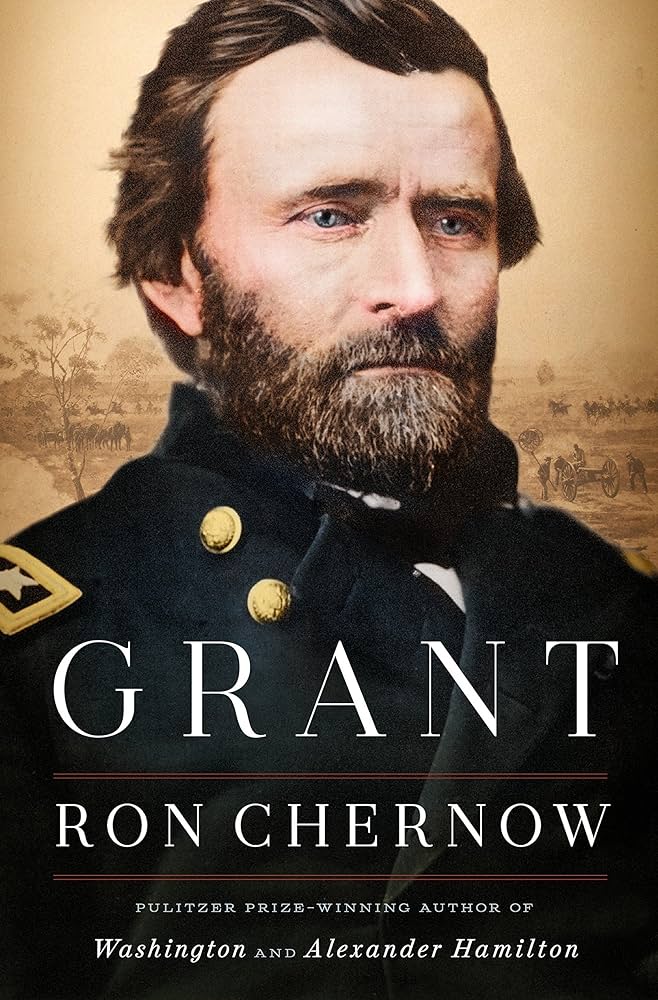
Ron Chernow
American writer and journalist
9
APPEARANCES
9
PODCASTS
Jul 2, 2026


Ron ChernowGUEST
The Declaration of Independence, we all tend to focus on, um, of course, what, uh, Jefferson wrote in the preamble.
Ron ChernowGUEST
That received very little attention at the time For them, the significant thing Jefferson listed, I think, was 27 different grievances against George III.
Ron ChernowGUEST
And I think it tells you, um, a lot about these rebels, that they felt the need to make the case.
7 MINS LATER
speaker_7UNKNOWN
The fact that we exist


David RubensteinHOST
So what did you think you could bring to it that others hadn't brought to the life of Mark Twain?
Ron ChernowGUEST
I was hoping that I could, um, write a fuller and richer biography if that was, uh, possible.
Ron ChernowGUEST
Uh, this is the largest literary personality that America has produced, and yet there's a way in which he's hidden behind the, uh, the stereotype.
Ron ChernowGUEST
Uh, everyone knows, uh, Tom and Huck and Life on the Mississippi, but he published two dozen books.
Ron ChernowGUEST
They don't know that he did a novel on Joan of Arc, that he did a polemical screed against Mary Baker Eddy, the founder of Christian Science.
Ron ChernowGUEST
Uh, they don't know that he [laughs] wrote a book, rather cockeyed book, claiming that it was actually Francis Bacon and not William Shakespeare who wrote the plays attributed to Shakespeare.
Ron ChernowGUEST
Mark Twain even wrote, dare I say it, um, a pornographic satire called 1601 that was set in the court of Queen Elizabeth I.
17 MINS LATER
speaker_3UNKNOWN
[laughs]

ClarkGUEST
When you were writing the book, did you think there would be a musical about it and a play about it?


Jeffrey RosenHOST
How- h- how- d- say more about y- how capturing him in all of his complexity made him a hero for a divided age.
Ron ChernowGUEST
Well, I should say, you know, when I started the book in, uh, in 1998, um, Alexander Hamilton was fading into obscurity.
Ron ChernowGUEST
If they had heard of Hamilton, they knew, uh, one of two things, that he was on the $10 bill, uh, and that he had died in a duel.
Ron ChernowGUEST
Maybe they knew that the person who shot him was Aaron Burr, but the knowledge of him was that, uh, limited, and I started reading about his life and number one, it was clear that just from a personal point of view that this was far and away the most dramatic life of any of the founders.
Ron ChernowGUEST
A completely, you know, self-invented, uh, figure, it's just the most astonishing story of this kid who was an autodidact who comes out of nowhere, he comes to North America just with a handful of introductions, is effectively orphaned, although in the play he's described as an orphan, he- actually he had a brother who was a carpenter in St. Thomas, and he had a kind of ne'er-do-well father who'd drifted down to the Grenadines to an island called Bequia, uh, but for all intents and purposes, he was an orphan, in fact, when he married Eliza, neither his brother nor his father came, so, uh, it was like this person...... was really all alone in the world, and just by dint of the most extraordinary intelligence, you know, created this dazzling intellect, this massive intellect.
Ron ChernowGUEST
But, um, you know, part of the fascination of the- of-of the story, which accounts for this tragic, um, uh, quality, is that this, um, dazzling intellect is on top of a very kind of fragile, uh, and unstable ego, psyche, if I can put it th- that way.
9 MINS LATER
speaker_9UNKNOWN
(laughs)


Ryen RussilloHOST
... did that, did that make him more popular that it was almost this decade-long sabbatical from being available in America?
Ron ChernowGUEST
You know, it's funny 'cause I was saying before, Ryan, that in many ways, he's the quintessential American.
Ron ChernowGUEST
So people are always surprised to learn that there were these kind of nine years in exile.
Ron ChernowGUEST
So this man that we think of as the quintessential American was actually the most, you know, worldly, well-traveled, and cosmopolitan person.
Ryen RussilloHOST
It's like, "I actually have way more thoughts and it doesn't have anything to do with two fictional characters on a raft."


Adam GrantHOST
... you know, even after pouring out seven hundred pages about a person, you still feel the contradictions.
Ron ChernowGUEST
Yeah, and also what happens is you-- as a biographer, you're peeling away layer after layer after, af-after layer.
Ron ChernowGUEST
I would always say to people, you know, "I knew more about George Washington than Martha did," you know.
Ron ChernowGUEST
But after you've peeled away all of the letters, you never get to the bottom of it.
Ron ChernowGUEST
Even someone as chatty [chuckles] and verbal as Alexander Hamilton or Mark Twain for, for, for that matter, there's always a secret corner to the life and of course, the silences.
13 MINS LATER
Adam GrantHOST
What do you think he would make of our current vices and virtues? Like, what would, what would his commentary be on, on our time?

Adam GrantHOST
Uh, that's a relief in some ways, to know that, you know, even after pouring out 700 pages about a person, you still feel the contradictions.
Ron ChernowGUEST
Yeah, and also what happens just, as a biographer, you're peeling away layer after layer after af- after layer.
Ron ChernowGUEST
I would always say to people, you know, "I knew more about George Washington than Martha did." You know? I, I knew more about Hamilton than Eliza did, et cetera.
Ron ChernowGUEST
But after you've peeled away all the layers, you never get to the bottom of it.
Ron ChernowGUEST
Even someone as chatty (laughs) and verbal as Alexander Hamilton or Mark Twain for, for, for that matter.
16 MINS LATER
Adam GrantHOST
What do you think he would make of our current vices and virtues? Like, what would, what would his commentary be on, on our time?

Ron ChernowGUEST
When his family is poor, they moved to Hannibal which then is now, is a tiny town tucked away, all the way in the northeast corner of Missouri.
Ron ChernowGUEST
Uh, most importantly, Hannibal sat on the, um, Mississippi River and so if you go to Hannibal, um, uh, today, they have preserved Mark Twain's boyhood home.
Ron ChernowGUEST
And for me, one of the most valuable things when I was researching the book is to, uh, when you, um, exit from the house, uh, and you turn left, there just a block or two away is this broad, shining, magnificent, uh, river.
Ron ChernowGUEST
So here's a sleepy town, you know, then and now, in the middle of a very beautiful, isolated, uh, rural area.
Ron ChernowGUEST
But once or twice a day, a little puff of smoke would appear on the horizon, then they would hear the steamboat whistle.

John HeilemannHOST
... right outside his door, and knowing that there was this free state, uh, in Illinois just across that river, uh, that those are transformative things for him in terms of th- the kinds of changes he goes through as he gets older.


Ron ChernowGUEST
He was helping Twain out, and, uh, Twain, you know, in New York, writes very proudly to Livy who was then in Paris, uh, describing, uh, the way that, um, Rogers is handling creditors and, um, Livy writes back.
Ron ChernowGUEST
She said, "I'm upset by the way we're handling the creditors." You know? She really felt that, um, they owed the creditors and they would sh- should be treating the creditors with much more dignity and, uh, and, and respect.
Ron ChernowGUEST
But it's an amazing story 'cause it did take several years to pay off the debts.
Ron ChernowGUEST
But you know what amazed me, Conan? Okay, so he goes through this terrible, grueling, it was a 12 or 13-month round-the-world, um, uh, tour, and then they're living in, um, Vienna and he discovers that there is this, uh, patent for a new process for printing on carpets and textiles and tapestries.
23 MINS LATER