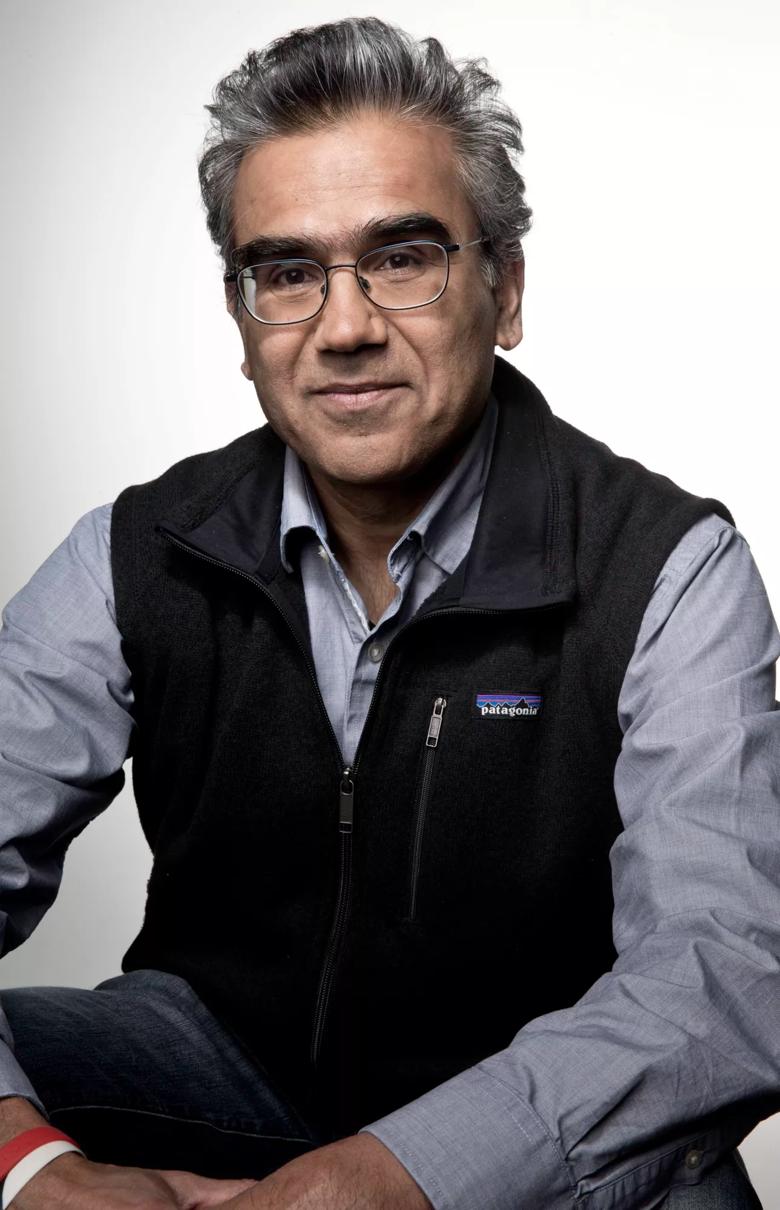
Rohit Chandra
Chief digital officer of the Cleveland Clinic
3
APPEARANCES
2
PODCASTS
Aug 27, 2026

PranavHOST
It's on every policy document India has seemed to write over the last year, right? How do you distill the incentives, right, of various actors to work on decarbonizing various industrial porce- processes that use oil, that use coal, right? How do you distill the incentives of governments, PSUs, private players, and even between private players, now you have a variety of players that are completely different from the players that existed 50 years ago, right? Now you have renewables players, now you have ac- like, industrial players, right? So how do you, how do you look at the whole incentive structure that this thing works with?
Rohit ChandraGUEST
Some of this comes down to ministerial turf wars again, right? Uh, who is announcing India's decarbonization kind of goals? Initially, it was all MEA, right? This is Indian diplomats trying to look good in international fora by announcing ambitious kind of targets, which have some analysis backed by the Ministry of Environment and Forests, but these are not the people who have anything to do with investment decisions and energy, right? And honestly, I think, um, a lot of what the Ministry of Coal and Ministry of Power especially have been doing are directly in contradiction to some of the things that India has said on international fora on climate and all, right? And so, I mean, that's the nature of government, right? You have the-- It's not a whole of government approach, right? Uh, and I think it's also a realistic one, right? Energy security is important.
Rohit ChandraGUEST
The vast majority of Indians don't still have, have access to high quality power regularly, uh, if they can afford it.
Rohit ChandraGUEST
And so my view on all of these things is that none of these UNFCCC targets or your 500 gigawatts, all of these, these are all political targets as far as I'm concerned, right? These, these have no- they have no grounding in engineering or any, you know...
Rohit ChandraGUEST
They, they are a way of setting a normative target for political action, which is a good thing, but we should not be reverse engineering our expectations from them, right? At least what I teach my students is look at what things on the ground actually look like.
Rohit ChandraGUEST
How many groundbreakings are you having? How many gigawatts are you actually building per year, right? Um, a lot of India's targets from a capacity side seem doable, but from an actual power generation side seem difficult, right, in terms of decarbonization.
19 MINS LATER
PranavHOST
Or there are power transmission bottlenecks, like you said, right? Like, so how do you, how do you square this, right? And on that note, what are the role of public sector banks in this overcapacity? Because obviously you can't get to building so many power plants without cheap finance.

Laura DierdoffHOST
And so I think if we narrow it down to just the last year or so, can you tell me a little bit about the projects or initiatives that had the most impactful results? What did you do, and how did you measure those outcomes?

Rohit ChandraGUEST
So, uh, for 2025, I think, uh, for us and perhaps for many organizations like us, the single most impactful AI initiative has been the AI scribe.
Rohit ChandraGUEST
An AI scribe, for the audience today, just to simplify it, is all of us will often, as patients, go to a physician for an outpatient appointment.
Rohit ChandraGUEST
And let's say it's a 20 or a 30-minute appointment that we have, let's say, with our primary care physician or some other physician.
Rohit ChandraGUEST
What we don't realize is that after that encounter, physicians typically need to spend anywhere from 10 to 15 minutes writing up their clinical notes from the encounter.
Rohit ChandraGUEST
So a primary care doctor today can spend anywhere from one and a half to three hours every day after their clinic time writing up their notes from each patient visit.
11 MINS LATER
Laura DierdoffHOST
And, you know, speaking of that, how do you see healthcare changing, and shifting, and evolving because of the technology and because of AI as it's coming more rapidly into the space? Where are those, some of those opportunities that you see and are excited about for 2026 and beyond?
Laura DyrdaHOST
And so I think if we narrow it down to just the last year or so, can you tell me a little bit about the projects or initiatives that had the most impactful results? What did you do, and how did you measure those outcomes?
Rohit ChandraGUEST
So, uh, for twenty twenty-five, I think, uh, for us and perhaps for many organizations like us, the single most impactful AI initiative has been the AI Scribe.
Rohit ChandraGUEST
And AI Scribe for the audience today, just to simplify it, is all of us will often as patients go to a physician for an outpatient appointment.
Rohit ChandraGUEST
And let's say it's a twenty or a thirty-minute appointment that we have, let's say with our primary care physician or some other physician.
Rohit ChandraGUEST
What we don't realize is that after that encounter, physicians typically need to spend anywhere from ten to fifteen minutes writing up their clinical notes from the encounter.
Rohit ChandraGUEST
So a primary care doctor today can spend anywhere from one and a half to three hours every day after their clinic time writing up their notes from each patient visit.
11 MINS LATER
Laura DyrdaHOST
And, you know, speaking of that, how do you see healthcare changing and shifting and evolving because of the technology and because of AI as it's coming more rapidly into the space? Where are those-- some of those opportunities that you see and are excited about for twenty twenty-six and beyond?