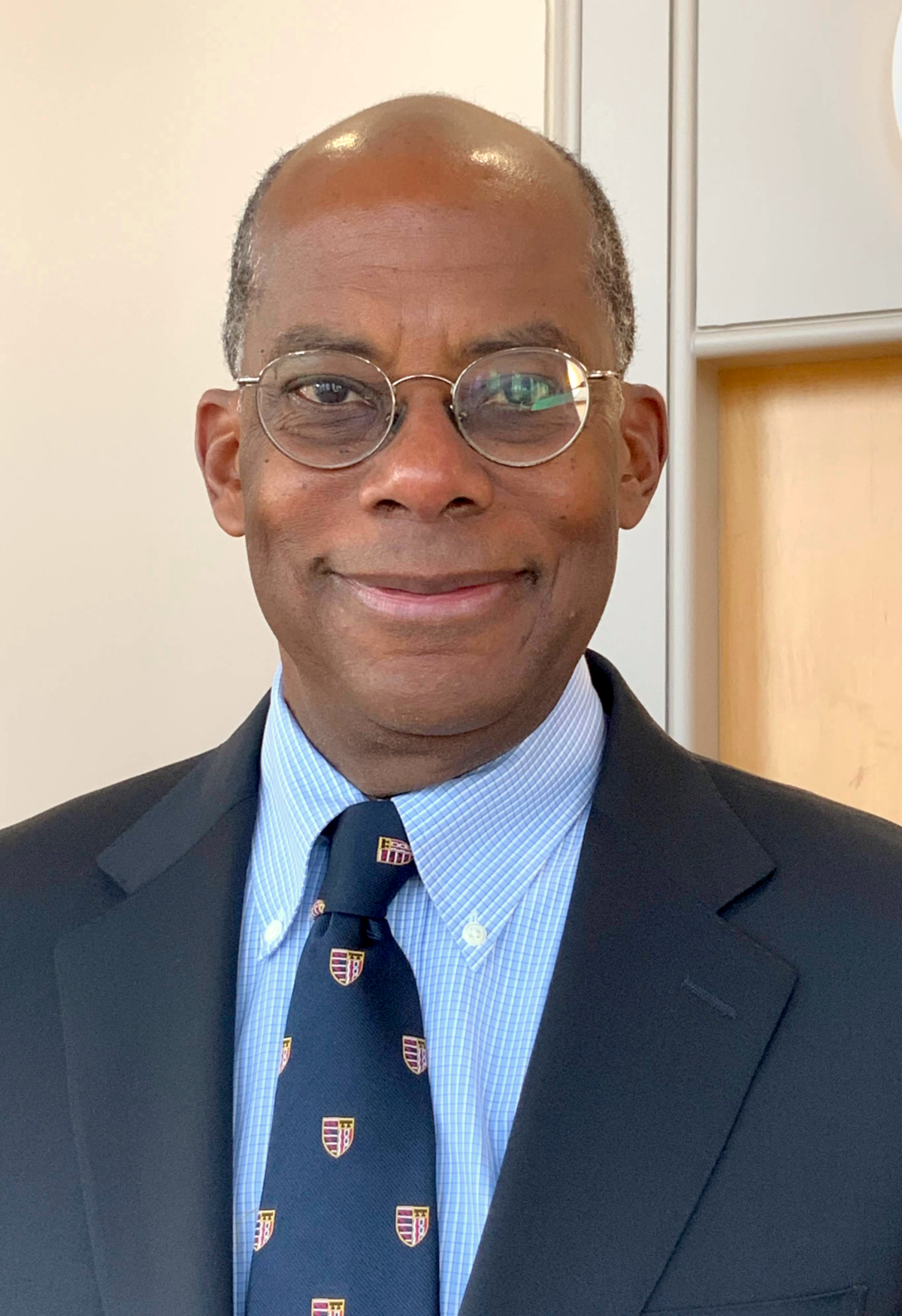
Roger W. Ferguson Jr.
American economist and former CEO of TIAA
24
APPEARANCES
5
PODCASTS
Sep 17, 2026


Joe KernenHOST
Is there any way that that turns out to be, in hindsight, like a year from now, say, wow, maybe we didn't need to do this? Is that possible in your view? I think

Roger FergusonGUEST
I think we need higher rates for a number of reasons, some of which Kevin Chair Walsh mentioned and one of which Steve mentioned.
Roger FergusonGUEST
And as Steve just talked about, for those who think about the neutral rate, all that says, you know, greater demand for credit, a lot of supply of notes and bonds, et cetera, being issued by both the public sector and the private sector.

Steve LiesmanCORRESPONDENT
which is if you remove accommodation, does that mean you're now neutral? Are you aiming for restrictive? What's your sense on whether or not the Fed needs to talk about where it is relative to a neutral rate and whether there's been a change in the neutral rate?


Dominic ChuHOST
How much do investors have to be prepared and traders have to be prepared for the notion that this is maybe the beginning of a broader campaign to rein in inflation?
Roger FergusonGUEST
It's sort of just, you know, tapping on the brakes, as Chairman Greenspan once said when the Fed, under his leadership, did one hike and then waited for quite a while.
Roger FergusonGUEST
But I want to put forth a third option, which is maybe there will be two moves, just enough tightening to create credibility, but not so much as to really – you know really slow the economy dramatically because I think they still have a hope maybe a forecast that with just a modest tightening inflation over the next two maybe three years will come in you know at the two percent and some of the uh shorter term um shocks that we've had may start to recede so you know I'm not sure campaign is in the future I would imagine maybe, you know, one hike today and maybe one in December and then possibly a wait and see stance.
Dominic ChuHOST
I wonder, in your opinion, What is the primary, maybe one or two drivers behind what's behind race? And by the way, I'm not even bringing in the deficit situation in this country or anything else.
Roger FergusonGUEST
Certainly, you know, some of the things they've done that portend the future are sort of confusing, so consider the dot plots, et cetera.
Roger FergusonGUEST
On the other hand, you know, the market does want some degree of transparency.
Roger FergusonGUEST
How is the Fed likely to react? And I think Chair Warsh is gonna eventually be forced to say a little bit more about the future than perhaps he, he wants to.
Roger FergusonGUEST
First, to answer your question, yeah, whenever I can I do look at CNBC and Squawk Box in the morning.
Roger FergusonGUEST
Um, and I think the last round of inflation had a number of factors, all of which led to the same issue, right? There was very stimulus fiscal policy.
Roger FergusonGUEST
Uh, the Fed accommodated it, um, and, and blew up its, and blew up its balance sheet, as we've talked about, and there were the bottlenecks that came from closing and suddenly reopening global, global economy.

Becky QuickHOST
... that this has been a problem, um, why is this the moment that we say everything has to happen? And I'll, I'll point out Myron added the other day that if the Fed didn't raise rates last time and the CPI numbers came in cooler than anticipated since then, why would they change their mind now?


Brian SullivanHOST
In your view, what is more important? Is it the rate decision, or is it the balance sheet move, or is it something else?
Roger FergusonGUEST
Look, I think the rate decision over time is certainly gonna be much more important.
Roger FergusonGUEST
There's no doubt that they need to shrink the balance sheet, but I think that will end up being a relatively slow and, and methodical move.
Roger FergusonGUEST
You know, on the other hand, you know, I think they're also gonna have to confront what they said in the last statement, which is that the Fed has missed the inflation target for roughly five years.
Roger FergusonGUEST
New, uh, Chair Warsh has come, come in, you know, guns a-blazing, so to speak, at least verbally.
Roger FergusonGUEST
Uh, and I think at some point the question will be when does they act? I think the markets are expecting two hikes this year.

Roger FergusonGUEST
Um, even if there's a slight downturn this time in CPI, we still have an inflation reading, uh, that it looks like it's much closer to 3%, if not above, and that's a far cry from the 2%.
Roger FergusonGUEST
So I think one of the big questions, uh, for Warsh today will be, you know, how does he react to this data? And in particular, yesterday, uh, Governor Waller, Chris Waller in New York, made some comments that were noticeably more hawkish, saying things like, "We can't just stare at inflation.
Roger FergusonGUEST
We may have to act if we get another hot read." And so I think the question of, uh, inflation hikes, um, is very much on the table, and it'll be interesting to see how Warsh manages that, particularly since he doesn't wanna give forward guidance.
Morgan BrennanHOST
Also suggesting, and we've heard this from others, that it's not just about elevated energy prices, it's about the role of AI and how that's contributing to inflation here, too.
Morgan BrennanHOST
But first, the geopolitical impacts on, um, the economic picture here if, in fact, we do see a ceasefire that's collapsing.
Roger FergusonGUEST
Um, the first thought is, again, the situation in the Middle East and globally is very, very unstable and unpredictable.
Roger FergusonGUEST
Um, secondly, I think it, it also clearly throws into question, you know, or will force the Fed to think about the inflation picture.
Roger FergusonGUEST
Anyone who was hoping that there is a move towards lower inflation probably will find this news certainly very unwelcome.
Morgan BrennanHOST
Um, a- and so I do wonder as someone who served on the board during that era, uh, what that could potentially look like here and whether that is a positive or a challenge, uh, if you are facing a situation where the data picture is changing in real time, in part because of the geopolitical landscape.


Roger FergusonGUEST
On the professional side, I think, um, what stands out most was a point that you made.
Roger FergusonGUEST
It came from literally looking at the economy every day for more than fifty years.
Roger FergusonGUEST
You know, he had his own, uh, very unique things that he'd look at, uh, things such as railroad car loadings and other things [chuckles] that I think the staff found at best amusing and probably had other words for it.
Roger FergusonGUEST
But at the end of the day, you know, he was more right than wrong around the major issues of the day.
7 MINS LATER
Roger FergusonGUEST
He's got to get through a Senate hearing, which should be smooth, but it's against the backdrop of a lot of politics.
Roger FergusonGUEST
More importantly, once he's in the seat, he's gotta continue the process of figuring out this very unusual economy, and very importantly, trying to get a consensus built out of a Fed that right now is really quite divided.
Roger FergusonGUEST
And finally, and most importantly, doing all of that while reassuring the markets that he is an independent actor.
Morgan BrennanHOST
But how do you tackle services, especially if shelters no longer contributing?
Roger FergusonGUEST
Well, I think you put your finger on exactly the nature of the Fed's problem.
Roger FergusonGUEST
For a long time, we've had goods disinflation, not just deflation, and services have remained sticky.
Roger FergusonGUEST
And we saw, you know, part of the vision in the minutes, and Fed speaks since then.
Roger FergusonGUEST
So I think you put your – you're exactly where they are, which is they're those who, in terms of risk and reward, are more concerned about inflation.
Morgan BrennanHOST
How much hinges on the politicization or the optics of politicization around the Fed and thus who the next Fed chair nominee is going to be and longer term what the composition of the Fed is going to be?

Frank HollandHOST
What do you make of this? Have you ever seen a situation where it's kind of this horse race that's so public well ahead of the end of the term of the next chair?
Roger FergusonGUEST
I've been through two or three chair selections, and there's always speculation for sure.
Roger FergusonGUEST
And second, obviously, the backdrop, where whoever sits in that chair next, whoever is nominated, I think is going to answer some very serious questions about independence from the president, which normally are not questions that one asks a nominee.
Frank HollandHOST
What do you make of this very vocal support from other international central banks as well?


Roger FergusonGUEST
There was a big debate back and forth, ultimately settled in President Truman's office with the Fed accord, Fed-Treasury accord, creating independent Fed in 1951.
Roger FergusonGUEST
Second point is there's always a lot of tension between the White House and the chairman of the Fed of the Fed.
Roger FergusonGUEST
uh point three though this is really unusual the degree to which that uh attention is spilled over to the public the degree to which that the president has directly attacked the intelligence of of the chairman and frankly then you know the legal attack um on fred independence so i think it is not a given i think it's likely to be uh handled well by the spring court But then there's still the whole question of whether or not the new chair of the Fed will be able to demonstrate to the markets satisfaction, credibility around being independent of a president who says, you know, you can only be appointed chair if you agree with me.
Frank HollandHOST
Hypothetically, if you were in this room and the government shutdown continued up until the Fed meeting, how would you view the lack of economic data? How would you work around it? How do you think the Fed should work around it?
Roger FergusonGUEST
I think you heard a little bit from Austin Goolsbee earlier on, I'm sure, at least a recording.
Roger FergusonGUEST
But at the end of the day, the analogy of they're driving through a fog that was already pretty thick and now it's gotten thicker.
Roger FergusonGUEST
And so I think they're going to have a healthy debate to use a phrase of, given that we're data dependent and there's no data, given that we came in being sort of undecided and divided, you know, wouldn't be off the table to say maybe we should take a pause.
Frank HollandHOST
Does the Fed worry there's too much concentration in GDP growth and the fact that it's coming seemingly primarily from one area?
Frank HollandHOST
What about some of that company data that we're getting from companies like we just mentioned, Restoration Hardware, that they're seeing a tariff impact? It's hard to not think that the impact the companies are seeing won't eventually show up in prices.
Roger FergusonGUEST
A close read of the last set of pricing data, CPI data, shows that the tariff-exposed sectors are those that are seeing big price increases.
Roger FergusonGUEST
And overall, to say that it came in and the inflation came in in line at 2.9% is not to give everyone comfort that it's moving towards 2%.
Roger FergusonGUEST
Surveys also suggest that after attempting to avoid passing this on, they are passing some of these price increases on.
Roger FergusonGUEST
So I think it's already a clear and present danger that we have stagflation, and it's a challenge for the Fed to maintain its inflation-fighting credibility while also pivoting towards a weakening employment situation and overall slowing growth.

Scott WapnerHOST
Do you think that any part of the mechanism of the Fed needs to be retooled, rethought, reorganized in any way, shape or form?
Roger FergusonGUEST
However, you have to be careful about timing, cost, process for doing all of that.
Roger FergusonGUEST
Chair Powell announced some pretty important changes to the monetary policy framework last week in Jackson Hole.
Roger FergusonGUEST
So no one should come in to any institution and say this is pristine, picture perfect, nothing could possibly change.
Frank HollandHOST
Do you agree with that take? And how does that kind of shape your view of the upcoming inflation reports, PCE on Friday and, of course, the jobs report?
Roger FergusonGUEST
Look, I think all of these things are a bit more in play than the immediate aftermath of Chair Powell's speech.
Roger FergusonGUEST
Look, it does look like the Fed is a little comfortable with inflation that is continuing to run above its target.
Roger FergusonGUEST
But if it gets outside of this comfort range, I think maybe they'll reconsider some of their strategy.
Roger FergusonGUEST
If there is either stability or maybe improvement in the market, that might force a reconsideration.
Roger FergusonGUEST
I think he's going to acknowledge, as you suggested, some of it was perhaps good news, but not all of it was good news.
Roger FergusonGUEST
I think he's going to reinforce sort of uncertainty and the risk kind of discussion that he had the last time.
Roger FergusonGUEST
He doesn't want the market to get very fixated, let's say, on 50 basis points.
Roger FergusonGUEST
He also knows that there are a range of views on the committee based on incoming speeches.
Frank HollandHOST
But how does Jay Powell view especially those revisions when we're talking about the job market?
Frank HollandHOST
So for a data dependent Fed, this much higher than expected PPI report, how do they kind of rationalize that going forward?
Roger FergusonGUEST
Well, look, I think there's a major debate at the table, and that's what you're hearing.
Roger FergusonGUEST
The other side of this, of course, as Chair Powell laid out, is it's not just inflation.
Roger FergusonGUEST
And that looks like it's weakening somewhat, but there's a big debate about that even.
Roger FergusonGUEST
Is that a sign of immigration policy cutting back on supply as well as demand? So I think they go into this meeting about as divided as they were going into the last one, with valid arguments on both sides.
Roger FergusonGUEST
I think this Fed, however, if they're wise, would not just risk on the notion that this might be a one-time pop.
Frank HollandHOST
What are some of the other data points that we should watch to try to get some sense of the direction the Fed could be going?
Roger FergusonGUEST
No, they've moved back very much into normal territory, and so that's a good sign.
Roger FergusonGUEST
I'd also say the other thing that seems interesting to me is this survey was done right after the so-called big, beautiful bill, and it didn't move expectations for capital expenditures.
Roger FergusonGUEST
The vast majority of CEOs are expecting to keep capital expenditures pretty much where they were, which is another sign that while they're not pessimistic, nor are they really putting their foot on the gas pedal.
Roger FergusonGUEST
And so I think there are a number of things here that suggest even Kiel has returned, but with Antenna up for certainly uncertainty and therefore a bit of caution coming from the CEOs.
Dominic ChuHOST
How about jobs? Are CEOs still looking to hire or are they looking to pull back?
Frank HollandHOST
How meaningful is that for the Fed or does the jobs report, does that overshadow anything else?
Roger FergusonGUEST
If you listen closely to what Powell had to say, he said right now inflation is still running somewhat above target and the labor market looks like it's roughly imbalanced.
Roger FergusonGUEST
And therefore, a statement he said is that maybe restrictive policy is where they want to be right now.
Roger FergusonGUEST
He also said something else really important, which is if it looks as though the risk is leaning towards labor market weakening, that might be the signal it's time to cut.
Roger FergusonGUEST
So I think they're going to have an eye on both of those reports, trying to figure out if inflation still is running above target.
Roger FergusonGUEST
And is there a signal that the labor market might be weakening inflation above target? Stan Pat slightly restrictive labor market, clearly weakening signal to move.
Frank HollandHOST
Do you do you have expectations for how PCE and the jobs report play out? And also, in your view, is September even still on the table?
Frank HollandHOST
If you're Fed officials who are, again, edging for a cut in July, does that mean that you've already decided that the majority of the impact of tariffs has already been factored in and it's kind of a speed bump that we're now over? Or how else do you think they're seeing it? Because it doesn't seem like we know the full effect yet.
Roger FergusonGUEST
Chris Wall in the past has said that he expects the impact of terrorists to be very temporary.
Roger FergusonGUEST
And at the last meeting, people took note of the fact that the number of people thinking no cuts this year had gone up.
Roger FergusonGUEST
And so the whole question of tariffs, I think, is being assessed differently by different members.
Frank HollandHOST
How are they viewing the Israel-Iran conflict, U.S. involvement? How are they planning their businesses with the idea that there may be this kind of geopolitical tension out there?
Roger FergusonGUEST
We've already seen international investors calling the question, perhaps, the stability and reserve currency nature of the dollar.
Roger FergusonGUEST
Normally, when equity markets are down, individuals look for dollars in order to buy the fixed income, the riskless asset that the US offers in terms of our treasuries.
Dominic ChuHOST
Why is the Fed, why is Chair Jay Powell, why are they not able or willing to cut interest rates the way that President Trump wants them to be cut?
Frank HollandHOST
We're hearing it from the companies in real time, like a Delta or Kohl's, that the consumer is softening.
Roger FergusonGUEST
You heard Chair Powell at a speech recently say, for example, that consumer survey data has not been a great predictor of actually consumer performance.
Roger FergusonGUEST
And we should also recognize that labor markets are still relatively balanced.
Roger FergusonGUEST
In fact, you know, at a 4.1, 4.2 percent unemployment rate, some might say we're at full employment.
Roger FergusonGUEST
And so, yes, everyone's hearing the stories and believe the stories that CEOs are telling of maybe softening order books, some concerns being shown showing up.
Frank HollandHOST
Are you concerned about a Fed that actually raises inflation expectations but lowers its expectations for economic growth? And what signals that could send, not only to the markets, because, you know, the markets and the economy are two different things, but the real economies.
Frank HollandHOST
What are you expecting, especially following the president's comments that he wants to see rates lower?
Roger FergusonGUEST
Secondly, as he said the last time around, they're in a new phase now where I think they're wait and see.
Roger FergusonGUEST
They'll be talking about being data dependent for sure and he'll undoubtedly talk about incoming data that has been a little disappointing on inflation and shown underlying strength in the economy.
Roger FergusonGUEST
And I think he'll be asked about the president's comments, and my suspicion is he will continue to reinforce Fed independence from political pressure.
Frank HollandHOST
How do you think they digest that when it comes to the decisions going forward? And does this put potentially this year a hike back on the table?