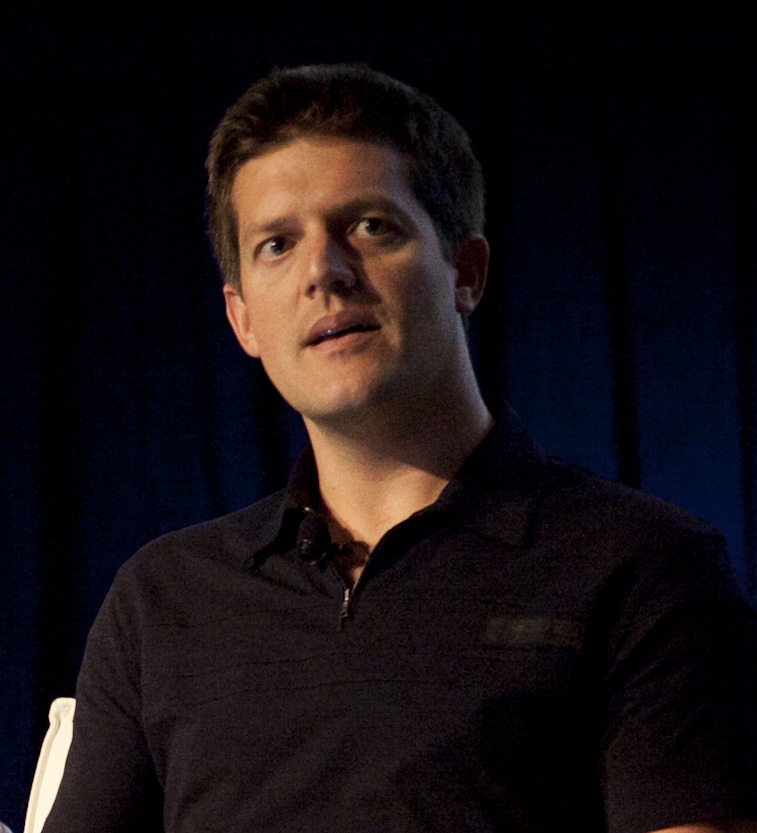
Roelof Botha
South African venture capitalist
10
APPEARANCES
8
PODCASTS
Sep 30, 2026

Ed LudlowHOST
Explain how that, the, the decision to do that, the opportunity that you see, why you still want to be involved here with Flow.

Roelof BothaGUEST
The three key reasons I wanted to continue to work with the company is team, traction, and timing.
Roelof BothaGUEST
So from a timing point of view, Pari explained how the company is really taking advantage of the current, uh, technology capabilities in AI to become a companion to the development of hardware.
Roelof BothaGUEST
Next, I look at traction, and the company has wonderful momentum with its customers.
Roelof BothaGUEST
They have customers across, uh, automotive, energy, space, defense, and 96% of the customers that the company has found them.


Roelof BothaGUEST
And then unfortunately, um, three, uh, then we had the, the crash, and, and things went quite well until 2015 with Joe Marcus at the helm, um, uh, at the, um, Monetary Policy Committee.
Roelof BothaGUEST
The average real prime rate, which is the prime rate minus CPI, during our five-year term of office was 3.4%.
Roelof BothaGUEST
And then unfortunately, um, three, uh, then we had the, the crash and, and things went quite well until 2015 with Joe Marcus at the helm, um, uh, at the, um, Monetary Policy Committee.
Roelof BothaGUEST
The average real prime rate, which is the prime rate minus CPI, during our five-year term of office was 3.4%.

Roelof BothaGUEST
Even, um, the credit extended to households, um, loans and credit extended to households, that, that has, uh, just picked up now after almost, uh, f- four or five years of, of steep decline because of these ex- ex- very, the record high interest rates we had.
Roelof BothaGUEST
And the minute, the minute the interest rates started coming down, your Betterbond index of home loan applications started moving up.

Roelof BothaGUEST
I think the first financing, when you get an investor, if you're getting an investor board member, um, You should treat it as a recruiting decision, not a financing decision.
Roelof BothaGUEST
Because they'll have a much bigger bearing on the ultimate outcome of your company.
Roelof BothaGUEST
And then I'm generally a fan of getting a very good independent board member within a year or two.
Roelof BothaGUEST
And I think there's a different relationship that the founder has with the investor board member, by virtue of what Jack described, that sometimes that person may come to the conclusion that the founder is no longer the right person to run the company, maybe rightly, maybe wrongly.
Roelof BothaGUEST
If you can get an independent board member, there's a different relationship that the founder has with that board member.
16 MINS LATER

Brian HalliganHOST
What are timeless CEO qualities and what is new? Like what are the new qualities CEOs need today?

Roelof BothaGUEST
And we discourage, you can surface questions to the sponsors of an investment over the weekend, but we really don't want sidebar debates.
Roelof BothaGUEST
Hey, listen, will you vote for my company on Monday? And, you know, can the two of us reach that kind of agreement? That's not healthy.
12 MINS LATER

Connie LoizosHOST
How do you handle that from a resource perspective in terms of how much time and energy and follow-on funding you give these companies?


Jack AltmanHOST
I'm curious when you think about that whole landscape, are you able to sort of give like a summary lay of the land of how you maybe like see things or what's your framework for the venture world right now?
Roelof BothaGUEST
Obviously, the scale of what technology impacts today is different from what it was a decade ago, two decades ago.
Roelof BothaGUEST
Technology just affects far more of the world than I think we could have imagined.
25 MINS LATER
Jack AltmanHOST
Before getting into how it applies in like AI times, which I think is like new interesting dynamics, how do you think about the component of costs for a startup building a company, its product, its go-to-market, everything?
Unknown podcast
Sequoia's Roelof Botha: Why Venture Capital is Broken & How Great Companies Are Built
Oct 9 · 27m

David SacksHOST
Can you just level set on what you've learned and what the industry has learned and where we are? I'm glad you called it an industry, not an asset class.
Roelof BothaGUEST
I listened to one of the shows you guys had recently, and I think there's a huge problem with the venture industry that there's too much money.
Roelof BothaGUEST
Venture industry as a whole invests right now between $150 to $200 billion a year.
Roelof BothaGUEST
If you think about reasonable assumptions for returns, let's just say 12% per annum net, which isn't great.
18 MINS LATER

3:52

Can you just level set on what you've learned and what the industry's learned, and where we are?
Roelof BothaGUEST
Um, I listened to one of the shows you guys had recently, and I think there's a huge problem with the venture industry that there's too much money.
Roelof BothaGUEST
Uh, venture industry as a whole invests right now between $150 to $200 billion a year, was the last numbers I saw.
Roelof BothaGUEST
If you think about reasonable assumptions for returns, let's just say 12% per annum net, which isn't great, might as well invest in an index fund, the math basically implies that you need three and a half to 4X funds to make that math work over a reasonable timeframe.
Roelof BothaGUEST
So if you're investing, let's just say, $200 billion a year, the industry needs to give back $700-800 billion a year.

Jason CalacanisHOST
What's your take on the, the opportunity in China? Will that return? A- and just the, the experience you had with all those incredible hits at the time.


Roelof BothaGUEST
So some of the other residences that are now available weren't here, but Schwab was newly constructed.
6 MINS LATER