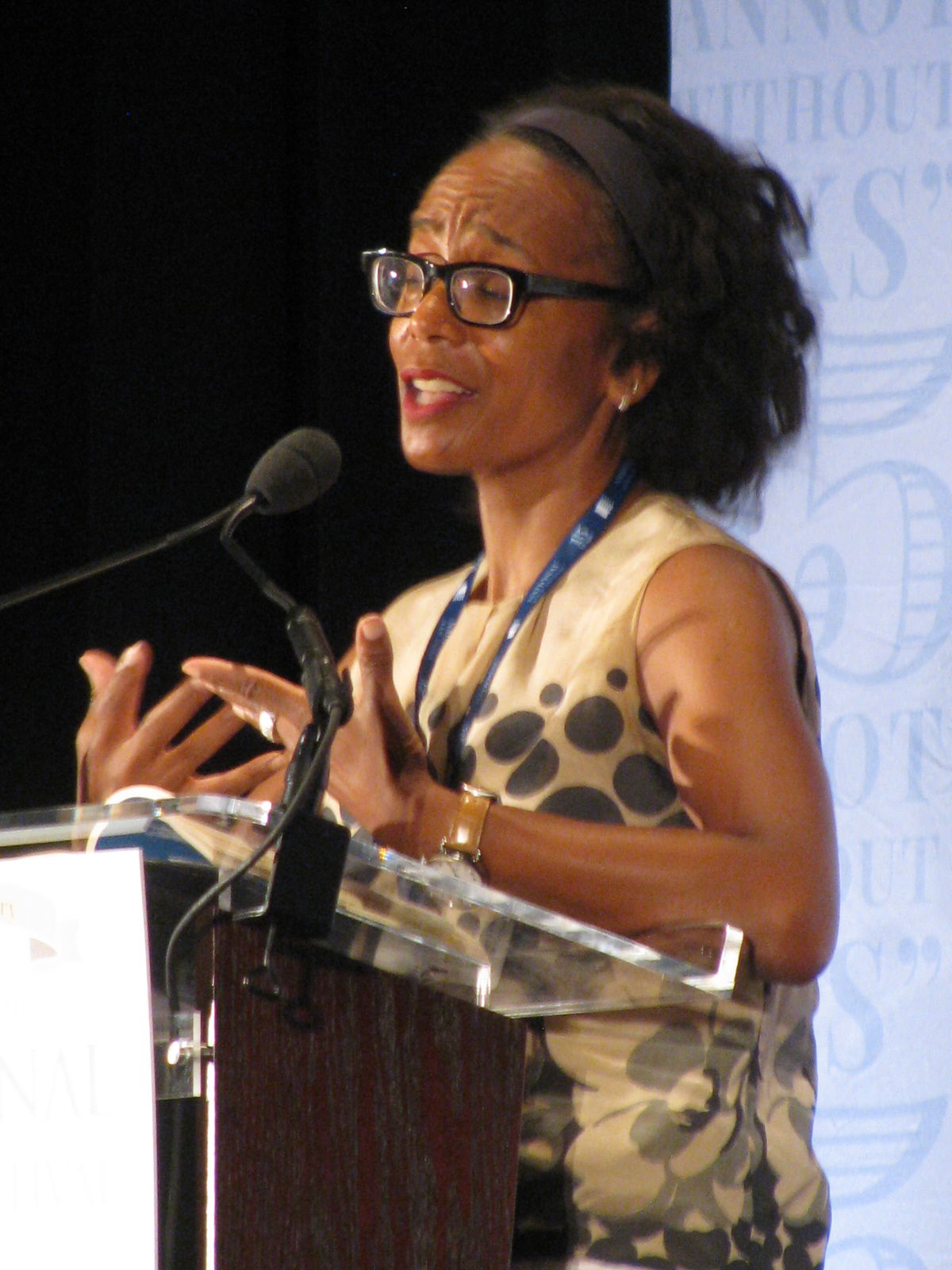
Robin Givhan
American fashion editor
9
APPEARANCES
8
PODCASTS
Aug 14, 2026

DeniseHOST
What surprised you in your research, if anything? I

Robin GivhanGUEST
mean, I would say probably, well, there were two moments that sort of delighted me.
Robin GivhanGUEST
I mean, one was when I was looking back on sort of how the menswear world had changed over the years, because I felt like Virgil's success was would have been a lot more challenging if he had been aspiring to sort of take the reins of the women's collection.
Robin GivhanGUEST
But I thought it was really interesting to me to see the degree to which menswear had been impacted by the rise of sort of athletes as icons and the way that Black men, particularly Black athletes and Black entertainers and rappers and performers, had really come forward as sort of the leading figures in menswear sort of icons.
Robin GivhanGUEST
I mean, they are the ones who are kind of leading the way and on the covers of magazines and things like that.
7 MINS LATER
DeniseHOST
into mainstream culture like for example I don't think I actually knew about Virgil which is kind of crazy until like I remember I saw a picture of Timothee Chalamet which you actually mentioned in your book and he was wearing off-white yeah in the 2018 like I don't even remember which awards it was right but it yeah it was like and then I deep dived into that because it was getting a lot of you know like attraction so I'm interested in what you think in your personal opinions of you know who gets to um define culture the role of celebrities and like athletes etc etc in this

Robin GivhanGUEST
I think the first is, it is this year, and people are particularly sensitive to income inequality.
Robin GivhanGUEST
They are particularly s- sensitive to the ways in which, uh, billionaires seem to have invaded our government and have taken this outsize sort of control over people's lives.
Robin GivhanGUEST
Whether it's, you know, Jeff Bezos and the company he founded, Amazon, or whether it's Elon Musk and his leadership during DOGE.
Robin GivhanGUEST
I mean, I think there's this sense of, why are the billionaires running the country? And then I think it's also the element of this money comes from tech, and there is a sense that this is money that comes from perhaps changing our lives, but we're starting to wonder if they're actually making our lives better.
Robin GivhanGUEST
And there's a sense that this is cold money, that this is soulless money, and it's being pushed into, uh, an institution that is focused on creativity and the human spirit.

Laura CoatesHOST
What does her look say to you? Because there are some who are commenting from Madame X alone, it was somebody who was almost mocking this, um, in a combative way, the idea of the perception of high society and the realities of those tensions.


Robin GivhanGUEST
I mean, I think we want them to look like the best version of ourselves, and that obviously means something different probably to, to each person.
Robin GivhanGUEST
But I, I think there's this element in which you want them to be recognizable to you as someone that you feel that you, that, as someone who sort of makes sense to you.
Robin GivhanGUEST
You want them to look a bit more, um, you know, sort of ready to step into any environment and wanting them to look comfortable in any environment.
21 MINS LATER

Monica L. MillerMODERATOR
Right.
Robin GivhanGUEST
The immigrant part of his story was, I think, important to him, but it was also important to, I think, the way that people understood him and the way that they placed him within the fashion universe.
Robin GivhanGUEST
I mean, it was a city that had an enormous lawsuit filed because the public schools had never really desegregated.
Robin GivhanGUEST
Board of Education, they had really struggled to truly be desegregated schools.
9 MINS LATER
Monica L. MillerMODERATOR
And the relationship of this moment, this 2006 moment to like the way that his career kind of takes off after that.


Stacey AbramsHOST
And so I'd love to just know how you're thinking about the role that the fashion industry is playing in this, you know, overthrow of democracy.
Robin GivhanGUEST
Well, you know, I think for some, some of the designers, certainly, particularly around, uh, the time of inauguration, um, were trying to kind of separate the person from the institution, the particular administration from this sort of historical American moment.
Robin GivhanGUEST
Now, I don't know that that's possible, but, you know, I think at that point, there was definitely a sense of trying to be nonpartisan I don't know that if choosing non-partisanship under those circumstances is a choice that will ultimately sit well with history.
Robin GivhanGUEST
I think that the fashion industry is like any other in that it is is a business that is trying to look out for its bottom line.
Robin GivhanGUEST
I mean, I will say that certainly the world of luxury fashion under the corporate ownership of LVMH is of particular interest because, you know, that is a conglomerate that is controlled by Bernard Arnault.
Robin GivhanGUEST
And that is someone who has a very, I would say, publicly comfortable relationship with this administration.
Robin GivhanGUEST
I mean, I don't know what goes on behind closed doors, but, you know, that is certainly...
9 MINS LATER

Stacey AbramsHOST
And so would love to just know how you're thinking about the role that the fashion industry is playing in this, you know, overthrow of democracy.
Robin GivhanGUEST
Well, you know, I think for some, some of the designers certainly, particularly around, uh, the time of inauguration, um, were trying to kind of separate the, the person from the institution, the, the particular administration from, um, this sort of, uh, historical American moment.
Robin GivhanGUEST
Now, I, I don't know that that's possible, but, um, you know, I think at that point, there was definitely a sense of, um, uh, trying to be nonpartisan.
Robin GivhanGUEST
Um, I don't know that if choosing nonpartisanship under those circumstances, um, is a choice that will ultimately sit well with history.
Robin GivhanGUEST
Um, I think that the fashion industry is like any other in that, um, it is a business that is trying to look out for, um, you know, its bottom line.
Robin GivhanGUEST
I mean, I will say that certainly the world of luxury fashion under the corporate ownership of LVMH, uh, is of, of particular interest because, you know, that is a conglomerate that is controlled by Bernard Arnault, and that is someone who has a very, uh, I would say publicly comfortable relationship with this administration.
Robin GivhanGUEST
Uh, I mean, I, I don't know what goes on behind closed doors, but, um, you know, that is certainly, um, all signs point to that.
9 MINS LATER

Robin GivhanGUEST
You know, I think it's kind of hard for people to believe that, um, there was a point where the stars would show up pretty much left to their own devices.
Robin GivhanGUEST
You know, the, in the very early days of, uh, the Oscar red carpet, most of the celebrities were sort of dressed by the costumers from the studios, and then they were kind of left to their own devices, and there were some pretty outrageous moments.
Robin GivhanGUEST
And then Armani hired a woman named Wanda McDaniel, who came in and sort of created almost a system, and Armani started dressing a lot of the celebrities, who, you know, really, I, I, I think felt, um, you know, indebted to him for doing it because it allowed them to get a bit of s- you know, support when they're out there on the red carpet being photographed.
Robin GivhanGUEST
And he dressed them in his sensibility, so it was all about sort of the classic tuxedo and elegant evening gowns.
Robin GivhanGUEST
Um, not a ton of skin, not a lot of sheer, but very much the Armani aesthetic.
Robin GivhanGUEST
I think that has, uh, something to do with it, but I also think it's because the brand had such a clear and distinct, uh, vision, that it really represented the singular point of view of one person.

Geoff BennettHOST
Did he see himself as a, as an insurgent or an insider? How did he navigate that dualism?
Robin GivhanGUEST
He had this, um, way of talking about how people were both insiders and outsiders sort of simultaneously.
Robin GivhanGUEST
And he liked t- to describe himself as a fashion outsider, but he also was an insider for many of the people who followed him, many of the people who connected with him over social media.
Robin GivhanGUEST
And for them, the fact that he would share prototypes with them, that he wouldn't just have a one-way conversation on social media but would respond to their DMs.

Robin GivhanGUEST
He posted on social media essentially a- a rebuke of those who had wrecked the store and, you know, sort of took the- the position that, you know, someone's w- hard work had been destroyed.
Robin GivhanGUEST
And he got a lot of pushback because, uh, people took that to mean that he was placing more value on things as opposed to people who were hurting and people who felt that they were being disrespected, who felt that, um, their...
Robin GivhanGUEST
Essentially, their- their personhood was being, uh, disrespected and put in danger.
Robin GivhanGUEST
You know, at- at another point, he had sort of suggested that people make a donation, you know, to support, uh, the protesters and to support Black Lives Matter, and he noted that he had, you know, made this $50 donation.

Tonya MosleyHOST
I think you- you kind of alluded to this or you said this just a few moments ago that, um, you wonder how much that would've become more complex, he would've leaned more into that as the years, um, had gone on.