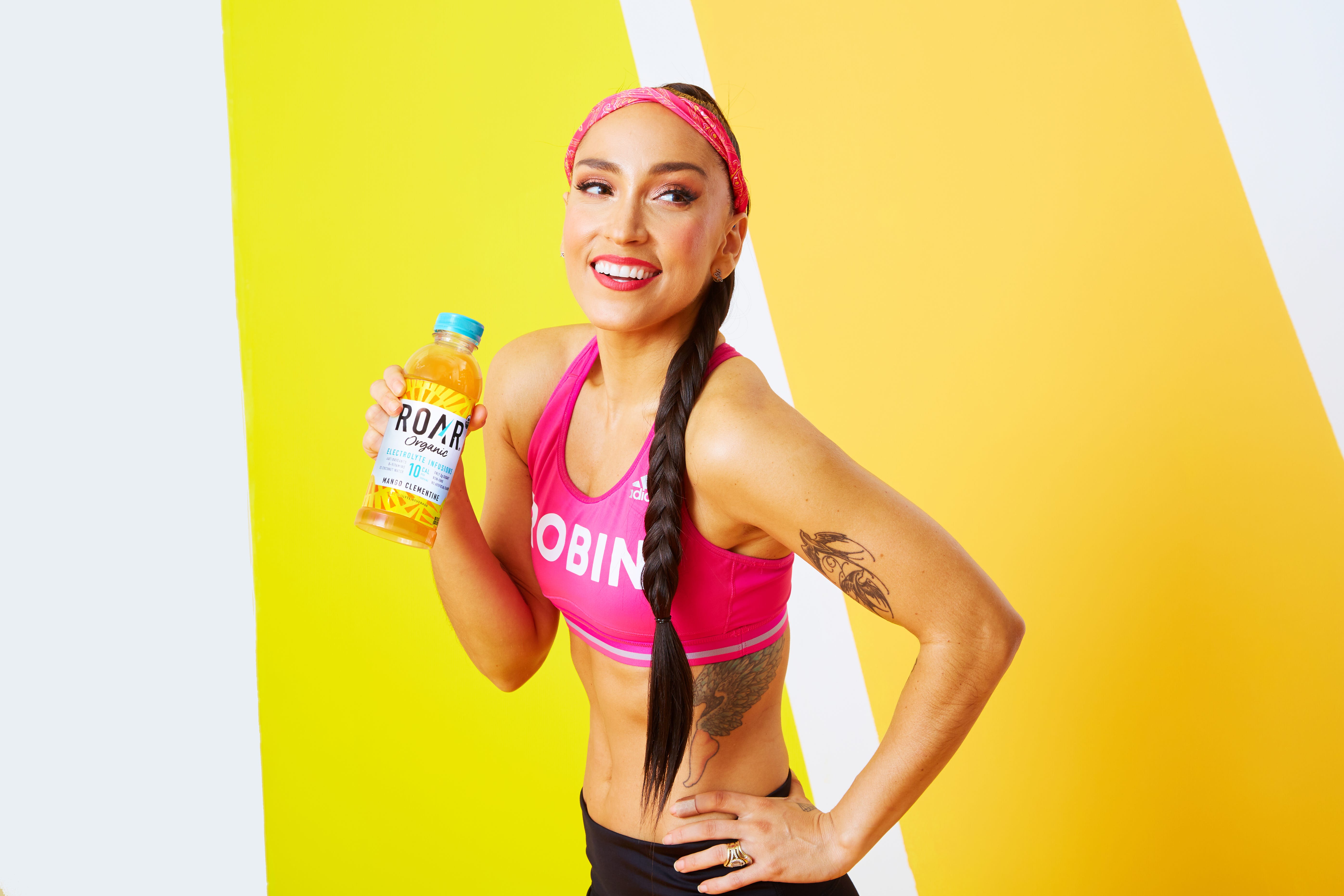
Robin Arzon
American instructor and author
18
APPEARANCES
15
PODCASTS
Nov 24, 2026


Kelly McGonigalGUEST
Does this make me feel better about myself? Does it make me feel better about life? And does this help me become more the kind of person I want to be in all my other roles and relationships?

Robin ArzónGUEST
That is such an important acknowledgement that I don't think we talk about enough.
Robin ArzónGUEST
I actually think that the entry points to that through movement and workouts specifically are earned.
Robin ArzónGUEST
You can read a podcast, you can read a Well article about it, you can get a coach, you can take a Peloton class, but then at some point you just have to jump in the game and do it.
Robin ArzónGUEST
And the after effect, befriending that version of yourself that kept showing up, There is no amount of money on that.
9 MINS LATER
Danielle FriedmanMODERATOR
We have just a few more minutes, but I would love to ask both of you how you see the connection between physical activity and emotional resilience, both kind of globally and maybe how you've experienced that personally.

Spencer DukoffHOST
Are there, and not even in a posting likes way, but are there metrics that you're monitoring or using? There's kind of the feeling of recovery and optimization, but then is there anything that you're looking at quantitatively to kind of like, okay, that explains something or I'm trying to optimize towards this piece?
Robin ArzónGUEST
I do have it wrapped in a gold and diamond ring because I love myself when I splurge.
Robin ArzónGUEST
I will pay attention if it's saying that I have major or minor strains going on in my body.
7 MINS LATER
Spencer DukoffHOST
It's let's give ourselves a little bit of grace to really focus on different pieces and be like our full self.

speaker_3ADVERTISER
I think, uh, uh, better question
Robin ArzónGUEST
is whether you're making intentional choices with how you spend your day and if that's in alignment with your season of life and your values.
Robin ArzónGUEST
I believe in being a multi-hyphenate and that we can wear many hats, but it's not necessarily in one moment.
Robin ArzónGUEST
And it's because I'm delegating and I'm trusting loved ones in my life to take on that role and love her.

Kim RittbergHOST
And in truth, it's what do I want for this season of life? Or what is my priority in this month or in this year? And like, do you feel like the term work-life balance is something that isn't helpful for people because it makes you think you need that?

Robin ArzónGUEST
But in writing He Eats a Hustle, the initial table of contents, I literally just went down My most asked questions, the most frequently asked questions in interviews by folks on social media, by members at Peloton.
Robin ArzónGUEST
And the number one question as a vegan athlete was, how do you get your protein? And have you really built muscle eating regularly? plants and plant-based foods.
11 MINS LATER

Dani NierenbergHOST
And in the era of GLP-1s and the era of, you know, going back to this sort of skinny culture from the 90s, how do you encourage the women who you're both teaching and Peloton and folks who are, you know, trying to cook from this cookbook to think, you know, that strong doesn't necessarily mean being super.

Robin ArzonGUEST
... nutritional yeast for additional B12 and that cheesy boost without the dairy.
Robin ArzonGUEST
It- i- it develops this, like, nice sweet glaze, um, with a little bit of salt.
Robin ArzonGUEST
Uh, of course, the, the spice that I kind of go to most readily is usually sazon and adobo, and that kinda gives me, like, more of a Latin vibe.

Alison StewartHOST
What advice do you have for people to try to maintain sort of an intentional diet when you have a demanding job?

Robin ArzonGUEST
Like, to give you some context, five sets of five reps, five by five, is a classic strength training protocol.
Robin ArzonGUEST
But obviously, the weight that you're selecting for those five reps is challenging.
Robin ArzonGUEST
Like, on a scale of one to 10, a good sweet spot is, like, it feels like a seven or an eight.
Robin ArzonGUEST
Are you on your period? Are you stressed out from work? Like, these are all things that inform how a workout's gonna feel, right? So just 'cause something's written on a piece of paper doesn't mean, like, it's gonna go as planned.
Robin ArzonGUEST
But, you know, I, this morning, had a front squat, back squat workout with a barbell, and I know I'm working off percentages.
15 MINS LATER


Robin ArzonGUEST
... f- you know, freelance little articles and things for whatever publication would take me.
Robin ArzonGUEST
And, um, uh, and then it started becoming branded work, and that was when influencer marketing was kind of starting to become a thing within the marketing, um, canon.
Robin ArzonGUEST
And I was very grateful to be a part of it because once I started being able to pay, uh, my rent with things that I loved, namely running and talking about running and taking photos running, it became an entry point into a brand new life.
Robin ArzonGUEST
Like, I remember two weeks before the London Olympic Games in 2012, I had quit my law job and I made these little tiny, these little tiny cards with my, one of my Instagram photos, my Instagram handle, my phone number, and my email, and I thought, "I don't even know who I'm gonna give these to, but these little business cards I'm just gonna put in my back pocket." And I was in a Nike store, and Mark Parker, former CEO of Nike, g- walks in and said, "Hey, you have great style.
Robin ArzonGUEST
You should, you should do something with that." And I was like, "Funny you ask."


Robin ArzonGUEST
I mean, if you look at the most obvious examples or applications of recovery, they are in our, in our physical state and how, uh, how we need the recovery to grow muscle.
Robin ArzonGUEST
And it's actually not during the workout where you're making any of those adaptations.
Robin ArzonGUEST
It's later, you know, call it twelve to twenty-four hours later when, when the muscles are repairing, when your energy system is repairing, when your nervous system is, is calming down.
Robin ArzonGUEST
The, uh, that was, that was the l- hardest lesson I had to learn, um, 'cause I am a pretty high-octane individual.
17 MINS LATER

Elizabeth SteinHOST
Yeah.
Robin ArzonGUEST
So it'll be, like, a 60-minute ride or a 60-minute run, sometimes a little longer.
14 MINS LATER
Elizabeth SteinHOST
So first, like, when did the concept come together? And if you could talk a little bit just about the basics of, like, your nutrition philosophy.


Robin ArzonGUEST
Actually, 95%, it increases your, your, um, completion of your fitness goal by 95% if you do it with an accountability partner-
Robin ArzonGUEST
That's just a measure of how hard our heart is working, and generally, if you're going to, um, try to assess your heart rate zones, you're gonna do 220 minus your age, and Zone 2 is 60 to 70% of that number.


Robin ArzónGUEST
In 30 minutes or less, I'm giving people my hot take on a specific wellness, um, or lifestyle topic and then a call to action as well as a toolkit to do something about that.
Robin ArzónGUEST
So these aren't just-... ephemeral or esoteric things that we're wrestling with, it's like this, I w- I, I, I consider that every single episode we're adding a tool to the toolkit, and not everybody is gonna use that same tool in the same exact way.
Robin ArzónGUEST
But I think, you know, if you listen to a year's worth of episodes, you're gonna have 48 tools in your toolkit, and you never know when you're gonna have to dig back into, um, self-talk or taking creatine or, you know, thinking about aging and longevity and, um, of course, like movement is gonna be a part of the conversation, but we're going much broader than that.
Robin ArzónGUEST
This is, um, me really stepping into the intersection of, um, of wellness, of business, of entrepreneurship, of motherhood, and I think a lot of folks are multi-hyphenate in that way.
16 MINS LATER
Robin ArzonGUEST
And you'll see across all three ladies, even though their goals are different, cardio and strength is an element in each of them.


Robin ArzonGUEST
So I've been a plant-based athlete for... over 12 years, and I wrote Eat to Hustle because I wanted to demystify and uncomplicate what feels like should be straightforward, but now when we have this onslaught of information and pressure, and one more thing to add to the to-do list is it can get really overwhelming, almost to the point of paralysis.
Robin ArzonGUEST
And so my perspective, first of all, with the book, which is obviously infused with my food philosophy as somebody who's not a classically trained chef.
22 MINS LATER
Sarah Rob O'HaganSOUNDBITE_SPEAKER
Thanks so much and have fun, ladies.
JamesAUDIENCE
So, you know, if it's not too personal, I'd love to ask her how being Type 1 diabetic, uh, impacted, uh, her writing this book.
Robin ArzónGUEST
Um, the, the carb counts obviously are relevant to how much insulin we are gonna give ourselves in whatever system or shots that we are using.
Robin ArzónGUEST
I was already an athlete when I was diagnosed as an adult, so I was very body aware of how, um, different foods affect my energy, how different types of movement affect my energy, and then of course, after being diagnosed as a Type 1 diabetic, um, that became even more granular and nuanced.
Robin ArzónGUEST
I would say fueling as a, as a plant-based athlete has really helped me with my T1D management, because my carbs are almost always paired with protein and fiber, which in fact-
7 MINS LATER
Alison StewartHOST
What advice do you have for people to try to maintain sort of an intentional diet when you have a demanding job?

speaker_15UNKNOWN
Mm-hmm.
Robin ArzónGUEST
At the same time, I was also doing marathons and ultra-marathons, um, recreationally, but, like, obsessively, and I started writing my first book, Shut Up and Run.
Robin ArzónGUEST
And so I thought, "Oh, cool, I might have a point of view actually that is underrepresented in the marketplace right now." And that was when I decided to take the second leap, which any time you make a leap, you take that leap, it's like you're building wings on the way down.

Megan RapinoeHOST
Um, but why a, why a podcast? What's the in- inspiration for Project Swagger, and, like, what do you wanna get out of it?

Robin ArzonGUEST
I mean, it was decades ago now, but it does feel like it was just the other day.
Robin ArzonGUEST
In fact, the other day, I was walking by where the incident happened and I was just thrown.
Robin ArzonGUEST
It's funny when you look back at your own history and you're like, "Wow, I was right there, but also I'm a totally different person now." But to get your listeners in up to date, or into the story, on a Friday afternoon, I was entering my senior year at NYU, so college age, and I had planned to go to law school the following year.
Robin ArzonGUEST
And on the eve of graduation that year, so it was all very exciting times, I was meeting my girlfriends after work.
Robin ArzonGUEST
I was a paralegal at a law firm doing my corporate gig and a great day turned into a horror movie really within minutes.
34 MINS LATER
Ilana GolanHOST
So, can you share for us a hard moment that you needed to, like, lean into and say, "You know what? This is probably the wrong door that I'm knocking on."


Alex RodriguezHOST
First of all, I do want to know, like, how'd you go from being a lawyer to where you are now?
Robin ArzónGUEST
When I was 10 years old, you asked me, you know, back to school, what am I going to be? It was a lawyer.
28 MINS LATER
Alex RodriguezHOST
So when you think about your family office, how does your team look and how do you kind of vet deals and where do you see yourself in three to five years?
Robin ArzonGUEST
Yeah, I mean, it was decades ago now, but it does feel like it was just the other day.
Robin ArzonGUEST
In fact, the other day I was walking by where the incident happened and I was just thrown.
Robin ArzonGUEST
It's funny when you look back at your own history and you're like, wow, I was right there, but also I'm a totally different person now.
Robin ArzonGUEST
But to get your listeners in up to date or into the story, on a Friday afternoon, I was entering my senior year at NYU, so college age, and I had planned to go to law school the following year.
Robin ArzonGUEST
And on the eve of graduation that year, so it was all very exciting times, I was meeting my girlfriends after work.
31 MINS LATER
Ilana GolanHOST
So can you share for us a hard moment that you needed to like lean into and say, you know what? This is probably the wrong door that I'm knocking on.