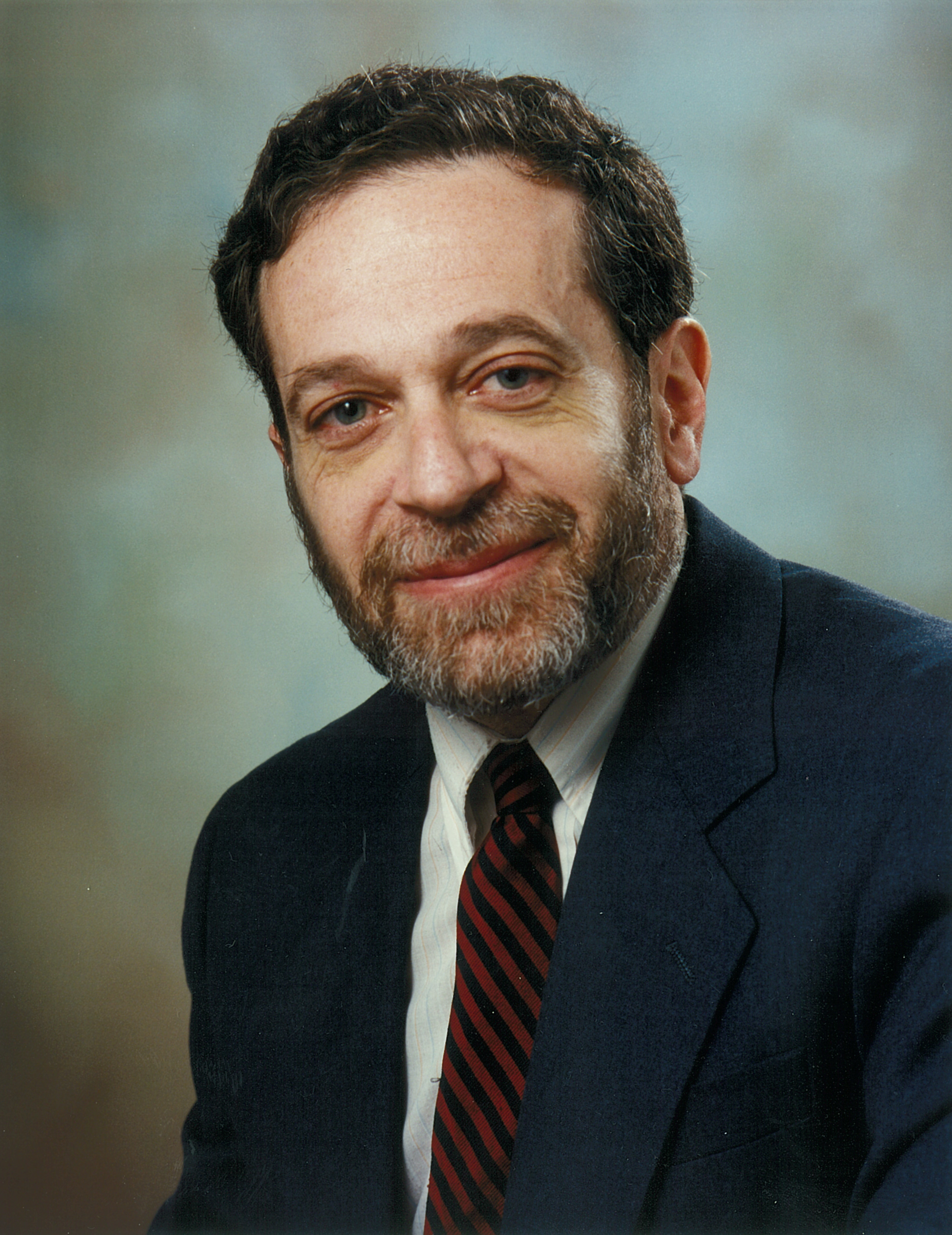
Robert Reich
Professor and former United States Secretary of Labor
47
APPEARANCES
28
PODCASTS
Sep 15, 2026


Robert ReichGUEST
And Lewis Powell wrote a memo that said to corporate America, and the chamber distributed it to every CEO in America.
Robert ReichGUEST
It said, "You have got to be much more active in politics, and you've got to put a great deal of money into political campaigns and into public relations and into even academe." And this was an extraordinary document, and this was the beginning.
Robert ReichGUEST
Uh, and I've, I only f- really found out about this because in the late '70s, I was at the Federal Trade Commission, and we were doing some, I thought, important work trying to protect American consumers and trying to deal with antitrust issues, monopolization.
Robert ReichGUEST
And Congress, particularly the House at that time, under the control of the Democrats.
Robert ReichGUEST
The House of Representatives stopped our appropriation, stopped the Federal Trade Commission, and I remember saying to the chairman of the Federal Trade Commission at that time, it was Michael Pertschuk.
19 MINS LATER

W. Kamau BellHOST
How can we mitigate, which is an important word, how can we mitigate the damage being wrought by a biased Supreme Court?


Robert ReichGUEST
You know, even, a, somebody who has taken one week of economics, even somebody who has not taken, ah, economics, who has just simply observed the world, understands that trade is generally speaking a good thing.
Robert ReichGUEST
Ah, we get the benefits of Canada's forests, Canada's aluminum, Canada's this, Canada's that, and they get the benefits of we- what we specialize in.
33:04
When you look at everything Trump is doing on the economy right now, what worries you the most?


Robert ReichGUEST
I think what we've had, Monica, is a steady erosion since the 1970s of our social contract.
Robert ReichGUEST
And by social contract, I mean what we owe each other as members of the same society.
Robert ReichGUEST
It had been the case, and I remember this, I'm old enough to remember this, that there was a social contract standing for the proposition that if you worked hard, and if you played by the rules, and if you tried to be a good member of your community and society, you would do better, your children would do better, everybody would do better, as the economy did better, as corporations did better, you would do better as well.
Robert ReichGUEST
We lost in part because of big money coming into American politics from big corporations and from very wealthy people, big money that changed the rules of the game, that changed the rules in such a way that almost nobody could make it except for The people already had a great deal of wealth and power and big corporations.
18 MINS LATER


Jonathan LemireHOST
Uh, so what would be an example or two of something they could do that would be big, that would make a difference?
Robert ReichGUEST
Uh, well, I think we're hearing it around the country in terms of progressive Democrats who are saying, uh, you know, number one, Medicare for all or at least a single-party player, payer for, uh, healthcare that's going to be affordable.
Robert ReichGUEST
And number three, uh, housing, making housing more affordable and more available, uh, particularly to young people in this country who now cannot afford a house.
Robert ReichGUEST
I mean, issue by issue, what people talk about over the kitchen table, uh, really are now central to the Democratic message.
Robert ReichGUEST
And I think that, uh, a lot of Democrats I speak with, a lot of Democratic candidates are not get- um, are not, are not getting off on, uh, the, the, the issues that Republicans wanna talk about, uh, you know, issues of wokeism, uh, or issues having to do with, uh, with, with the Democratic socialists of America.
Robert ReichGUEST
Uh, no, the Democrats are focusing where they should, on this issue of what can we do to make your life better off? I also expect the Democrats are going to be asking the same question that Ronald Reagan famously asked in 1980 at the end of his debate with Jimmy Carter, and that is, "Are you better off than you were at the start of this presidency?" And most people are gonna say no.

Mara GayPANELIST
What went wrong in the Democratic Party? How did the Democratic Party become so corporate, and where were those mistakes made? Was it NAFTA? Was it in compromising on single-payer healthcare? What went wrong?


Robert ReichGUEST
Uh, but let me just say, uh, there's a lot of studies that show that if we had a single-payer pa- a single-party payer, Medicare for All, it would be cheaper.
Robert ReichGUEST
Right now, so much of our medical costs are going into administrative costs, and that is unnecessary.
Robert ReichGUEST
Uh, this, I mean, milit- uh, if you wanna talk about fraud, waste, and abuse, go to the military.


Nermeen ShaikhHOST
So if you could talk about the significance of this, the value of stocks as opposed to the more common measurements of wealth or income distribution and how these plain numbers can be disputed.
Robert ReichGUEST
Well, I think this is very, very important because a lot of the administration, particularly the president, thinks the stock market is the major indicator of the success of the economy.
Robert ReichGUEST
I mean, for years, we've known that there is a big gap between the Wall Street and Main Street.
Robert ReichGUEST
Because, again, you've got the top, the richest 1% of Americans owning almost half all of the shares of stock available in the United States.

Nermeen ShaikhHOST
So if you could talk about the significance of this, the value of stocks as opposed to the more common measurements of wealth or income distribution and how these plain numbers can be disputed.
Robert ReichGUEST
Well, I think this is very, very important because a lot of the administration, particularly the president, thinks the stock market is the major indicator of the success of the economy.
Robert ReichGUEST
I mean, for years, we've known that there is a big gap between the Wall Street and Main Street.
Robert ReichGUEST
Because, again, you've got the top, the richest 1% of Americans owning almost half all of the shares of stock available in the United States.

Nermeen ShaikhHOST
The richest 10% own 92%." So if you could talk about the significance of this, the value of stocks as opposed to the more common measurements of wealth or income distribution, and how these plain numbers can be disputed.
Robert ReichGUEST
Well, I think this is very, very important because a lot of the administration, particularly the president, thinks the stock market is the major indicator of the success of the economy, and it's not.
Robert ReichGUEST
I mean, for years we've known that there is a big gap between, uh, the we- Wall Street and Main Street.
Robert ReichGUEST
Uh, because you, again, you've got the top, the richest 1% of Americans owning almost half, uh, the, all of the shares of stock available in the United States, and you've got the richest 10% owning 92% of all the shares of stock.
Robert ReichGUEST
So if the stock market goes up, uh, well, that's nice, I guess, for the people who own shares of stock, but it doesn't do anything for most Americans.
Robert ReichGUEST
And even if you throw in the 401[k]s, uh, and their, uh, you know, their, the, their, their pensions and everything else that may be connected s- to the stock market, it's only a very tiny portion of the stock market for most Americans.

Nermeen ShaikhHOST
The richest 10% own 92%." So if you could talk about the significance of this, the value of stocks as opposed to the more common measurements of wealth or income distribution, and how these plain numbers can be disputed.
Robert ReichGUEST
Well, I think this is very, very important because a lot of the administration, particularly the president, thinks the stock market is the major indicator of the success of the economy, and it's not.
Robert ReichGUEST
I mean, for years we've known that there is a big gap between, uh, the we- Wall Street and Main Street.
Robert ReichGUEST
Uh, because you, again, you've got the top, the richest 1% of Americans owning almost half, uh, the, all of the shares of stock available in the United States, and you've got the richest 10% owning 92% of all the shares of stocks.
Robert ReichGUEST
So if the stock market goes up, uh, well, that's nice, I guess, for the people who own shares of stock, but it doesn't do anything for most Americans.
Robert ReichGUEST
And even if you throw in the 401[k]s, uh, and their, uh, you know, their, th- their, their pensions and everything else that may be connected s- to the stock market, it's only a very tiny portion of the stock market for most Americans.


Robert ReichGUEST
Number one, we eliminate Trump's across the board tariffs because they they're import taxes.
Robert ReichGUEST
Number two, we'll get energy prices down by ending Trump's war in Iran and shifting to renewable sources of energy.
52 MINS LATER

David FeldmanHOST
Does that mean close to 37 percent of the United States economy is government spending? And if my math is correct, what does it mean if, let's say, 37 percent of our economy is what government spends? What does that mean?
Robert ReichGUEST
... we will be able to get back, but we may not be ever the same again, because trust is at the center of so many of our institutions, whether you're talking about NATO or FIFA or the Department of Justice.
Robert ReichGUEST
We never assumed that an American president could wreak havoc on these institutions.
Robert ReichGUEST
A- and so then in terms of my analogy, yes, we're going to have to lock a lot of doors and windows.
Robert ReichGUEST
We're going to have to invest a great deal of our time and energy, and maybe money, in buying locks and at creating a, a different kind of society that is less susceptible, less vulnerable to this kind of demagoguery.
Robert ReichGUEST
... my personal view, because I'm an optimist at heart, Jonathan, is that our next president is going to be elected because that president, whoever it's going to be, has so much integrity and so much humility and so much concern about institutional integrity that he helps mend the country.

3:42

And the betrayal by Donald Trump, who made many promises to them and instead has damaged their prospects.
Robert ReichGUEST
But another lens, if you excuse me, might be to say that we are in the midst of a revolution right now.
Robert ReichGUEST
People in this country began to see that the game was rigged against them or perceived that the game was rigged against them.
17 MINS LATER
21:39
I'd like you to have the last word here on, is there an American common good? And how should we think about it?
4:30
Um, why don't you tell us about, um, your experience there and about the importance of independent regulatory agencies? And we've just had a decision from the Supreme Court in the Slaughter case against the idea of the independence of these agencies to protect American citizens and consumers, and what that means.
Robert ReichGUEST
Uh, well, Sid, to your point, um, when I was at the Federal Trade Commission, we did a great deal to, uh, reduce the influence of monopolies on the American economy and also to reduce consumer fraud.
Robert ReichGUEST
Those were the two major roles, and they still are, supposed to be, of the Federal Trade Commission.
Robert ReichGUEST
Uh, even then, in the late '70s, uh, it was difficult to get stuff done because Lewis Powell, who, uh, was originally an attorney in Virginia, had helped the US Chamber of Commerce come up with a plan in 1971, uh, to increase corporate power in America, fearing that Nader and Nader's Raiders and all of the labor people who were becoming a little bit stronger, uh, would rob corporations of the kind of independence and power they had already attained.
Robert ReichGUEST
And Lewis Powell said that big corporations had to put more money into politics.
Robert ReichGUEST
Uh, by the time I got to the, uh, Trade Commission, Federal Trade Commission in the late '70s, Lewis Powell's memo was already being put into effect, and there were already huge amounts of money being spent against what we were doing at the Federal Trade Commission, uh, on monopolization and on consumer fraud.
21 MINS LATER
27:58
When you look at, uh, the amount of money that Elon Musk alone put into the campaign for Donald Trump, it was certainly enough to turn a small number of votes in a few states towards him, and, um, we don't put enough emphasis on the role of big money in politics.

Robert ReichGUEST
Uh, I mean, for example, if, uh, if, if companies can monopolize because they've paid off, uh, the, the executives and paid off, l- you know, the, the legislators, well, if they are able to monopolize, that means prices are gonna be higher than they would otherwise be.
Robert ReichGUEST
Uh, the reason that, uh, Peter Magyar did so well, uh, in Hungary, uh, is that he tied corruption to the, the worries and the financial worries of average people.

Robert ReichGUEST
And so I asked older, occasional, a few older boys to kind of be my protectors.
Robert ReichGUEST
And one of those older boys who was my protector is named, was named Michael Schwerner, Mickey Schwerner.
Robert ReichGUEST
And in 1964, I lost touch with them, you know, after I became a teenager, I didn't need older protectors.
7 MINS LATER


Paul ConstantHOST
But I, I feel as though deregulation slips through the cracks, and I was wondering if you could talk a little bit about how that functions in terms of, uh, income inequality.
Robert ReichGUEST
Uh, if you define trickle-down economics as giving benefits, uh, to the wealthy on the supposition that somehow those benefits are gonna trickle down to the middle class and the poor, uh, they haven't with regard to tax benefits.
Robert ReichGUEST
We've had now years, starting with Ronald Reagan, in which we've seen, uh, that tax benefits that go to the wealthy don't help anybody.
Robert ReichGUEST
They don't actually end up raising wages for people in the middle or at the bottom.
Robert ReichGUEST
Uh, and we've also seen it with regulations, uh, particularly under the Trump administration, uh, where regulation after regulation has been either repealed, curtailed, or not enforced on the supposition or on the promise that somehow the economy is going to grow, these businesses are going to be doing better without the regulations, and everybody therefore is going to be better off.
Paul ConstantHOST
Uh, when you were labor secretary for Bill Clinton, uh, can you talk a little bit about some examples, uh, that you might have had with, uh, considering whether a protection was good for the people or bad for, uh, the people and sort of the cost-benefit analysis that you had to do?


David PakmanHOST
And I wonder to what degree that's something they've concluded, maybe based on being in that age range themselves, if the question makes sense.
Robert ReichGUEST
Let me be very, very candid about this, because I am 10 days younger than Donald Trump, which means... that in nine days from now, I'm going to also be 80 years old.
Robert ReichGUEST
Now, if you are 79 on the verge of 80, if you are commencing your ninth decade on the earth, you don't have as much, let's say, pizzazz as you had before.
Robert ReichGUEST
Your brain is still, hopefully, I mean, I like to think that my brain is pretty good, but there are a lot of people I know who are my age who are slowing way down in terms of their brain functions.
15 MINS LATER

Robert ReichGUEST
... now, if you are 79 on the verge of 80, if you are commencing your ninth decade on the Earth, you don't have as much, uh, let's say, uh, pizzazz as you had before.
Robert ReichGUEST
Uh, but, uh- There are a lot of people I know who are my age who are slowing way down in terms of their brain functions.
David PakmanHOST
How does it work when-- Is the idea that at some point Trump will be gone and nobody will ever talk about the 2020 was stolen thing again? Or what's the off-ramp from this?


Robert ReichGUEST
in which they are actually going to give you something back, a good or a service.
Robert ReichGUEST
But when you are in a bribe economy, what you're paying for is not just a good or a service, it is actually a government policy, or it is a government guarantee not to do something, uh, that is going to enlarge your income and your wealth.
Robert ReichGUEST
Uh, and that bribe economy is not obviously as large as the regular economy, but the bribe economy shapes the regular economy.
Robert ReichGUEST
I mean, what the Trump administration has done is essentially eviscerate antitrust.
13 MINS LATER

Ali VelshiHOST
I probably only listed a quarter of the things I could have listed that seem untoward about the dealings between the president and the president's friends and other countries.
Robert ReichGUEST
Well, yeah, I think one of the most important themes here is that in previous administrations, and I've been involved in, actually worked for three, uh, presidents, uh, one Republican.
Robert ReichGUEST
Uh, in previous administrations, you have had a, a specialized group of people in the State Department, uh, diplomats, people who, uh, have developed an understanding of a particular country, like Iran, uh, or like China, and they really do, uh, have a very central role to play in American foreign policy and what a president does when he visits one of these places or when he makes decisions about going to war, uh, such as Iran.
Robert ReichGUEST
This administration instead has the president's son-in-law, uh, uh, Steve Witkoff, who's another real estate developer, a president's friend, uh, a bunch of CEOs who are part of the delegation that went to China with the president, but where are the diplomats? Where are the people who are supposed to know what is going on?Uh, there is really no distinction at all in this administration between the personal business interests of various people who are advising the president, including his family, uh, and America's supposed national interest.
Ali VelshiHOST
Our prices are higher, our cost of living is higher because of tariffs and the war in Iran.
speaker_3HOST
What Hegseth said was just BS.
Robert ReichGUEST
[laughs] Yes, that's a good summary of exactly what the Trump regime is trying to pull off.
speaker_3HOST
This is actually a thing caused by the Trump administration.

Robert ReichGUEST
I mean, I, I used to be chairman of a group, a citizens group called Common Cause, and I went around the country arguing against partisan gerrymandering.
Robert ReichGUEST
I, I argued that what states really do need to do is to, is to give the mapping of districts to independent commissions, and I still believe that.
Robert ReichGUEST
Uh, but how are you going to deal with the situation that we've found ourselves in after Greg Abbott, the governor of Texas, at Trump's insistence, uh, gerrymandered in the middle of a, you know, a, a 10-year census process where you are not supposed to gerrymander at all.
Robert ReichGUEST
Uh, he gerrymandered and redistricted solely for the, and obviously, uh, for the purpose of creating more Republican seats.
Robert ReichGUEST
Well, I, I, you know, uh, what Democrats have to do is have a detri- you know, a deterrent to that.
11 MINS LATER

Stephen A. SmithHOST
Just enlighten my audience about the 10 most important ways to resist right now.


David MarrHOST
Is the deficit the continuing limiting factor for social reform in the United States?
Robert ReichGUEST
Because what Republican presidents have done since Ronald Reagan— is they've run huge deficits.
Robert ReichGUEST
In fact, if you didn't have the Reagan and the Bush, George W. Bush and the Trump deficits, you actually would have an economy in the United States that was very financially stable and very good.
Robert ReichGUEST
But those Republicans, those Republican presidents intended to starve Americans The beast, in the words of David Stockman, who is Ronald Reagan's budget director, starved the beast in the sense that making it almost impossible for any subsequent Democratic president to do much because, you see, the deficits were so large.
9 MINS LATER
David MarrHOST
What is it about his followers that they don't just turn their backs on him at that point and say, you're a fraud, mate? Well,
Robert ReichGUEST
I mean, Louis XIV, uh, whether [laughs] you know, he said, "The state is me." Well, that's not what we have in the United States.
Robert ReichGUEST
We have a society in which we want the person who is the president to be like George Washington.
Ali VelshiHOST
Let me ask you, for people who aren't sure, who are just worried about where we are right now, what does just showing up tomorrow do?
Robert ReichGUEST
And we see that over and over again, not only in the war, uh, in Iran, uh, that he doesn't know how to get out of, and he's really cornered now given the Strait of Hormuz, uh, but also in terms of what he's trying to deflect attention from, which is, number one, the economy, but number two, it's not just the courts, uh, finding that he abused his power, it's also Jeffrey Epstein.
Ali VelshiHOST
seven out of the eight FBI documents, interview documents, had disappeared, and that was, uh, becoming an interesting story, and then suddenly Iran gets hit.
Robert ReichGUEST
Uh, and, and Donald Trump, what he's very good at, the one thing I'll give him a lot of credit for, is he understands the media.
Scroll for more appearances