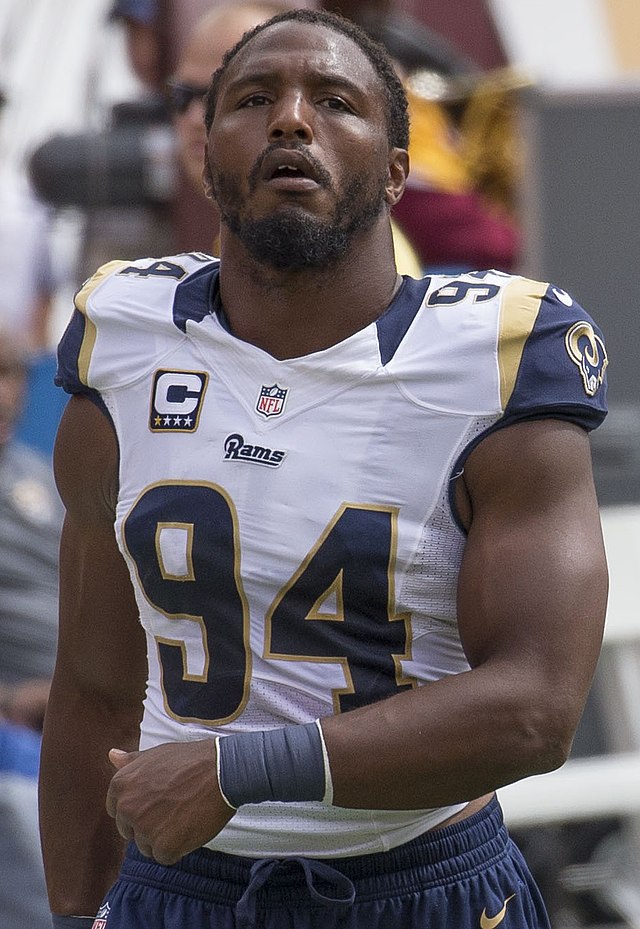
Robert Quinn
Philadelphia Eagles defensive end
3
APPEARANCES
3
PODCASTS
Nov 6, 2026


Greg TishHOST
How long did it take for you to kind of set in to the business before it came more solid?

Robert QuinnGUEST
And then they came to Tallahassee and worked with me for a few weeks to really help me hone the skills.

13:29
How does that affect people on the ground, that it is something that affects people's lived realities and assists in the fight for freedom of expression and academic freedom, but also quite often, as we mentioned earlier, that some of these people are imprisoned today?
Robert QuinnGUEST
And again, I confess I'm not a scholar, so I'm not going to say fall into philosophy and political theory, but just this half a step, right, which is The claim to academic freedom, just like the claim to any other freedom or right in terms of human history, is still relatively revolutionary, right? And at the heart of all of those claims to rights are an assertion that every human being has a dignity and that arbitrary exertion of power against that dignity is wrong, right? And that's what the whole human rights movement is about, is recognizing that dignity and protecting against arbitrary power, whether that's state power or unjust majority power over minorities or unjust minority power over majorities, right? So that's what all of human rights is about.
Robert QuinnGUEST
What makes the academic freedom rights so important to that contest, that mission, is academic freedom is what allows the development of of honest information about very complicated issues, right? So the media, which you mentioned earlier, that's about developing the rapid information, but the university is where we develop the complex information, right? So it's really, really central to that.
Robert QuinnGUEST
So at the end of the day, and now I'm coming back to the casework, we're engaged in a contest of legitimacy.
Robert QuinnGUEST
Our position is that scholars are engaged in fully legitimate activity when they ask questions of power and when they share information with the public, as long as they're following their professional and ethical standards, right? Attacks on higher education or on universities or on students are fundamentally the state or some other authority saying, no, that question is illegitimate.
14 MINS LATER
29:16
Given the current debates worldwide around migration, the rhetoric, the anti-immigrant rhetoric, can you give us examples of the contributions of these scholars in their new homes, to their new institutions after they have relocated?

13:29
How does that affect people on the ground? That it is something that affects people's lived realities and assists in the fight for freedom of expression and academic freedom, but also quite often, as we mentioned earlier, that some of these people are imprisoned today.
Robert QuinnGUEST
I, I think to answer that, we gotta take a half step back, and again, I confess I'm not a scholar, so I'm not gonna say full into philosophy and political theory, but just this half a step, right? Which is the claim to academic freedom, just like the claim to any other freedom or right in, in terms of human history, is still relatively revolutionary, right? And, and at the heart of all of those claims to rights are an assertion that every human being has a dignity, and that arbitrary exertion of power against that dignity is wrong, right? Uh, and that's what the whole human right movement is about, is recognizing that dignity and protecting against arbitrary power, whether that's state power or unjust majority power over, over minorities, or unjust minority power over majorities, right? So that's, that's what all of human rights is about.
Robert QuinnGUEST
What makes the academic freedom right so important to that contest, that, that mission, is academic freedom is what allows the development of honest information about very complicated issues, right? So the media, which you mentioned earlier, that's about developing the, the rapid information, but the university is where we develop the complex information, right? So it's really, really central to that.
Robert QuinnGUEST
So at the end of the day, and now I'm coming back to the casework, we're engaged in a contest of legitimacy.
Robert QuinnGUEST
Our position is that scholars are engaged in fully legitimate activity when they ask questions of power and when they share information with the public, as long as they're following their professional and ethical standards, right? Um, attacks on higher education or on universities or on students are fundamentally the state or some other authority saying, "No, that question is illegitimate.
Robert QuinnGUEST
You can't do it." And they call scholars traitors, and they call them immoral, and they call them enemies of the state or enemies of the people, and they use that counter-narrative, that negative, illegitimate narrative to justify firing them and throwing them in prison and doing violence against them and closing universities or doing surveillance of universities and so forth.
Robert QuinnGUEST
So, so everything we're engaged in is defending the legitimacy of serving the public by asking questions of power.
13 MINS LATER
29:15
Um, given the current debates worldwide around migration and the rhetoric, the anti-immigrant rhetoric, can you give us examples of the contributions of these scholars in their new homes to their new institutions after they have relocated?