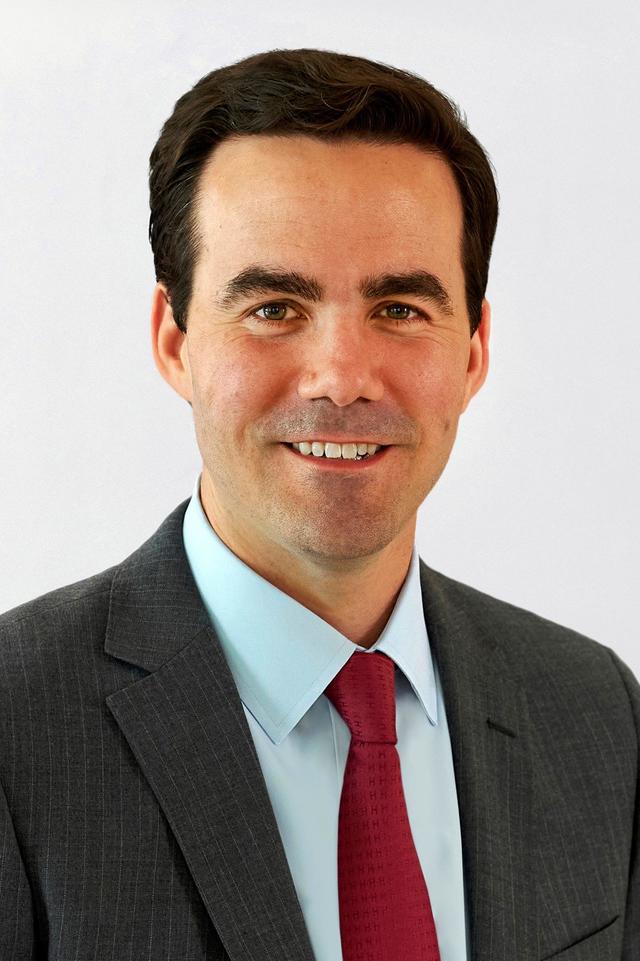
Robert Costa
American journalist
10
APPEARANCES
6
PODCASTS
Oct 26, 2026


Robert CostaGUEST
They're watching these top Republicans, voters like you spoke to earlier today here in Texas, and they're worried some of these Republican voters are going to be drifting toward the Democrats.


Major GarrettHOST
So, Robert, this is an example, as I said in the cold open, power of the president's endorsement, but also why Ralph Norman? Now, because he endorsed Nikki Haley, the only member of the South Carolina Republican delegation to do so in 2024, President Trump never forgets things like that.
Robert CostaGUEST
In 2023, I was at Nikki Haley's presidential announcement in Charleston, South Carolina, at this kind of shed in Charleston.
Robert CostaGUEST
And Ralph Norman was there, and he was enthusiastic as you could be about Nikki Haley.
Robert CostaGUEST
Understandably, a congressman from South Carolina endorsing a South Carolina presidential candidate, not that surprising.
Robert CostaGUEST
He could have just stayed back, and he thought Haley was the direction he wanted to go.


Robert CostaGUEST
Well, Congress has a, a kind of a better job these days than a lot of, uh, people.
Robert CostaGUEST
They're about to take a five-week recess in the House starting on Thursday of this week, and a lot of Americans, uh, don't believe Congress is doing a good job.
Robert CostaGUEST
If you look at Gallup's polls, for example, they say nearly nine in 10 Americans don't like Congress.
Robert CostaGUEST
So I tried to understand why that is, and not just to, to really focus on the inaction of Congress, 'cause sometimes we talk about Congress and we say, "Oh, they're not passing a lot of bills.
Robert CostaGUEST
That's a bad thing." Well, many Americans who, let's say on the conservative side, they, they're fine with Congress not passing a lot of bills.
Robert CostaGUEST
So r- measuring Congress only by legislative output, I don't believe as a journalist who's nonpartisan is the best way of measuring why people dislike Congress.
5 MINS LATER
9:45
W- what happens on January 20 of, of 2027 when a new president comes, if it's a Democrat?

Robert CostaGUEST
When you look back to 2015, Donald Trump comes into the presidential race, comes down the escalator at Trump Tower in New York, and he is immediately written off by a certain segment of the political establishment in both parties.
Robert CostaGUEST
But one group that was not writing him off, even at that early stage, was the conservative wing of the GOP, particularly the evangelical Christian wing, the religious voter wing, the conservative Catholic coalition inside the Republican Party.
Robert CostaGUEST
Trump, some people forget, had hired someone named Chuck Laudner to run his Iowa campaign in 2015, 2016.
Robert CostaGUEST
And why does that matter? Because Chuck Laudner was most known at that time for running Rick Santorum's 2012 Iowa campaign.
Robert CostaGUEST
And Santorum had coupled together a blue-collar conservative populist message with his own conservative religious views to surge to a come-from-behind Iowa win, a narrow victory over Mitt Romney in the 2012 Iowa caucuses.

Scott CarterHOST
Future bosses figured that you were conservative and that's how you got assigned eventually to Trump.
Robert CostaGUEST
Very careful and revealing about how he's trying to navigate being President Trump's biggest booster as the president seeks a peace deal, and as the president deals with Prime Minister Netanyahu.
Robert CostaGUEST
But it's evident in the conversation we had on Tuesday morning that Vice President Vance is both President Trump's ally and governing partner, but also someone who has his own worldview, and he has his own foreign policy outlook.
Robert CostaGUEST
Not that he's articulating and advocating, uh, but it's been reported that the president has said publicly even that JD Vance has a philosophically different view of military intervention in places like the Middle East, and they grapple with that behind the scenes.
Robert CostaGUEST
And you see him grappling with how to handle maybe his own wariness of Prime Minister Netanyahu on some fronts, saying he's made some mistakes, but not wanting to call him out too much that it would rupture the fragile relationship.

Nancy CordesHOST
Uh, so, you know, does that, you know, more cautious approach, does that create any tension behind the scenes between these two men?
Robert CostaGUEST
Well, it certainly creates a political tension, perhaps not between those two, but for the Republican Party.
Robert CostaGUEST
That's why I asked Vice President Vance, "Do you believe a deal is going to happen before the midterm elections?" Because when I talk to Republicans on Capitol Hill, they don't want this issue lingering over them as they face voters in November.

Robert CostaGUEST
Now, that's interesting person to watch, because he's not in the spotlight, not really a splashy guy, but a young Democratic governor from the South.
Robert CostaGUEST
You think about the, when, when have the Democrats come back in American political history? Think about Watergate, the Democrats trying to really make an inroad again for the first time since Johnson in '64.
Robert CostaGUEST
After 12 years of Republicans, Reagan, Reagan, Bush, in 1992, who do they go to? The outsider from the South, Bill Clinton, the unknown governor from Arkansas.
10 MINS LATER

Stephen A. SmithHOST
How do you maintain a non-partisan reputation at CBS when the very act of fact-checking this particular president's claims is viewed by half the country as a partisan attack?
Robert CostaGUEST
Stephen, you mentioned our conversation at the beginning of, uh, this discussion.
Robert CostaGUEST
That doesn't mean you don't hold them to account, but you don't come in with an assumption about whether this person can win, whether this person's smart or dumb, whether they're cool or not.
Robert CostaGUEST
It's not the job of the press, in my view, to start coming into any kind of coverage with a hard assumption about what is and what's not.
6 MINS LATER
Stephen A. SmithHOST
Considering how much you've been around all of this, my last question to you would be this: Based off of what you've seen last night, what do you think is likely to happen with the upcoming midterms, based off of what you've seen last night? Will it be more of the same, or does change seems to be on the verge of arriving in Washington, where, dare I say, the Democrats ended up- end up winning the House back or the Senate or whatever, and Trump's gonna have a lot more to deal with moving forward? What do you foreshadow, considering what you saw last night, if anything at all?
Stephen A. SmithHOST
We need to make sure that that's addressed." Your mentality is that they're doing the right thing with their standoff with this?
Robert CostaGUEST
If you go around this country and you say to people, "Do you know who Senator Chuck Schumer is? Could you look m-, a- at him in a lineup and place him? Could you place Representative Hakeem Jeffries out?" Most people don't know who the Democrats now are.
7 MINS LATER
Stephen A. SmithHOST
I don't care, I'm gonna do it anyway, but...I'm wondering what your thoughts are about Mamdani winning and what that would mean for America, especially compared, comparing it to what we saw, one would say, during the Biden administration, what those times were like.


John HeilemannHOST
We'll do this, we'll do a book about, uh, we'll do your, we'll do, I'll, I'll ghostwrite your memoir as a young rock journalist that will be called-
Robert CostaGUEST
No, clearly my method is to go to more esteemed writers and learn, so you're next.
Robert CostaGUEST
Well, I, I think we gotta, you know, we gotta pause on the Hunter Biden thing for a second.

Mike MurphyHOST
So the Supreme Court has said, "You made a mistake, you gotta bring him back." Trump says, "Court shmourt, I'm the boss around these parts." What happens?
Robert CostaGUEST
Well, I think yesterday was such a prism, such a microcosm of what is going on in the United States with the Trump Administration since day one of 2025 and their, uh, his inauguration.
Robert CostaGUEST
And who was hovering over the couch? You played Secretary Rubio, interesting, but who was hovering over Rubio on the couch? Stephen Miller.
Robert CostaGUEST
I mean, Jonathan and I were c-covering Trump 10 plus years ago, and Stephen Miller was this unknown aide to Jeff Sessions, the Alabama senator, who would write these long, long emails to reporters about immigration policy.
42 MINS LATER