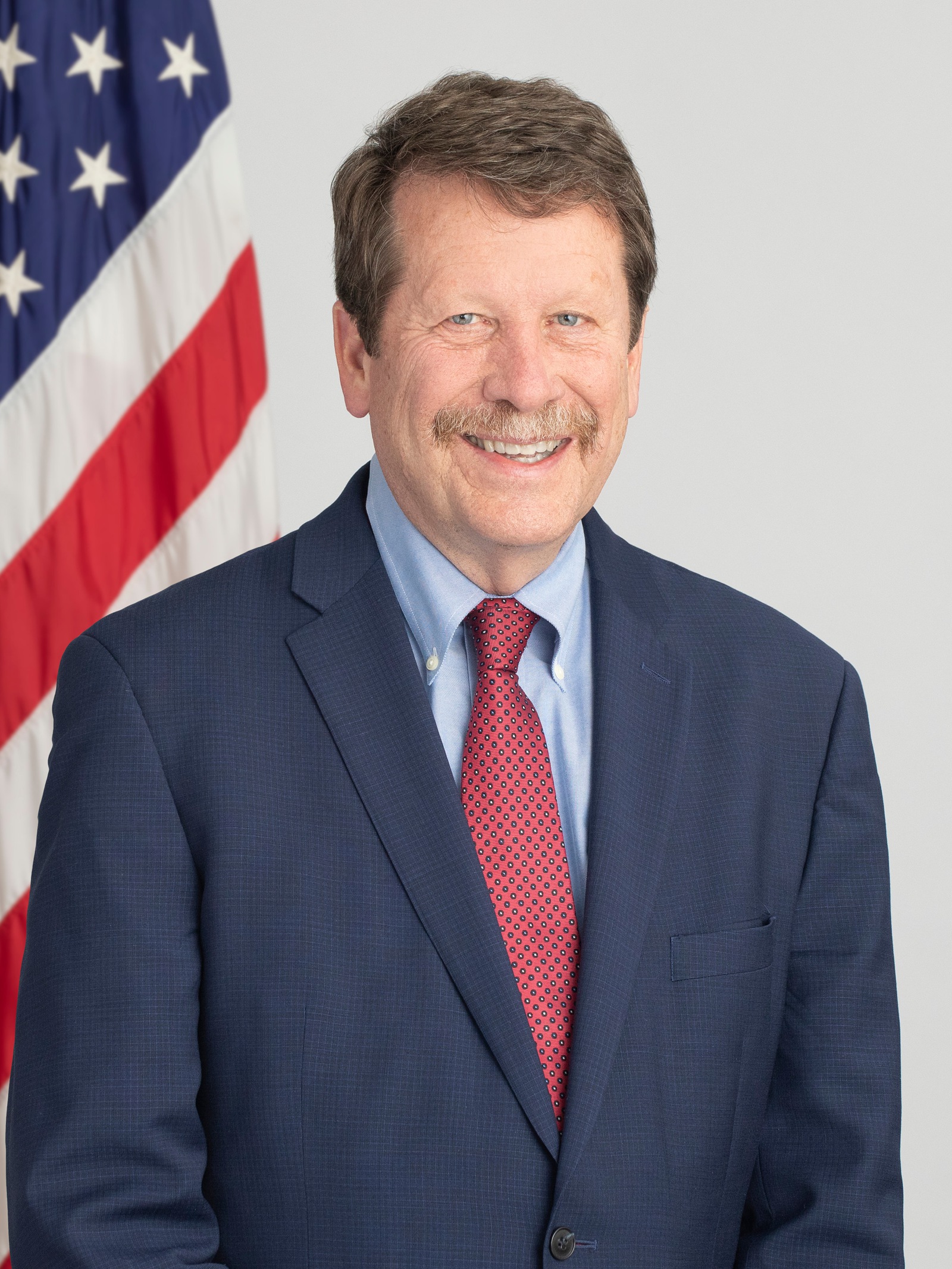
Robert Califf
Former United States Commissioner of Food and Drugs
11
APPEARANCES
10
PODCASTS
Oct 5, 2026

Nicholas KatmanHOST
What changes do you think need to occur for these treatments to become accessible to populations that are disadvantaged?

Robert CaliffGUEST
And here's where I have to point out, you know, I've been a political appointee twice.
Robert CaliffGUEST
And so I really think we've got a system right now which highly rewards pharmaceutical innovator companies for finding new drugs.
Nicholas KatmanHOST
What do you think needs to be known about the risks and responsibilities? Rather, what should the responsibilities of regulators and lawmakers have in responding to these kind of emerging gray areas?


Robert CaliffGUEST
There's one really important lesson that I haven't said as much about as I probably should have.
Robert CaliffGUEST
In junior high school, I was a basketball fanatic because our house backed up on the elementary school with the asphalt courts.
Robert CaliffGUEST
And at the time, Frank McGuire had come down from University of North Carolina to coach the Gamecocks.
Robert CaliffGUEST
And for whatever reason, they used our asphalt court for their summer practices.
7 MINS LATER

Robert CaliffGUEST
So I'm sure that over time, the full effect of DOGE will be analyzed by many people.

Major GarrettHOST
So it's somewhat hard to get people to remember what they consumed, where they consumed if it was two weeks ago.


Kelly EvansHOST
So talk a little bit about, from your point of view, has the FDA done everything it can here? Does this have anything to do with the changes that have been made with the MAHA movement and everything else? What are the facts? What do we know?
Robert CaliffGUEST
Well, I don't have a whole lot of facts on hand, 'cause so much is happening and not a lot of it has been talked about publicly, but I think your reporter did a great job actually just now of sort of summarizing very succinctly, uh, what the issue is.
Robert CaliffGUEST
This is a very difficult test to do, um, and it's not uncommon to have tests that are right on the borderline between positive and negative.
Robert CaliffGUEST
Remember, you're trying to get a small amount, um, uh, of this parasite that's in a head of lettuce, isolate the DNA and amplify it, and then try to do the test.

Robert CaliffGUEST
Well, first of all, I think it's a real privilege to be, uh, in the leadership position at a place like FDA.
Robert CaliffGUEST
It has so much influence over the day-to-day lives of people and, and that's what I think makes it challenging also.
Robert CaliffGUEST
Um, in the practice of medicine, you do make a lot of decisions, particularly in my specialty of cardiology, that have serious implications for individuals.
Robert CaliffGUEST
But, um, at the FDA, you know, decisions that are made can affect the entire country.
Robert CaliffGUEST
So there's a lot at stake, and that leads to a lot of interest and a lot of pressure.
40 MINS LATER


Jim WeissHOST
How did it happen? I mean, it's not like you walked in and said, hey, I want to work at the FDA, did you?
Robert CaliffGUEST
We started out with a study group trying to figure out what to do about heart attack.
Robert CaliffGUEST
Because we had access to computing at Duke that other people didn't have in the 1980s, we became a coordinating center for the clinical trials.
Robert CaliffGUEST
I still have a vivid memory of one afternoon, this young FDA person from CBER named Janet Woodcock called me up to yell at me for doing something wrong in a clinical trial.
Robert CaliffGUEST
And eventually, I was brought up several times for FDA commissioner in previous administrations, but things didn't work out.
7 MINS LATER
Robert CaliffGUEST
I mean, I think, as I said, I feel like I've been lucky in a lot of ways, but I came along at a time when all medical records were handwritten.
Robert CaliffGUEST
We were among the first people to enter medical data into computers to make sense of what was going on.
Robert CaliffGUEST
And then we went through this phase of, as I said, of electronic health records that were extraordinarily clunky and still are today, although they're getting better and better.
Robert CaliffGUEST
And during my time at Google, one of the things that I'm still trying to absorb is you could see all the possibilities.
Robert CaliffGUEST
And in fact, what's happening now, we were dreaming about in the late 1970s, early 1980s, but you just couldn't do it.
8 MINS LATER
Jim WeissHOST
used to optimize profit not to improve health outcomes good point can it help with food allergies you know i wanted to come back to that and i work with a food allergy group and we talk about it a lot i mean that seems like it's pretty safe overall but we still have that problem how do we fix that there we have to divide you know there's fundamental bacteria and viruses and


Wolf BlitzerHOST
How does this impact the FDA's role right now in safeguarding the nation's food and drug supplies?
Wolf BlitzerHOST
And let's not forget that the FDA has already endured thousands and thousands of layoffs this year alone under HHS Secretary Robert F. Kennedy Jr. What's your understanding of the impact that this is already having? The thousands of FDA officials who've been laid off and lost their jobs, others who are about to be furloughed and they're not going to be paid, they might get back pay after the shutdown, but that they could use this shutdown potentially to fire completely a lot of FDA officials.

Robert CaliffGUEST
Every time you do it, if you change the slices and dicing from the way it is now, you just end up with a different set of barriers across segments.
Robert CaliffGUEST
And this is one in particular that I'm very suspicious of for the reasons that Ned and alluded to, you really have a person in HHS who's not a vaccine skeptic.
Robert CaliffGUEST
And this is extraordinarily dangerous given the number of people whose lives are protected by vaccines today.


Claudia WilliamsHOST
I'm just curious for you, with all the perspectives you've had, with all the experience you've had, what would be your Make America Healthy Again agenda?
Robert CaliffGUEST
First of all, let me just say, I bet you didn't know this, by the way, Dr. Oz is a Duke man also.
Robert CaliffGUEST
But in general, what I'd say is we got the right problem, but the wrong solution set being offered, at least from what I can see right now.
7 MINS LATER
Claudia WilliamsHOST
What are you excited about now? What are you, what are you going to focus on and what really, um, has you going?

Ben GuptaHOST
Even if there's a self-evident quality to some of these cuts and their impact, h- how is this gonna impact the life of an everyday American?
Robert CaliffGUEST
Well, I think one, there are many analogies that are all kind of similar for something like this, and maybe pothole repair is a, is an easy example to grasp.
Robert CaliffGUEST
If you decide I wanna, um, uh, cut the city budget, the expenses, you could say, "We're not gonna fix any potholes for the next couple of years." And right away, you don't notice anything different, but then over time, the risk of something bad happening goes up incrementally over time, and eventually someone's gonna hit a pothole and something bad is gonna happen.
Robert CaliffGUEST
And so, I mean, we have industries that, in America that, and globally, that supply America, that produce pretty good products.
Robert CaliffGUEST
Um, and so you wouldn't see something right away, the, the, uh, for the average person.
Robert CaliffGUEST
But there will be, um, harm done by products that are deficient that didn't get inspected on time or safety reports that go out.
Robert CaliffGUEST
One place that was cut substantially was the communications part of government.
21 MINS LATER
Ben GuptaHOST
Wondering k- if you can zoom out 10 years from now and assuming that what's happening today with these cuts across NIH, research funding cuts, impacts on, uh, committees and expertise across FDA that oversees quality and safety across a range of products, what does that mean for the American patient 10 years from now when it comes to access to treatments that might save their life for, uh, uh, a cancer or say a chronic cardio, ma- uh, metabolic disease or something in between? Ca- c- can you make that real for us? W- what's the real patient impact here five, 10 years from now?