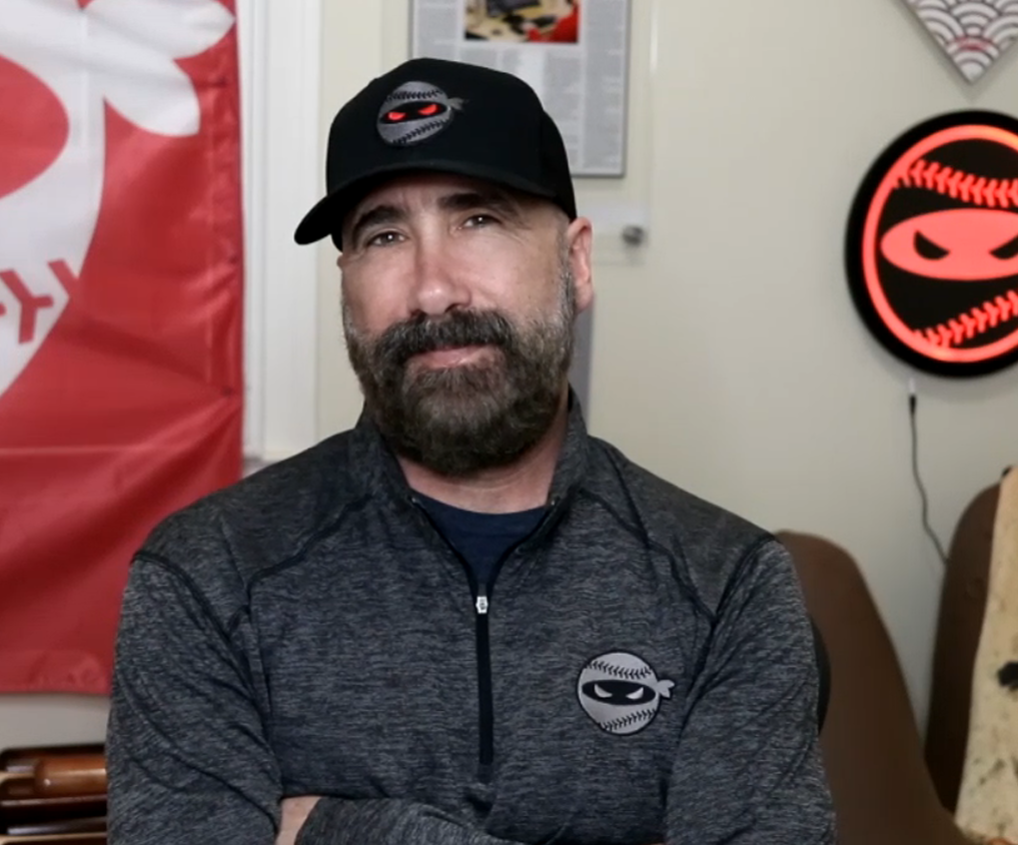
Rob Friedman
American baseball analyst
14
APPEARANCES
8
PODCASTS
Oct 15, 2026


Dan DakichHOST
What are the... what's the Brew Crew doing? What are they doing to silence the Dodgers' bats?

Rob FriedmanGUEST
Well, one of the th- they have a great pitching staff, and I, and very much underrated.
Rob FriedmanGUEST
Everybody knows Miziorowski, but Logan Henderson has been really good, and their entire bullpen is tough.
Rob FriedmanGUEST
If you watch him, like just watching him pitch, it is some of the nastier pitches you'll see.
Dan DakichHOST
You know, everybody wants to bitch, whine, moan, complain about umpires, but I think the challenge system has showed how good umpires really are.
Rob FriedmanGUEST
Like there were two balls that should have been challenged that weren't arguably the first inning one.
Rob FriedmanGUEST
But I would say later on with the with the Terangit bat on a 3-2 pitch, a ball that was That would have been a strike if he challenged it.


Karl RavechHOST
But what the heck's going on there that he's able to, uh, be so dominant his last half dozen starts?

Erik KratzHOST
If you are Stephen Vogt, you have your best pitcher on the mound for some reason in game two, how quick do you pull that trigger when the big rig could put up 10 punchies?

AJ PierzynskiHOST
So is 106, is, is 103 in the first inning, is it worth it or are we gonna have a short, short window to watch him throw?
Rob FriedmanGUEST
I mean, if you look at somebody like, we all go back, how hard did Nolan Ryan throw? People say whatever.
Rob FriedmanGUEST
Um, there are guys who throw hard for a long time, but there are also guys who don't.
Rob FriedmanGUEST
And, you know, to me, chasing 106, while you'd go down in history, is it worth it to risk injury? Probably not, but if you're a competitor, you want to be the best at whatever you do.
AJ PierzynskiHOST
What, what's going on? What do you see with Paul Skenes? 'Cause it, last year he was Jacob Mazurowski, and now does velo, uh, he's, he's not.
Rob FriedmanGUEST
So the thing that people misunderstand is the tradeoff, number one, A lot of people think it's just command that matters, velo doesn't matter, throwing hard, you know, whatever.
Rob FriedmanGUEST
If you look at the stats, and I ran this the other day, 102-mile-an-hour fastball right down the middle, you would think MLB hitters would hit that? Their batting average, less than 100 off of those pitches.
Rob FriedmanGUEST
the batting average is still like, you're talking about 400 or something like that.
Dan DakichHOST
All right, I got to ask you though, what does robot umpires mean to you? Like, what will that look like and do you like it?

Blake MurphyHOST
Um, what's kind of been the, the overarching, you know, response, not just to the book, but where we are with pitching as a whole right now?
Rob FriedmanGUEST
Oh, I, I think people really like to see, 'cause I wanted to address the history of the game, too.
Rob FriedmanGUEST
So I, I think what really jumps out to people are, is the historical look-backs versus where we are today.
Rob FriedmanGUEST
And I'm not saying that pitchers are necessarily physically, they are physically better, but that's not really the focus.
Rob FriedmanGUEST
'Cause pitchers back then might have been better had they pitched today in this environment.
Rob FriedmanGUEST
So I really wanted to touch on that, and that's what really kind of jumps out at, at people.
Rob FriedmanGUEST
I have had people kind of surprised at how far it has gone into the game and where, and how deep it is, um, even down to, like, colleges where they have, you know, pitching labs are as good as can possibly be, like, as good as Major League labs.
Blake MurphyHOST
So, um, I, I don't know to what extent you, you got to this point in the writing process, but wh- how do you feel about, you know, where things do go from here? And you, you kinda set up the question there of like, do we want it this far where a 700 OPS is good? Where, where did you land kinda as you went through all this about what the near-term future of batter versus, uh, pitcher looks like?

Rob FriedmanGUEST
We have basically a biomechanics lab on the field now because of all the Hawkeye cameras, you can tell how a pitcher moves, whether they're tipping and stuff.
Rob FriedmanGUEST
You have biomechanics labs at facilities like Driveline or Tread Athletics who can break pitchers down in the offseason.
Rob FriedmanGUEST
You have things like they can look at how the ball is coming off their hand at thousands of frames per second, the spin axis of the ball, how to change it just a little bit to make your pitch move five to 10 more inches by just a little change in seam orientation using things like seam shifted wake.
10 MINS LATER
Chris TownsendHOST
With this book, what is the one thing, when you were researching it, that you didn't know that actually blew your mind and went, wow, I had no idea?

Ross StriplingHOST
You know, I think they were gonna kind of platoon it, and he's just gone out and said, "No, I'm the closer." Um, but anyways, what, what I want to ask you about him is, is if you go back in time in some of these generations and maybe in, like, the '60s and someone watched Bob Gibson and you're just like, "Oh, my gosh," like, "Is this what baseball's gonna become?" And you fast-forward to Nolan Ryan, you're like, "Oh, my gosh," like, "Is this eventually what every pitcher's gonna look like?" I was gonna ask is, is Mason Miller what the future of every pitcher is, or is he even, like, above an, a normal anomaly, like, is, he's just a, a unicorn of sorts?
Rob FriedmanGUEST
So the cool thing is when he made his debut, I literally said, "I've seen the future and his name is Mason Miller," because his stuff, even in his first outing, his first appearance was, like, mind-blowing.


Rob FriedmanGUEST
I mean, Bob Gibson was, you know, an all-time great, um, and pitched a ton of innings.
Rob FriedmanGUEST
So the way pitching has changed really is the way pitchers have been expected to compete.
Rob FriedmanGUEST
Like, back in the day, Bob Gibson did not consider it a good outing unless he finished nine innings.
Rob FriedmanGUEST
Like, you were able to ramp yourself up and maybe throw harder in the later innings.
5 MINS LATER
Erik KratzHOST
They wanna stay in the big leagues." So is all this information and all this ability to spin it, to throw it harder, getting guys hurt? And is there more value in getting there but not having a long career than getting there and having an average career that's longer?
Rob FriedmanGUEST
Unfortunately, to get your foot in the door today, there's a reason why people sit behind the backstop with radar guns.
Rob FriedmanGUEST
That doesn't mean that you constantly always, once you're there, have to throw as hard as you can.
Rob FriedmanGUEST
And as a matter of fact, I think the trend now is to throw many, many different pitches because it makes it h- tougher for a hitter to hit.
Rob FriedmanGUEST
If they don't know what's coming, if you have eight different pitch types and you can command them, that's as good as somebody who just can blow you away with 103, um, and maybe a little less stressful on your arm.
5 MINS LATER
Erik KratzHOST
But who do you feel like is the pioneer of this development age, and then who do you feel like is doing it the best right now?


Rob FriedmanGUEST
[laughs] So what h- what- what's happened is pitchers have been engineered to throw harder.
Rob FriedmanGUEST
It used to be you were taught that you either throw hard or you don't, you throw strikes or you don't, you can spin it or you can't.
Rob FriedmanGUEST
And now we've taught, been able to teach pitchers through a bunch of different things, biomechanics, weight training, um, things like Rapsodo, things that slow down pitches as they leave your hand so you can see exactly how it's leaving your hand, and you can design different pitches.
Rob FriedmanGUEST
You know how it's gonna move, and you can now attack hitters whole different ways.
Rob FriedmanGUEST
Like, I am, I am gonna be sitting right here working constantly and watching every game.


John LundHOST
Is that part of this whole thing? Not to say that the pitching isn't amazing, what they're doing, and technology and everything you're talking about, but just the approach of hitters, kind of an all-or-nothing approach, is that hurting hitters as well?
Rob FriedmanGUEST
It can, and I kind of agree with where your head's at because, you know, I understand why hitters do it because the odds of putting together a rally are low when pitchers are that nasty, so you have to try to hit a ball over the fence or do damage when you've got a chance and swing hard and hope you hit it.
Rob FriedmanGUEST
But talking to every major league hitter, the guy, and even, you know, Roger Clemens is of the world, Nolan Ryan, who I've spoken with, Those guys hated facing the pesky hitters who ran up their pitch counts, who would just fight.
Rob FriedmanGUEST
And, you know, like Pete Rose versus Nolan Ryan, Pete Rose would foul balls off until he got one that he could hit.
Rob FriedmanGUEST
And we've lost that art a little bit because we're looking at it like from a math problem.
Rob FriedmanGUEST
A math problem would say, yeah, you hit it over the fence and that's worth a run or two or whatever's on base.
Rob FriedmanGUEST
But there's a point where you're doing psychological damage to a pitcher and they just want to get rid of you at the plate.
John LundHOST
I don't know how it's going to ultimately work out or what's going to be the end game in this whole thing, but how does the automated strike zone now change this, if at all?


Doug McKainHOST
What do you think he needs to do to really realize that potential and contribute to the Dodgers this season?
Rob FriedmanGUEST
I noticed his la- last outing, he was playing with his mechanics, and it looked to me like he was out of sync.
Rob FriedmanGUEST
Like, I didn't think he was very in sync, um, but I also think sometimes it's just a matter of competing and just going with what you got that day and stop thinking about every move you make and just go out there and throw.
Rob FriedmanGUEST
But, uh, he seemed to figure it out in his, in his, uh, outing against the minor leaguers, though.
Rob FriedmanGUEST
I'm going with Paul Skenes again, but I think, I think Yoshi's got a real shot.

Rob FriedmanGUEST
Like, in the, in the preseason, you had Cal Raleigh making, eh, I think he called, he got eight consecutive challenges right.
Rob FriedmanGUEST
So you're, if you look at it like that, we're introducing maybe a different human aspect to the game that I think we can showcase.
7 MINS LATER

Scott BraunHOST
I mean, how many signs can you give away to somebody and, and be able to pick off how many pitches you're, you're able to see from a small tip?