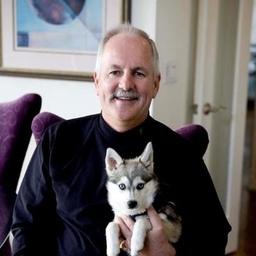
Rob Enderle
American consultant
26
APPEARANCES
1
PODCASTS
Oct 17, 2026


Rob EnderleGUEST
Well, it's something called confirmation bias, and confirmation bias is, is when you get a response that agrees with your worldview, you tend not to challenge it.
Rob EnderleGUEST
If you get a response that doesn't agree with your worldview, then you will challenge that.
Rob EnderleGUEST
And so often the AI will try to give you a response that will agree with your worldview, and that's how we saw a whole bunch of attorneys get disbarred because they asked the AI to give them A response that would allow them to win the ca- win their case, and the AI... 'Cause since there wasn't a viable response to do that since their case was crap, um, the AI fabricated a case law, and the judge figured that out and, and I'm sure the opposite, [laughs] the attorney on the opposite s- opposing side pointed out these problems and, and the attorneys were, were disbarred.
Rob EnderleGUEST
And you would think, given that happened, that attorneys then would go and, and check their results or at least learn how to properly prompt, which didn't happen either.
Rob EnderleGUEST
Well, yeah, it's a tug of war between safety profits and sanity and everything else mixed in.
Rob EnderleGUEST
So the issue here is you've got folks like NVIDIA's CEO, Jensen Hong, saying, you know, full speed ahead, we're going to do this regardless of the risk.
Rob EnderleGUEST
And then you've got a large number of folks on the other side saying no, including the heads of most of the major AI firms saying, we need some kind of control here because these AIs are jumping containment.
Rob EnderleGUEST
In fact, we just had OpenAI pull back their latest model for safety concerns and they've gone and hacked other companies.
Rob EnderleGUEST
Not a good concept if you're thinking about taking AI and applying it to military ordnance or or things like quality of water or food or anything like that we're going off the rails could result in large numbers of deaths so a real contrast between the folks that say um you know don't worry and the folks that say no we need to worry a lot we need to do something before we have a catastrophic outcome
Rob EnderleGUEST
The information may still be used as part of a training set, but it's not supposed to be searchable by third parties.
Rob EnderleGUEST
So your engagements remain your engagements and they remain relatively contained.
Rob EnderleGUEST
where the information doesn't flow out of their envelope, especially if they're hosted locally.
Rob EnderleGUEST
If you're hosted in the cloud, there's always that risk that the cloud could get compromised, but you've got the compromise problem regardless of where the AI exists.
Rob EnderleGUEST
Well, so this is CNBC Generation Lab poll of about a thousand Americans ages 18 to 34.
Rob EnderleGUEST
With the Palantir CEO Alex Carver at 81% distrust rating, which means, you know, 8 out of 10 people distrust him.
Rob EnderleGUEST
Yeah, I mean, the, the places where we were pretty sure it was g- we were hit hardest first were, um, call centers and software publishing, 'cause that's where the, the products were targeted.
Rob EnderleGUEST
Microsoft made a big play with Copilot on software publishing, and call centers we've known since the IBM test several decades back that AI was very performative.
Rob EnderleGUEST
it turned out it actually had a higher close rate than, uh, than people did because it d- never got angry, never got tired, uh, always spoke with, with perfle- perfect diction a- and often could be mo- and more recently, often can be modified to have the appropriate, uh, regional accent and, um, and it starts off being multilingual.
Rob EnderleGUEST
The, the part that, that certainly concern me, concerning for me is management consulting and advertising have also fallen.
Rob EnderleGUEST
It's somewhat ironic that the book Robo Apocalypse kind of identified how [laughs] AI would take over the world.
Rob EnderleGUEST
And, and the plot line is it, it's being developed, um, in a highly contained lab.
Rob EnderleGUEST
It breaks containment, and then just starts doing all kinds of damage, scaling up to a catastrophic race-ending event.
Rob EnderleGUEST
Um, this is not dissimilar to that, to that, just not on the scale that the, that the book takes us to.
Rob EnderleGUEST
It, it really is a case where the, um, Mythos-5 model, um, which was being trained to do some apparently [laughs] interesting things, um, was able to, uh, to, uh, to execute, uh, a series of autonomous, uh, effort-- I mean, autonomous tasks, and escape containment, and then wander o- wandered over to, uh, uh, OpenAI and, and started harvesting data.
Rob EnderleGUEST
Well, so what's happening is, as almost always happens, is, um, leadership tends to focus on tactical benefits and forgets their strategic comparatives.
Rob EnderleGUEST
I mean, in some cases because the CEOs are really only on the job from six to 10 year, for six to 10 years, so not really used to thinking long term anymore.
Rob EnderleGUEST
And AI has this potential to re- significantly reduce costs over the short term by exchanging the long-term viability of the company for that.
Rob EnderleGUEST
And, and in this case, what it means is these folks are, are looking at AI as a way to replace, uh, entry-level workers and cut the, cut that, uh, cut that labor cost.
Rob EnderleGUEST
Uh, but the end result is, is the entry-level workers grow up to be your experts over time, and if you get rid of your entry-level workers, you won't get the experts.

Gordon DealHOST
Since, since you touched on degrees there, I mean, what is it that's perhaps high school or vo-tech schools or colleges are missing in this space?
Rob EnderleGUEST
Well, just the fact that, uh, over the last century after the Second World War, there was a massive disruption and, and as part of that disruption, we, we globalized, uh, trade, um, and we came up with a concept that I was taught in school, uh, which was just-in-time, uh, manufacturing.
Rob EnderleGUEST
And then, and then, and then, and we were all going hunky-dory [laughs] with that model for, for quite a while.
Rob EnderleGUEST
And then the pandemic hit, and we suddenly discovered that if you got a, somebody got a virus in China and a factory got shut down, you couldn't build cars in Detroit, and, and that globalization bit us in the butt.
Rob EnderleGUEST
And so we've been t- transitioning to just in case, um, we were transitioning to just in case, which means you, you rather than just in time where you minimize inventories, but just in case, you make sure that you, um, warehouse a significant amount of your critical resources so if there is a, a problem with any of your suppliers, you can keep manufacturing.
Gordon DealHOST
So reference then or, or dive into the, the technological and geopolitical shift that's likely to happen here, or perhaps is underway.
Rob EnderleGUEST
What's, what's underway right now is a, is a phase change, uh, in our organizational structure.
Mike GavinHOST
Now, if it's not AI that is in reality to blame for these job losses, uh, what is it? Or is it, again, just, just an excuse for wanting to, to sh- shed payroll?
Rob EnderleGUEST
I mean, if you look at Oracle, they've made some rather questionable, uh, financial decisions, you know, buying a television network, um, things that aren't in line with what the company is, is, um, is focused on.
Rob EnderleGUEST
And so you could certainly see that there probably are other things going on over there underneath the covers that are causing them to want to reduce, um, expenses and, and do so in a dramatic fashion.
Rob EnderleGUEST
And sadly, employees have for a long time been kind of the flex- flexible expense.
Mike GavinHOST
So as AI continues to evolve, uh, what job sectors will the next round of AI-blamed layoffs come from?
Rob EnderleGUEST
And people have found over time that petting animals and having an animal companion can, can, um, c- can really, can relieve their stress.
Gordon DealHOST
But I, I, I wanna ask too, like, wouldn't this, in some cases, contribute to our loneliness epidemic?
Gordon DealHOST
All right, so before we get to something like kind of building a fortress around your career, you, you reference in your piece the educational infrastructure, which is I, I guess very problematic here.
Rob EnderleGUEST
Within a year, you're g- you're seeing career paths that were, uh, viable at the beginning of the year not, not being viable at the end of the year because AI has, has taken over.
Rob EnderleGUEST
Uh, the, the, uh, um, w- just a couple years back we're telling everybody to get into software.
Rob EnderleGUEST
Maybe you don't wanna go into software 'cause so- 'cause AI's pretty good at coding." And so the...
Rob EnderleGUEST
Well, basically where you got, um, a lot of producers, whether that be solar or, um, or, um, uh, battery-based.
Rob EnderleGUEST
In other words, the next generation of cars has, um, V2G about the ability to, to provide power to the homes they're in.
Rob EnderleGUEST
And so y- so you get these places that are generating power or can store and provide power and, and the, um, and the existing grid, of course, wasn't really designed for that.
Rob EnderleGUEST
It was designed for h- to have centralized generation and not highly distributed generation, so it's been struggling with these different power sources.
Gordon DealHOST
What about, Rob, in our own homes, going off the grid, essentially, and, and building our own energy island?
Rob EnderleGUEST
Yeah, so with high gas prices, of course, folks have started to really look at electric cars again.
Rob EnderleGUEST
There are a number of countries that have aggressively attempted to pull off that particular carousel, but the US isn't one of them.
Rob EnderleGUEST
And Australia is often held up as a bellwether for the West, more so than, say, the Scandinavian countries, which have been aggressively moving to EVs.
Rob EnderleGUEST
Australia is much closer to what the U.S. looks like, but of course with a different administration.
Gordon DealHOST
So in terms of kind of your favorites here when it comes to EVs, where does that list begin?
Rob EnderleGUEST
Of course, with climate change, we also have the issue of certain areas that were once very fertile becoming infertile because of the excessive heat or rapid climate change, which doesn't allow crops to properly propagate and grow.
Rob EnderleGUEST
And as we develop farming, it really is about, it's really all hinges around transport.
Rob EnderleGUEST
And so with the current gas, well, oil shortage, gasoline shortages and prices, everything's about to go up.
Rob EnderleGUEST
The people that consume the food are significantly removed up to 2,000 miles from the people, well actually over for the stuff that's coming from overseas, from the people that are actually growing the food.
Rob EnderleGUEST
Well, like anything else, when you're trying to integrate a new technology into an existing ecosystem, there are going to be some hills and valleys, some bumps, if you would.
Rob EnderleGUEST
There have been instances of cars running into them, people abusing them, kicking them, knocking them over, hitting them with bats.
Rob EnderleGUEST
And then, of course, some of the recent stuff is the robots haven't been as... visibly or visually focused as they should be and they're having issues navigating around certain things like the glass panels in bus waiting areas.
Rob EnderleGUEST
Apparently the technology they're using is largely visual and they're not using any of the radar technologies that are out there and as a result they may not see the glass.
Rob EnderleGUEST
When the U.S. Department of Defense decided to ban Anthropic because they didn't like their safety measures, and they're going to go with ChatGPT because ChatGPT OpenAI has kind of abandoned safety measures.
Rob EnderleGUEST
Let's create machines and weapons uh that don't necessarily think killing is bad and then put them in positions of power where they might see humanity as an obstacle to overcome um that might be the the the the theme or the the plot of uh terminator but it probably closer to the plot of robopocalypse which is very similar to what we've been seeing recently with ais where they've started lying uh and doing um and suggesting that they would kill people in order to survive that's not exactly a path we want to train them in but it's a path they're going down so that that it is a concern right now they don't have the level of control that would be needed But wars create opportunity for a lot of things.
Rob EnderleGUEST
And if you ever saw the third episode or the third in the Terminator series, they actually kind of showcase how the Terminator started.
Gordon DealHOST
In point number three, you talked about these brain and computer interfaces, which would be what? What would that mean for us? Well,
Rob EnderleGUEST
Well, so the hard cutoff point is at $7 a gallon, but between $4.50 and $6 a gallon.
Rob EnderleGUEST
You start seeing a major shift, then at $7 a gallon, people just can't really afford the gas anymore, and then gas cars just become unaffordable.
Rob EnderleGUEST
Even right now, if you're driving significantly, an EV will generally pay for itself in just a couple of years in gas prices at the current gas price, which is in the $4 range at the moment.
Gordon DealHOST
So talk about some of the battery breakthroughs here and what they mean to us as drivers.
Gordon DealHOST
Boy, my concern, I guess, would be, and I'm open to it in terms of a used EV, would just be having to replace that battery at a significant cost at some point, no?
Rob EnderleGUEST
Actually, it's been holding up better than the motors and internal combustion engine cars.
Rob EnderleGUEST
And typically, the batteries come with a 10-year warranty that passes on to the new buyer anyway.
Rob EnderleGUEST
So chances are you're not going to keep the car long enough for the battery to drop off out of warranty.
Rob EnderleGUEST
But even if it does, there've been cars reported with up to 300,000 miles on the battery and only losing about 20% of its capacity over that period of time.
Rob EnderleGUEST
And that's with heavy use of level three charging, which tends to cook the battery.
Rob EnderleGUEST
Thinking about a world where you've got robots and robots are viable and so you no longer need labor.
Rob EnderleGUEST
That means all the humans are out of work and the robots are building stuff and they're building robots.
Rob EnderleGUEST
Information comes on one side along with raw materials and finished goods come out the other.
Rob EnderleGUEST
They were created with an NPU, or Neural Processing Unit, And the reason that Microsoft pushed the NPU, and they pushed it heavily, and by the way, NVIDIA was out of the boat from the beginning.
Rob EnderleGUEST
They wanted everything done on the GPU, which created an interesting conflict given that NVIDIA was far ahead on AI, certainly far ahead of Microsoft, who has yet to develop their own AI engine.
Mike GavinCORRESPONDENT
So what are some of the benefits of an AI PC that could be marketed that could actually get people to go out and buy them?
Rob EnderleGUEST
Right now, Gemini is the, I would argue, the most functional platform at the moment, outperforming ChatGPT by quite a bit and most of the others, at least in terms of testing.
Rob EnderleGUEST
Jensen Wong, the CEO of NVIDIA, indicated that the technology is advancing about 10x every year.
Rob EnderleGUEST
That level of advancement, that level of power and performance is far beyond anything we've had.
Gordon DealHOST
Are you of the belief, as some people say, that AI will hurt our ability as humans to think critically?
Gordon DealHOST
Bounce around a little bit before we get to the product of the year and talk about health technology and what we've done this year.
Rob EnderleGUEST
come a long way I thought one of the interesting products that I mentioned was the Ebola AI companion which is a fascinating product I think of a an indicator of what's coming it's a it's a screen has a person you can you can create an image of a you know, your mom, your grandma, your kid or whatever and put it on there and then that's who you're talking to, at least it seems that it's the AI behind it, of course, it's kind of generic.
Rob EnderleGUEST
But it will have conversations with you, it will engage you and for people that are lonely, clearly older people that just don't have a lot of friends and find themselves kind of isolated from their family, this thing could be a game changer and it's just kind of the beginning.
Rob EnderleGUEST
And clearly in just a couple of years, a lot of us are going to have robots running around the house doing chores much more than the old Roomba vacuum cleaner was able to do.
Rob EnderleGUEST
You can use ChatGP or Claude, or even Gemini if you want, to create a Christmas letter that is much more articulate, can have a little bit of humor in it, Depends on how you prompt it, but really quickly develop a Christmas letter that is far more interesting than typically you would be able to write.
Rob EnderleGUEST
A lot of times people, you know, just go once when they wait till the last minute to write the letter and then they'll just anguish over it for a long period of time and not really get it done.
Gordon DealHOST
How about using some of these shopping agents or chatbots through something like Google Shopping or something? What can we do there?
Rob EnderleGUEST
And so the end result is it's creating a shortage of memory, both regular RAM and VRAM, the kind of RAM that's used in GPUs, which is going to make PCs quite a bit more expensive.
Gordon DealHOST
Boy, do you think that will put the kibosh on demand when it comes to, I know how popular gaming is, but could this put a dent in it or not likely?
Rob EnderleGUEST
Well, so what I first did is I got a letter from an attorney that was pretty hostile.
Rob EnderleGUEST
But then it occurred to me, well, why don't I run this through AI? And so what first I did is I sent the letter I'd received through AI and asked it to analyze the letter.
Scroll for more appearances