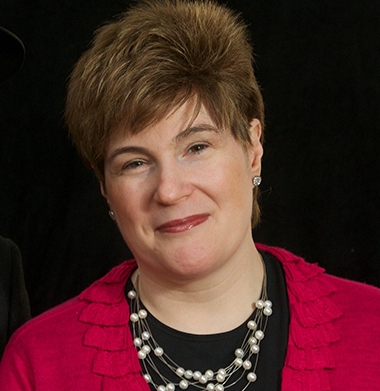
Rivky Slonim
Education director at the Rohr Chabad Center for Jewish Student Life at Binghamton University; internationally known Chabad lecturer, author, and "Chassidic feminist."
15
APPEARANCES
1
PODCASTS
Sep 25, 2026

Rivky SlonimGUEST
While there are several reasons for why we read the portion of Zei Sabracha on the final day of Yom Tov, like most of the Torah portions, there's an inherent timely issue that's reflected in the portion.
Rivky SlonimGUEST
Among the many verses in the portion that speak very obviously about Torah, which is what the holiday of Simchas Torah is about, we have the verse, Torah Tzivolonu Moshe, Rasha Ki Hilas Yaakov.
Rivky SlonimGUEST
When Rashi explains this verse, he says, the first part of the verse, Torah Tziva Lanu Moshe, doesn't stand on its own.
Rivky SlonimGUEST
Rather, it's an introduction to the latter part, as if to say, the Torah which God gave to Moshe is a legacy for the congregation of Jacob.
Rivky SlonimGUEST
Because what a legacy for the congregation of Jacob really means is, as Rashi says, we have taken hold of it and we will not forsake it.
Rivky SlonimGUEST
When we look at, um, the Frediker Rebbe's behavior, um, regarding dwelling in a sukkah, ra'inu davar v'hifoche.
Rivky SlonimGUEST
In his Law of Repentance, Maimonides teaches that though Tshuva and crying out to God is appropriate any time, in the ten days between Rosh Hashanah and Yom Kippur, it is even more so, and it is received even more readily by God.
Rivky SlonimGUEST
For it says in the book of Isaiah, Seek God out when you can find Him, when He can be found.
Rivky SlonimGUEST
In other words, at a time when God is more readily present with and available to each and every individual Jew, which is during these 10 days between Rosh Hashanah and Yom Kippur.
Rivky SlonimGUEST
Though in the Talmud we learn that when there is a decree that demands our prayer, when a community cries out to God in the face of a communal calamity, the decree is torn up for an individual this time of the 10 days of repentance is the right time for this prayer and crying to God, for this is when God is findable, accessible to the individual.
Rivky SlonimGUEST
Even though a person can always repent, they can always cry out to God at any time.
Rivky SlonimGUEST
But during the 10 days between or inclusive of Rosh Hashanah, Yom Kippur, and the days in between, There's something special about crying out and doing teshuvah, and it is accepted readily and immediately.
Rivky SlonimGUEST
[clears throat] Sicca is from Hillel Cafte- uh, Cafte or Lamites? Now I'm, now I'm confused.
Rivky SlonimGUEST
Vav Tishrei, as we all know, is the yard site of the Rebbetzin Chana, the Rebbe's mother.
speaker_1UNKNOWN
[coughs]
Rivky SlonimGUEST
Uh, we learn that Avraham prayed, that Itzhak prayed, that Yaakov prayed, that Moshe prayed.
Rivky SlonimGUEST
Pursuant to the Shabbos that precedes Rosh Hashanah, yadua piskum adam ha'zakin.

Rivky SlonimGUEST
And we have here the Halachas and the Rambam in the section called Beis Habechira, which deals with the Beis Hamikdash.
Rivky SlonimGUEST
I'm just gonna read through 14, 15, and 16 because they're all gonna be relevant, and even a little bit of 17, but I'll s- I'll just do these.
8 MINS LATER
OritUNKNOWN
It's freezing.
Rivky SlonimGUEST
HaMitvah asate v'nesinas tzedakah, the positive commandment to give charity, mefureshes b'Parshat Seinu is written clearly in our Parshah where it says, "Ki yhiye bachar evyon," if there will be one who is a pauper, somebody destitute amongst you.
Rivky SlonimGUEST
But before that, just want to wish a great huge mazel tov to Fega Rachel Gollum, who had a grandson this week, born to her daughter Sarala and her husband Shmuel Isaac Reitzes.
Rivky SlonimGUEST
They should have And that's the Simchas and the occasions for today, at least what I have so far.
Rivky SlonimGUEST
And if you have a Chumash and Rashi or a Chayenu, we're in Maftir in the last few Sukkim of the Parsha, Parsha V'eschanan in Perik Zayin.
1 HR 11 MINS LATER

Freidy YanoverHOST
So in the realm of a mitzvah, can you give an example? Is it like if you keep Shabbos, you'll have a feeling of like, what does that mean?
Rivky SlonimGUEST
We are overjoyed to wish mazel tov to Chana Mann, whose ainikel, Mushka Cohen, uh, was engaged to Daniel Namdar.
Rivky SlonimGUEST
And we are wishing a great big mazel tov to VV Darren on the birth of a new great-granddaughter.
Rivky SlonimGUEST
[clears throat] Isa Begemara, the Gemara teaches, "Harayah Pinchas bachalom, pele nasah lo." If you see Pinchas in a dream, then wonder, a wonder will happen for you.
Rivky SlonimGUEST
How would you recognize if it's Pinchas if he came to you in your dream? I don't know.
Rivky SlonimGUEST
Um, this sicha just seemed to be very, very appropriate as we come from Gimmel Tammuz, um, and it really has to do a lot with, with, with connection with hiskashrus.
Rivky SlonimGUEST
Before that, um, our wonderful Tzipa is going to, um, screen share a small section from a sicha that the Rebbe gave on Shabbos Parashat Shlach L'varacha Chodesh Tammuz in Hey Tav Shin Yud.
Rivky SlonimGUEST
The Rebbe is going to analyze the difference between Kayhanim and Leviim, and he's going to compare how these differences are understood between Rashi and the Rambam, Aleph.
Rivky SlonimGUEST
At the end of this week's Parsha, after the Pesukim delineate the various presents that were given to the Kohanim, there were 24 different gifts that were given to the Kohanim.
31 MINS LATER
Rivky SlonimGUEST
Should protect it and should have tremendous hatslacha in everything that has to be done.
Rivky SlonimGUEST
And that there should be an end already to this, what seems to be endless cycle, but we know it's not the case.
Rivky SlonimGUEST
Um, some simchas, Chani Rappaport's twin grandsons are putting on tefillin this week.
Rivky SlonimGUEST
Shalom Baren Schneersalminduba, you should have endless Hasidish nachas from them.
JoniUNKNOWN
That's my little plug.
Rivky SlonimGUEST
The, the, the halakha concerning the karbanot that were offered on a, on one of the shalosh regalim.
Rivky SlonimGUEST
That you don't say tachnun in davening from Rosh Chodesh Sivan until the twelfth day, inclusive of the twelfth day.