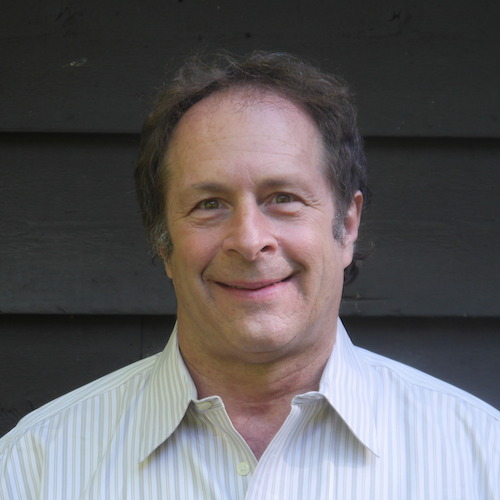
Rick Doblin
Founder of Multidisciplinary Association for Psychedelic Studies
8
APPEARANCES
6
PODCASTS
Sep 10, 2026


Rick DoblinGUEST
I mean, the people know their own internal landscape, both consciously and unconsciously more than the therapist.
Rick DoblinGUEST
And there's a lot of healing that can be done when you're providing that safe support, even where you don't know exactly what's going on.
Rick DoblinGUEST
So a lot of times patients under MDMA therapy or LSD or psilocybin therapy will have these profound breakthroughs.
6 MINS LATER


Lana PribicHOST
let's get into this idea of i heard you talk on another podcast that you did in the spring about politics being downstream for culture yes yes yes relates to psychedelics so what's the bridge here that you're imagining is it like psychedelics can create change or ignite the individual and then individuals influence culture and eventually Culture changes institutions are like, what's that link there that you're
Rick DoblinGUEST
And research, so here we are in America, where the newspapers, the media, all sorts of reports on a lot of the latest scientific developments.
Rick DoblinGUEST
And so what we needed to do with psychedelics that had been demonized, that had been highly stigmatized, driven underground, psychedelic research blocked for decades, we really needed to change cultural attitudes in order to create the context by which regulatory agencies and politicians and others would feel comfortable seeing psychedelic research move forward.
Rick DoblinGUEST
And so in my own life, when I was 18, back in 1972, I decided to become an underground psychedelic therapist or with the goal of one day being an above ground psychedelic therapist and to bring back psychedelic research.
Rick DoblinGUEST
And I dropped out of school for 10 years to start up again after having done work to integrate my own experiences and then graduated in 87 with an undergraduate degree in transpersonal psychology and psychedelic therapy and research, and then wanted to get a clinical psych PhD.
Rick DoblinGUEST
in order to do psychotherapy outcome research to show the value of psychedelics, particularly MDMA.
9 MINS LATER
Lana PribicHOST
What do you mean by that? And how does it relate to psychedelics and psychedelic research?

EvanHOST
Um, just explain the backstory behind this person.
Rick DoblinGUEST
It was-- MDMA was invented by Merck Pharmaceutical Company in 1912, but they had no idea what it was, and they never tested it in humans, and it was now, patents were expired and it was in the public domain.
Rick DoblinGUEST
Um, in the '60s, there was this drug called MDA, methylenedioxymethamphetamine, which is like an LSD-MDMA combination, and it was criminalized in 1970.
Rick DoblinGUEST
Sasha was a brilliant, brilliant chemist who had worked with, uh, Dow and had made the first biodegradable insecticide.
12 MINS LATER
EvanHOST
Wow

Rick DoblinGUEST
And so I think that was that shift, that, that you can accept this feeling, and when you do that, it doesn't have to be overwhelming.
Rick DoblinGUEST
And, and Gul has looked at the longer-- Now, these are for animal studies, but the longer you're in the psychedelic state, the longer this period of neuroplasticity lasts.
Rick DoblinGUEST
And ibogaine, which is 36 hours or often really longer, it lasts for potentially months, this neuroplastic state afterwards.
31 MINS LATER


Mayim BialikHOST
Can you start us off by sort of giving us a lay of the land of where psychedelic research is, and in particular, what moment we are in at this time in history?
Rick DoblinGUEST
Well, we're at, at a moment that has been building, I would say, for well over half a century.
Rick DoblinGUEST
So 1970, we have the Controlled Substances Act and criminalizes psychedelics, and then, uh, Nixon decides to, uh, really launch a global international, uh, war on drugs, and that wipes out psychedelic research.
Rick DoblinGUEST
That was sort of the peak of American power, and one of our worst exports was the drug war.
Rick DoblinGUEST
Right, so beginning in 1992, um, a new group of people took a hold at the FDA that were reviewing psychedelics.
Rick DoblinGUEST
And, and actually, it shows how different social justice movements sort of intersect with each other because it was the A- AIDS movement, the, um, ACT UPthat felt that the FDA in the '80s, when people were dying right and left from AIDS, that they felt that the FDA was overly focused on risk and not enough on potential benefits, particularly for life-threatening diseases.
30 MINS LATER
Mayim BialikHOST
Like there are these populations that people are happy to dismiss, and I think now we're having this reckoning of what does it actually mean to have these crises?

Rick DoblinGUEST
Now it's being used, and we talked earlier about neuroplasticity, it's being used for traumatic brain injury.
Rick DoblinGUEST
So now there's a project that's out of Stanford that took Navy SEALs and others who went to Mexico to an Ibogaine clinic and did scans before and after.
Rick DoblinGUEST
And it showed that there is this neuroplasticity that can restore certain kind of functions and help people get over traumatic brain injury.
Rick DoblinGUEST
The Bwiti religion is the one that has really used Ibogaine in Gabon, where it's from.
12 MINS LATER
Darshan ShahHOST
What do you mean by that? I would love to dive in kind of the history of psychedelics and specifically psychedelics in medicine, but let's talk about that.
Rick DoblinGUEST
Well, from the more recent history with the psychedelics really flowering during the 1960s in the United States.
Rick DoblinGUEST
And he's got this famous quote from, I think it was 1979, to Dan Baum, a reporter.
Rick DoblinGUEST
And he said that the two main enemies of the Nixon White House were the hippies and the civil rights movement.
5 MINS LATER


Rick DoblinGUEST
Yeah, I was very ung- ungrounded and, and, and I went to the guidance counselor at college, and this was a new college, uh, uh, in Sarasota, Florida, and it was a private school at the time, and the guidance counselor, I said, "I need help with my tripping, and, uh, it's become more important to me than my studies." And he said, "Well, you know, I understand what you're doing.
Rick DoblinGUEST
Y- we're overdeveloped intellectually and underdeveloped emotionally and spiritually." And he gave me this book to read, and I loved it, and it was by Stanislav Grof, the world's expert LSD researcher, and he was MD PhD at Johns Hopkins.
29 MINS LATER