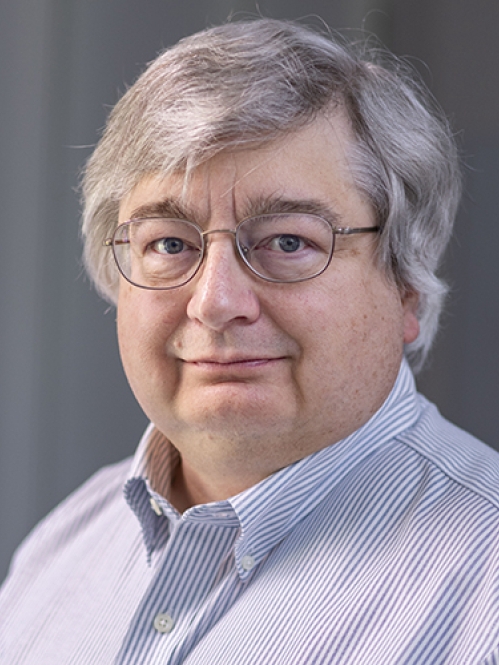
Richard Ebright
Board of Governors Professor of Chemistry and Chemical Biology at Rutgers University's Waksman Institute, and prominent advocate of the COVID-19 lab-leak hypothesis.
2
APPEARANCES
2
PODCASTS
Oct 11, 2026

speaker_21NARRATOR
Not necessarily a nefarious lab leak, not a bioweapon, but just a lab accident of people, virologists, working on these viruses.

Richard EbrightGUEST
They've come up with shortcuts and easy pictures that you can actually print in the press to shape the opinion.
Richard EbrightGUEST
And because there was such a repression of any dissenting voices, it was most likely that the dissidents would be coming from the margins.
37 MINS LATER
speaker_21NARRATOR
Basically, we're pretty


Richard EbrightGUEST
The ostensible reason is to obtain information about viral threats that may exist in nature in order to increase preparedness for potential outbreaks, epidemics, and pandemics.
Richard EbrightGUEST
The actual motivation for the research for the funding agencies is bioweapons agents development, bioweapons agent intelligence gathering.
Richard EbrightGUEST
After 9-11 and the anthrax mailings in 2001, the United States Congress appropriated large amounts of resources for bio preparedness and bio defense.
Richard EbrightGUEST
And the Vice President at that time, Dick Cheney, was unhappy with biodefense research programs that were being carried out by the Department of Defense.
Richard EbrightGUEST
The Department of Defense had a large and active biodefense research program, but it was focused primarily on countermeasures.
Richard EbrightGUEST
That is to say, measures to react to use of a biological weapon or development of a biological threat, such as therapeutic agents and vaccines.
19 MINS LATER