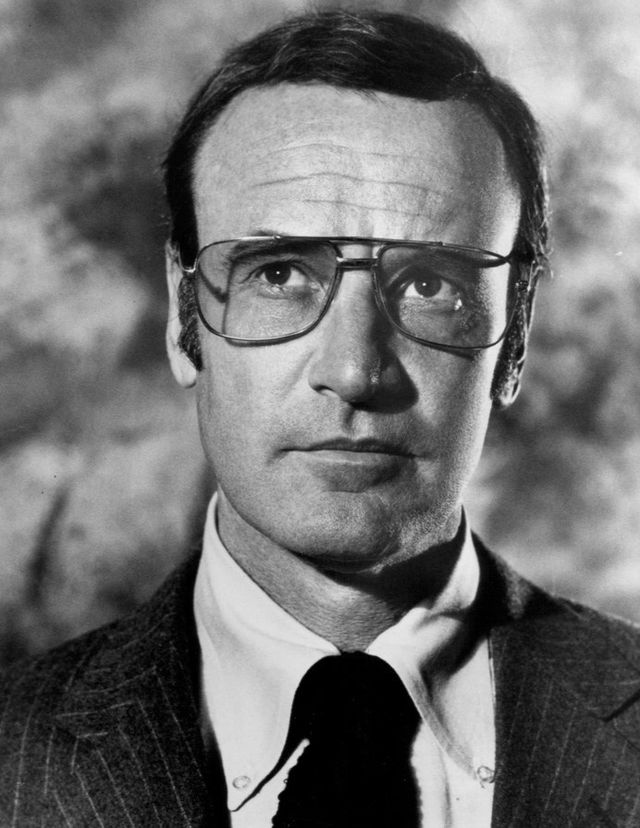
Richard Anderson
American film actor
3
APPEARANCES
2
PODCASTS
Jun 9, 2026


Sarah NorcrossHOST
Richard is a trustee of PET, and he is chair of the British Fertility Society's Policy and Practice Committee.

Richard AndersonGUEST
Thank you very much, Sarah, and, uh, thank you for Raj for setting the scene so eloquently and com- compassionately as well.
Richard AndersonGUEST
Um, so, so my role tonight is to give, and again it's important to emphasize, a personal presentation, uh, on some of the issues that, that, that arise that maybe, you know, aren't quite necessarily as perfect as Raj would like us to believe, and so perhaps some, raise some subjects for, um, discussion and, and debate as we go along.
Richard AndersonGUEST
So I think that-- So this is, of course, the document that we're discussing tonight.
Richard AndersonGUEST
Um, I, I, I think Raj, uh, emphasized, and I think it's important just to highlight that we're here talking very much about health-related fertility problems, and I'm sure the speakers later on this, this evening, um, will highlight some of the issues that that ran- raises.
Richard AndersonGUEST
But it's, but it's very clear that although many of the comments are indeed inclusive of, you know, transgender, binary patients, uh, as well, uh, it is very much focused on health-related fertility, uh, situat- uh, problems.
Richard AndersonGUEST
Last autumn, the, the, um, draft came out for stakeholder review, and that was, uh, six weeks' worth.
18 MINS LATER

3:37

Why hasn't there been the same level of investment as for female contraception, which we've now had working pills for more than 60 years?
Richard AndersonGUEST
So it's interesting, if you look back at the origins of female contraception, how the pill was developed, it was a real passionate development by individuals who wanted to put money into it and they made it work.
Richard AndersonGUEST
And because it was so successful, I think what happened is you had a range of methods and lots of different companies all making lots of products and there were far more involved, but there was far more activity 50 years ago than there is now in this.
Richard AndersonGUEST
And I think the trouble is it became so popular that people thought it was a done deal.
Richard AndersonGUEST
And so trying to develop a new male hormonal methods, you know, I guess there was a concept that the field was already sewn up.
Richard AndersonGUEST
And therefore, if you are going to be developing a new male methods and putting the money into that, that meant you were going to be losing sales on another existing methods.
8:20
Do we know about women's attitudes toward male contraception? Do we know about whether women as a generality would trust men? So there have
Richard AndersonGUEST
You know, hormonal methods involve administering drugs like testosterone, drugs like progesterone in combination that switch off sperm production.
Richard AndersonGUEST
For then it's the hormonal methods that have really been the ones getting the clinical research, actually going back many decades.
Richard AndersonGUEST
I and I personally have been involved in research in this field going back to the early 1990s when we were involved in a, a World Health Organization trial giving men an injection every week.
Richard AndersonGUEST
Overall worldwide, that was then used as a contraceptive by those men, those couples, and very effective, and we've been refining that since.
Richard AndersonGUEST
The non-hormone methods, they're much more in, in their infancy in this field actually, and they're often targeting pathways in the production of sperm or the maturation of sperm that are very specific to how sperm are made and work that don't affect other pathways in the body and identifying, you know, the key biochemical pathways that drive this, that we can then potentially target with small molecule drugs that you could take orally as a, as a daily pill to switch this off.
6 MINS LATER