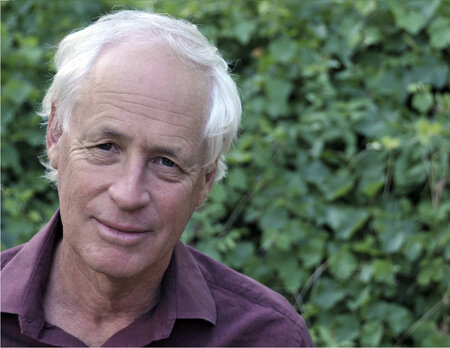
Ray Raphael
American historian and author
7
APPEARANCES
4
PODCASTS
Jul 4, 2026
Unknown podcast
Extra: What You Don’t Know About the Declaration of Independence
Jul 4 · 24m

Dave AnthonyHOST
When did the anger really start to build the most in the colonies against the British?

Ray RaphaelGUEST
Well, Massachusetts was ahead of its time, the people in Worcester, because they were the ones to suffer this real crackdown because Boston was kind of the focal point and then the Boston Tea Party.
Ray RaphaelGUEST
What would we do if our constitution were taken away? We'd be pretty damn upset.

Ray RaphaelGUEST
We're not doing it." And so basically throughout the countryside of Massachusetts in the, in, uh, late 1774 and early 1775, they, they, they, they shed British rule.
Ray RaphaelGUEST
So at the time of Lexington and Concord, 95% of, of, uh, of Massachusetts, it's outside British control.
Ray RaphaelGUEST
And what Lexington and Concord did, that was an attempt by the British Crown to take the colony back.
Ray RaphaelGUEST
Well, that was the first armed warfare- And once you have warfare, a lot of people join it.
Ray RaphaelGUEST
The Ma- Massachusetts did, then the New England colonies joined in, and then the, then the rest of the colonies joined in.

speaker_12UNKNOWN
In fact, the British even thought about sending soldiers to Worcester months before the shot heard 'round the world, but they eventually concluded Worcester was too far from Boston, too powerful, too dangerous.
speaker_12UNKNOWN
He says the fact that there was no bloodshed, that's why the revolts in Worcester and Western Mass for that matter, are so overlooked.
Ray RaphaelGUEST
[laughs] It's so clear where the heart of the resistance was, and it's a story of who we are as a people.
Unknown podcast
America 250: Small-Town Patriotism and the State of National Pride
Jul 3 · 32m
Ray RaphaelGUEST
First of all, the committee that actually drafted it was five people, including Thomas Jefferson.
Ray RaphaelGUEST
And Thomas Jefferson got a lot of what he was saying from the Virginia Declaration of Rights, which was drafted primarily by George Mason and which had just been published in Philadelphia, right there.
speaker_12UNKNOWN
Right.
speaker_4UNKNOWN
There's a committee that puts this together, correct?
Ray RaphaelGUEST
The, the committee is, uh, that puts it together, first of all, the committee that after, actually drafted it was five people, including Thomas Jefferson.
Ray RaphaelGUEST
And Thomas Jefferson got a lot of what he was saying from the Virginia Declaration of Rights, which was drafted primarily by George Mason, and which had just been published in Philadelphia right, uh, a few days before they wrote this.
Ray RaphaelGUEST
But they weren't just responding to other people wanting this, they were actually instructed.
Ray RaphaelGUEST
Remember, all of these, all these, uh, uh, people were representing states, and their states had instructed them to vote for independence, and those states in many cases were responding to local communities within those states, instructing them to instruct Congress to declare independence.
speaker_4UNKNOWN
Right.

Clarke PetersNARRATOR
In the morning, they begin a journey into the unknown.
Ray RaphaelGUEST
Well, there is one river in Maine which actually kind of takes you a large way up there, the Kennebec River.
Ray RaphaelGUEST
So they say, "Okay, we'll get these boats", they call them bateaux, flat-bottom boats, "and we'll load all our supplies on these boats and kind of tug them along the river." That's a lot of stuff you have to load.
Ray RaphaelGUEST
How are you gonna keep the gunpowder dry? How do you really supply an army of several hundred or thousand people with food going through a wilderness? Now winter is coming on.
Clarke PetersNARRATOR
Some of the rank and file survivors might envy the dead.

Clarke PetersHOST
But some think there's too much focus on Adams, and that this distracts attention from the so-called Boston mob, the ordinary men and women who want their grievances heard.
Ray RaphaelGUEST
The whole point of the whole revolutionary period was to broaden the base of who the people were.
Ray RaphaelGUEST
Boston's a seaport teeming with rough-and-tumble guys, and it's not a gentle place, and these people are kind of rowdy, and they drink a lot, and they grouse.
Ray RaphaelGUEST
And when you actually get political engagements, they're much more prone to using violence.
Ray RaphaelGUEST
So ironically, you have this popular image that, uh, Samuel Adams was revving up the crowd to do their thing, and it was exactly the reverse.
Ray RaphaelGUEST
The leadership is trying to calm them down because they say, "This isn't gonna get us anywhere."