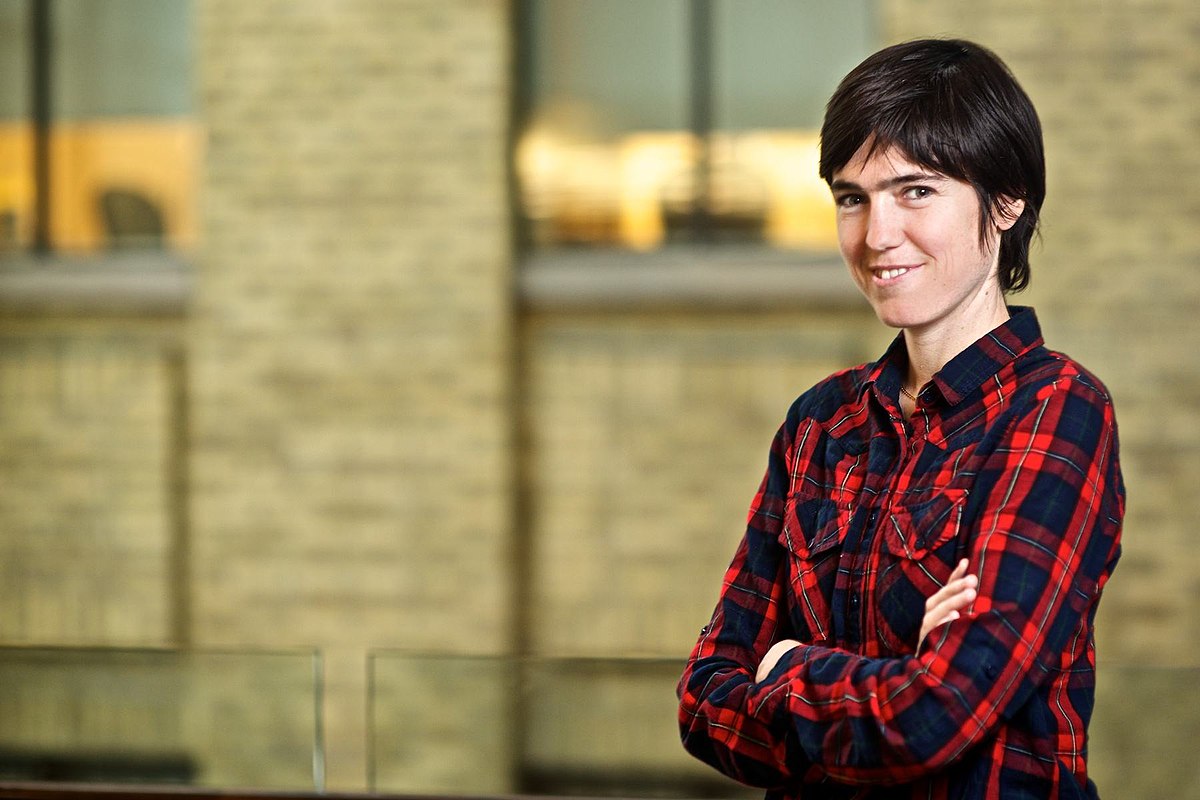
Raquel Urtasun
Spanish-Canadian computer scientist and entrepreneur
7
APPEARANCES
7
PODCASTS
Sep 28, 2026


Raquel UrtasunGUEST
What do I mean by this is, if you look at the industry, it has been built in the premise for tracking, right? It's a hub-to-hub model.
Raquel UrtasunGUEST
You have these hubs next to the highway, and then between the hubs, freight will be moving autonomously, and then humans will do the end part of the journey, right? Going from those hubs to the end customer.
Raquel UrtasunGUEST
And that, you know, Let's be honest, that was done in order to simplify the autonomy problem, right? Because for classic trucks, tractor trailers, historically it has been very difficult to handle any surface streets.
25 MINS LATER

Raquel UrtasunGUEST
And I think, uh, you know, for the audience will be worth to, uh, touch upon there is several types of generalization that, uh, you know, humans do seamlessly.
Raquel UrtasunGUEST
Um, you know, in the industry, we talk a lot about generalization across environments and scenarios.
Raquel UrtasunGUEST
Um, and this is, for example, if you go to a new geography, uh, this is important, uh, for our customers because it's the ability to open new lanes really quickly, right? That generalization is very important.
9 MINS LATER


Douglas SoltysHOST
To see these innovators and read this beautiful 80-page print issue, head to mostambitious.betakit.com.
Raquel UrtasunGUEST
Um, so today I'm gonna tell you all about physical AI, which is the revolution that is about to happen.
Raquel UrtasunGUEST
And when you think about how the world is gonna look like in five to 10 years, it's gonna be extremely different to what you see today.
Raquel UrtasunGUEST
If you look, you know, out your window, you don't see robots, but in this timeframe of five to 10 years, they're gonna be everywhere, and the benefits are ridiculously massive when you think about safety, productivity, and all the empowerment that it's gonna bring to humans.
Raquel UrtasunGUEST
Now, when you think about what is, uh, what is the application of physical AI that is first to happen at the scale, it's very clear today that it's self-driving, whether it's robotaxis or self-driving trucks, um, that are, you know, a reality today in our roads.
13 MINS LATER

Melanie WoodinGUEST
... and maybe to, to the other presidents across, uh, Canada about what we can be doing to foster innovation, uh, and founders such as yourself.


Julia BoorstinCORRESPONDENT
Are you concerned about this competition and how do you differentiate?
Raquel UrtasunGUEST
We have the most scalable approach that really is, you know, as I mentioned before, is really ready to launch and scale significantly.
Raquel UrtasunGUEST
Unlike some of the competitors, we really truly believe that we should do a safety first approach.
Raquel UrtasunGUEST
So we are not launching driverless before the redundant platform from the OEM is ready.
Raquel UrtasunGUEST
And that's what we are basically waiting for, which is that final validation that Already a couple of quarters ago, Volvo has publicly said that we'll be ready over the next couple of quarters.

Kelly EvansHOST
Has that helped or in some ways cleared the way for you? And what makes your company different? Or does this just remain a very difficult area to solve?


Raquel UrtasunGUEST
Right? And, and it has been fundamental, both the type of autonomy system that we have, which is verifiable end-to-end technology, and I'm happy to go into, into what that means and why it's very different from the traditional AV 1.0 or the, what, uh, has become more traditional now, AV 2.0, right? Uh, but yeah, has been a massive accelerator, and what is very exciting about the technology that we have is that for the first time it's not anymore a compromise between this use case and that use case.
Raquel UrtasunGUEST
You don't need to fork, uh, you know, build two teams, fork the stack, uh, into, you know, robotaxis versus, versus trucks.
Raquel UrtasunGUEST
Uh, on the contrary, it's the same brain and the same, uh, you know, simulator and world model that actually does both use cases.
Raquel UrtasunGUEST
The same as for humans, we don't change our brain every time that we actually drive a different vehicle.
17 MINS LATER

Raquel UrtasunGUEST
Yeah, so we're going to use, you know, the one billion of capital to really double down on our tracking product, right, and really bring that to commercialization at the scale, and then also into expanding into the new vertical.
Raquel UrtasunGUEST
So a billion dollars of new capital, basically for us, think of it as infinite capital.
Raquel UrtasunGUEST
So, you know, there is a lot that we can really, you know, accomplish with this.
Raquel UrtasunGUEST
And, you know, I think we are, if you look at trucking, for example, we are the most stable player in the industry by, you know, A totally different dimension, I will say.
Raquel UrtasunGUEST
So this gave us definitely the peace of mind and the ability to really focus on what we do best, which is executing on milestones that are extremely ambitious, but we always hit in time and under budget, which really defines who WAP is as a company.

Akash PasrichaHOST
And so I'm just imagining here, I mean, in terms of your own business, if it's per mile and based on distance, how quickly is revenue growing for Wabi right now?

Ed LudlowHOST
Are you able to give me a kind of assessment o- of, of going to market in Canada versus the United States? Which jurisdiction you think is ahead, right, in accommodating this nascent technology?
Raquel UrtasunGUEST
technology?Yeah, the US is definitely ahead of the Canadian market, uh, in terms of, uh, you know, regulatory piece as well as adoption.
Raquel UrtasunGUEST
Um, and Canada has to do, you know, quite, quite a bit to catch up, but there is a lot of excitement on the Canadian ecosystem, uh, to make this, uh, this possible.
Raquel UrtasunGUEST
They really understand that this technology has so many benefits from safety, uh, to, you know, the efficiency, uh, that is, and sustainability, extra sustainability that is gonna come, uh, with, uh, with the technology.
Raquel UrtasunGUEST
You know, for us, our first market has been, over the last couple of years, uh, for tracking, uh, really the US, uh, also it's a much larger, uh, you know, market.
Ed LudlowHOST
What, what do you make of that? And, like, what, what is the ecosystem in Canada right now? Like, on the software and hardware side, do you see the talent pool that you need available in, in your home country?