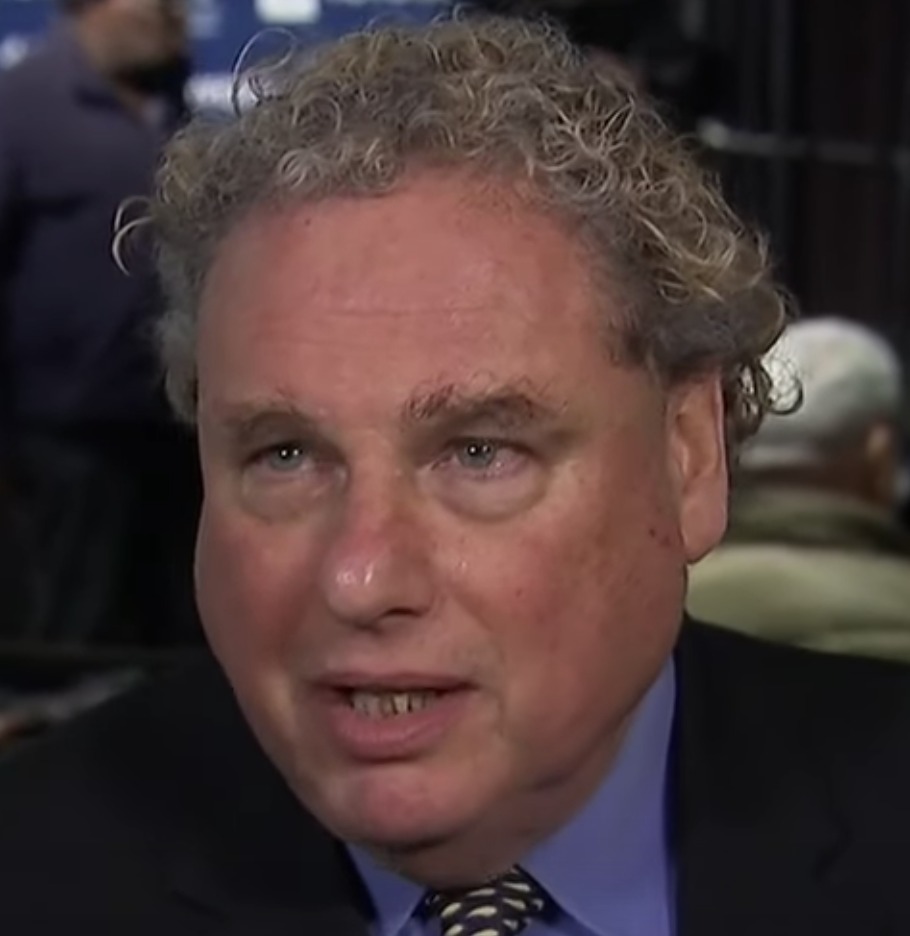
Randy Levine
President of the New York Yankees
14
APPEARANCES
8
PODCASTS
Sep 17, 2026


Craig CartonHOST
So when President Trump reached out to you and asked you to be on a panel, for lack of a better term, of people that care about sports and care about the status of college sports in our country to try to fix the chaos that's happening right now, what was your initial reaction to the request to join that group of men and women?

Randy LevineGUEST
Well, actually, what happened is this has been deteriorating for, you know, seven years.
Randy LevineGUEST
You know, all the conferences, the universities, members in Congress, this has been kicking around.
Randy LevineGUEST
They went to the president and said, hey, can you can you put something together to solve this problem? So he asked me to put together a group.
5 MINS LATER
Craig CartonHOST
So when President Trump reached out to you and asked you to be on a panel, for lack of a better term, of people that care about sports and care about the status of college sports in our country to try to fix the chaos that's happening right now, what was your initial reaction to the request to join that group of men and women?
Randy LevineGUEST
Well, actually, what happened is this has been deteriorating for, you know, seven years.
Randy LevineGUEST
You know, all the conferences, the universities, members in Congress, this has been kicking around.
Randy LevineGUEST
They went to the president and said, hey, can you can you put something together to solve this problem? So he asked me to put together a group.
Craig CartonHOST
Do you think that people that are against what you're trying to do will accept that, or are they really fighting for every year, if I want to change schools five times in five years, I'm going to have the ability to do that?
Craig CartonHOST
So when President Trump reached out to you and asked you to be on a panel, for lack of a better term, of people that care about sports and care about the status of college sports in our country to try to fix the chaos that's happening right now, what was your initial reaction to the request to join that group of men and women?
Randy LevineGUEST
Well, actually, what happened is this has been deteriorating for, you know, seven years.
Randy LevineGUEST
You know, all the conferences, the universities, members in Congress, this has been kicking around.
Randy LevineGUEST
They went to the president and said, hey, can you can you put something together to solve this problem? So he asked me to put together a group.

Randy LevineGUEST
a lot of work for the city to do to address challenges with school bus service, both in the short term and in the long term.
Randy LevineGUEST
And some of our recommendations are not particularly complicated, like posting the name and contact information for each school's transportation coordinator, better communicating bus route information to families instead of requiring them to find it through an online account that many families find difficult to access, and better training schools to help address challenges.
Randy LevineGUEST
The city can also take steps to improve the alternative transportation options it provides while students are waiting for school bus service to begin, both making sure that parents have better access to the rideshare that currently exists and to develop options that don't rely on the student to have a parent available to ride with them.
Randy LevineGUEST
And most importantly, we want the city to overhaul our current bus system in favor of one that can provide the safe, on-time, and reliable service our children need and deserve.

Isabella RicciHOST
I mean, why hasn't the city overhauled this pretty dysfunctional bus system? What's preventing us from doing so?
Randy LevineGUEST
One major issue is that the city contracts with dozens of bus companies to provide bus service.
Randy LevineGUEST
And many of those contracts have been extended and extended since 1979, when Ed Koch was mayor and the subway cost only 50 cents.
Randy LevineGUEST
But I feel good about it because I think over the last several months it's become clear that if there is no action, if this bill does not pass, the entire college sports system is going to collapse.
Randy LevineGUEST
Just in the last couple of weeks, we've seen schools lose hundreds of millions of dollars, schools diverting money from their schools, Endowments, raising student fees.


Carol MassarHOST
We spoke about it with Ira a few minutes ago, but lay out the case for us and why you see this as being so important.


Randy LevineGUEST
We're finalizing all of the activities to honor all of the great first responders and heroes, and to pray and honor the memory of all of the victims of 9-11.
Randy LevineGUEST
So it'll be a solemn night, but as you know, Chris, a message from 9-11 was never forget, but move forward.


Dylan ConroyHOST
And I feel like it creates a really interesting feedback loop with engagement with high profile people or companies, corporations who want to give back and in some ways market to their communities.
Randy LevineGUEST
Well, as Troy said, you know, we both grew up in upstate New York and he's western New York.
Randy LevineGUEST
I was actually central New York near Syracuse, which is a different thing because he grew up in a town that had two professional sports teams, you know, one of which the Buffalo Bills.
Randy LevineGUEST
Um, but you know, I, Troy started talking to me a couple of years ago about this and he had the idea of doing some kind of experiences.


Paul FinebaumHOST
Can you take us through how you ended up, uh, being involved in this? And you're not just involved, you're involved to, to a very high degree.
Randy LevineGUEST
So I was talking to the President, and, um, it actually, uh, had gone on for, you know, several months.
Randy LevineGUEST
Um, people were coming to the President saying that people had been in the Congress for years and years and years, and the situation in college sports was growing worse and worse and worse.


Brian KilmeadeHOST
What was your approach to doing it? First listen to all angles, and then come up with a piece of legislation that both Democrats and Republicans can get behind?
Randy LevineGUEST
Well, I give all the credit in the world to Senators Cruz, Cantwell, Schmidt, Co- Coons, and a bunch of others who, who have been part of this.
Brian KilmeadeHOST
So what's gonna happen to those sports? Can you, in layman's terms, give us an idea of why should people feel better in this system that those sports have a future, like wrestling, for example?
Brian KilmeadeHOST
What was your approach to doing it? First listen to all angles and then come up with a piece of legislation that both Democrats and Republicans can get behind?
Randy LevineGUEST
Well, I give all the credit in the world to Senators Cruz, Cantwell, Schmidt, Co- Coons, and a bunch of others who, who have been part of this.
Brian KilmeadeHOST
So what's gonna happen to those sports? Can you, in layman's terms, give us an idea of why should people feel better in this system that those sports have a future, like wrestling, for example?
Brian KilmeadeHOST
What has to be fixed in sports? How did you narrow it down to maybe four key components?
Randy LevineGUEST
Well, this has been going on now for several years, and everybody came to the president and said, "This has been in the Congress.
Randy LevineGUEST
We need somebody to bring everybody together with your force of personality in the office to finally solve that." And that's what happened because these universities, all of them, big and small, are hemorrhaging money.
Brian KilmeadeHOST
Do you feel as though next year you're gonna have a big clash between labor and management? Because next year you're gonna be re- reconfiguring and maybe getting a salary cap in there or...

2:53

Now, the other problem is that I was told is how do small colleges compete with large colleges?
Randy LevineGUEST
In fact, the end result of all of this is money is going to basically football and men's football and basketball.
Randy LevineGUEST
But the worst part is women's sports, Olympic sports, non-revenue sports are being cut because what's happening is there's just not enough money to go around.
Randy LevineGUEST
So, you know, one of the Yankee players, a very good player, who went to a great university, actually told me this story, that he's been asked as an alumni, and he has given a bunch of money to name, image, and likeness, you know, a quarterback, who transferred after four months, and a friend of his daughter, who is a potential Olympic rower on the rowing team, lost her scholarship and actually had to go take out a college loan.
4:09
And, I mean, I don't remember, what year did it start? Did college kids start getting paid? How long
50:55
Now, the other problem is that I was told is how do small colleges compete with large colleges?
Randy LevineGUEST
In fact, the end result of all of this is money is going to basically football and men's football and basketball.
Randy LevineGUEST
But the worst part is women's sports, Olympic sports, non-revenue sports are being cut because what's happening is there's just not enough money to go around.
Randy LevineGUEST
So, you know, one of the Yankee players, a very good player, who went to a great university, actually told me this story, that he's been asked as an alumni, and he has given a bunch of money to name, image, and likeness, you know, a quarterback who transferred after four months, and a friend of his daughter, who is a potential Olympic rower on the rowing team, lost her scholarship and actually had to go take out a college loan.