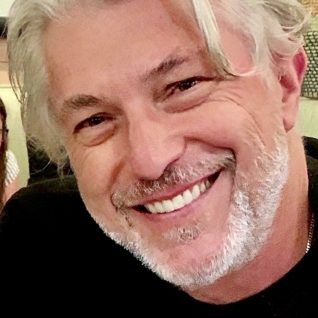
Randall Sullivan
American author and journalist
7
APPEARANCES
6
PODCASTS
Jul 14, 2026


Randall SullivanGUEST
But as it happened, you know, when they told, when they told Arch Ward, the sports editor, you know, "Arch, see if you can pull this off," he, he began by studying train schedules and realized that, uh, after teams played, you know, an intense, you know, a double header on, on the Fourth of July and another game on the fifth, everybody then was gonna be traveling, uh, uh, would be on the road on July 6th.
Randall SullivanGUEST
So he saw an opening in the middle of the season where you could, you know, schedule a game.
Randall SullivanGUEST
Chicago was at the crossroads of teams heading east and west, so, you know, he convinced them it was feasible to have a game on July 6, 1933 in Chicago.
Randall SullivanGUEST
And, uh, uh, [laughs] and then he had to convince, uh, the Major League owners and the presidents of the league and the commissioner and, uh, all of that was a tall task indeed, and he went through many machinations to make it happen, including in the end threatening the last two holdouts, uh, that he was gonna expose their past connections to Arnold Rothstein, who was accused of fixing the 1920 World Series.
Randall SullivanGUEST
But he got it done, and once Babe Ruth said he wanted to be part of it, the other players fell in line.
7:31
Uh, do you think that the All-Star game is, like, a lot, a little less intriguing because of interleague play?
149:56
I guess logistically it would have been a little bit easier, too, because geographically the teams were grouped closer together in terms of travel.
Randall SullivanGUEST
Well, I suppose that's true, but bear in mind the travel was by train, so you couldn't get somebody across the country in an hour.
Randall SullivanGUEST
But when they told our sports editor, see if you can pull this off, he began by studying train schedules and realized that after teams played an intense doubleheader on the 4th of July and another game on the 5th, everybody then was going to be traveling, would be on the road on July 6th.
Randall SullivanGUEST
So he saw an opening in the middle of the season where you could, you know, schedule a game.
Randall SullivanGUEST
Chicago was at the crossroads of teams heading east and west, so he convinced them it was feasible to have a game on July 6, 1933 in Chicago.
Randall SullivanGUEST
And then he had to convince the major league owners and the presidents of the league and the commissioner, and all of that was a tall task indeed, and he went through many machinations to make it happen, including in the end threatening the last two holdouts that he was going to expose their past connections to Arnold Rothstein, who was accused of fixing the 1920 World Series.
154:28
Do you think that the All-Star Game is a little less intriguing because of interleague play?

Randall SullivanGUEST
I mean, the upshot was that less than three weeks after he was shot, Cernak died in the hospital.
Randall SullivanGUEST
I mean, Cernak was actually in Miami for multiple reasons, but one was to avoid a trial that was going on back in Chicago, a trial of Frank Nitti, who had taken over control of the mob in Chicago from Al Capone, who had been shipped away less than a year earlier.
14 MINS LATER

Kerri MillerHOST
I mean, how slowly or how quickly does the perception change about what these criminals are doing?

Randall SullivanGUEST
And one of those apocalypses that it, it, uh, survived was the Great Depression.
Randall SullivanGUEST
I started reading about the Great Depression, and I realized that it all bottomed out and began to tick back up in the late spring and early summer of 1933.
Randall SullivanGUEST
Aside from the policies of the new Roosevelt administration, the, there were two events that stood out as significant in that time.
Randall SullivanGUEST
One was the Chicago World's Fair, which, uh, was, you know, a global event really.
Randall SullivanGUEST
But the other was this baseball game that was played as an exhibition as part of the Chicago World's Fair.
17 MINS LATER


Randall SullivanGUEST
I mean, it came to him by a very complicated process that began with the attempted assassination of the new president elect Franklin Roosevelt.
Randall SullivanGUEST
The new mayor wanted to put some imprint on the impending Chicago World's Fair.
speaker_2UNKNOWN
what made that first game such a success

CraigHOST
Can you kind of walk us through how the city of Chicago and these personalities were central to the story of the first All-Star game?
Randall SullivanGUEST
One, on October 28, 1929, the day before the stock market collapsed and started the Great Depression, the voters in the city of Chicago voted to approve a bond to stage a new World's Fair.
Randall SullivanGUEST
so then the stock market collapsed and they were stuck with it and the city the city probably you know was more battered by the great depression than just about any other you know major metropolitan area in the united states because its manufacturing was its you know its main financial economic base and nothing took a you know sort of collapsed like manufacturing but what really i mean book begins For very good reason, I think.
Randall SullivanGUEST
In Miami, when a man attempted to assassinate the new president-elect, Franklin Roosevelt, got off five shots and hit six people, but none of them were Roosevelt.
Randall SullivanGUEST
who was in Miami to avoid a trial that was happening in Chicago, a trial of Frank Nitti, who had just recently inherited control of the mob, basically the mob, certainly the biggest gang in Chicago, from Al Capone.
22 MINS LATER
CraigHOST
Can you tell us a little bit about that great player?


Randall SullivanGUEST
Well, the initiating event was this attempted assassination of Franklin Roosevelt after he'd been elected, but before he was inaugurated.
Randall SullivanGUEST
We'd done fishing trips, speaking to a crowd when this guy stood up out of the crowd and tried to assassinate him.
Randall SullivanGUEST
Not a single bullet hit Roosevelt amazingly, but everybody around him, including the mayor of Chicago, Anton Cermak.
22 MINS LATER