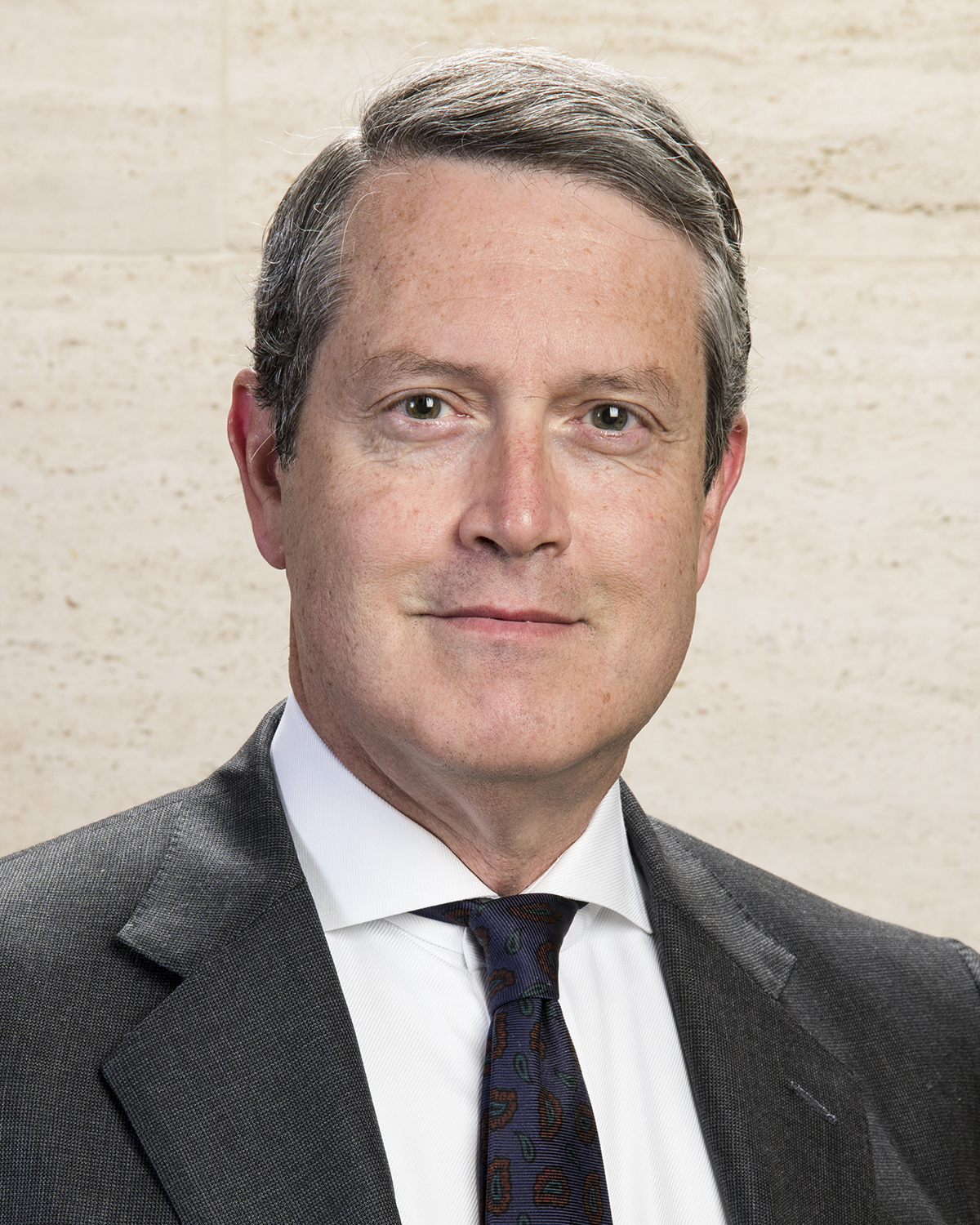
Randal Quarles
Investor and former United States Under Secretary of the Treasury for Domestic Finance
5
APPEARANCES
4
PODCASTS
Sep 16, 2026

Jay SapsfordHOST
Have we been asking the wrong questions? Should we be asking how to grow faster instead?

Randal QuarlesGUEST
One, just the political reality is such is that we are so equally divided as a country that a political agreement on the scale of tax cuts or tax increases or expenditure cuts that would be necessary in order to close the deficit would are simply impossible.
Randal QuarlesGUEST
And what's really important is the debt to GDP ratio, not the absolute size of the debt.
9 MINS LATER


David WestinHOST
What are the risks of that? And at what point might we start seeing demand destruction given what's going on, particularly with the energy markets?

Randy QuarlesGUEST
Again, you're going to start seeing responses pretty quickly to higher energy prices in consumer spending.
Randy QuarlesGUEST
And, you know, and again, because of the uncertainty about the future macro environment and business investment.
Randy QuarlesGUEST
If that's relatively short, if we're talking a resolution in a month, even in two months, then that's from the point of view of the Fed, which looks over long arcs of time, a blip.
Randy QuarlesGUEST
But on the flip side of that, which is partly why I think you're not going to see a hike in interest rates, but you're not gonna see a lower interest rates either, those are effects that slow the economy.
Randy QuarlesGUEST
but higher energy prices feed into higher prices generally, and that's inflationary.


Randal QuarlesGUEST
We're not a family office per se, but we like to think of ourselves as kind of the early years of a Lazard or a Rothschilds or Lehman Brothers, uh, you know, an investment firm with many clients and, and many different...... investing strategies, but that has been anchored and we intend to continue to be anchored by the Eccles family.
Randal QuarlesGUEST
The genesis really was, um, you know, the Eccles family built its position over the 19th and 20th centuries with a number of investments in private companies in the Intermountain West, some of which grew to be quite large.
Randal QuarlesGUEST
By the end of the 20th century, all of those investments in private companies had been sold to large public companies and that created a set of investment challenges for the family.
Randal QuarlesGUEST
You know, we now had a lot of liquid securities, they'd all been private companies before.
6 MINS LATER


Jon HartleyHOST
And I hadn't realized myself when I was working At Goldman Sachs, if there were actually Federal Reserve employees or regulator employees that were actually in the bank, is that too many? So I guess I'm just curious what your thoughts are on just stress testing and how that process maybe could be improved, if at all, in your mind.
Randal QuarlesGUEST
So, you know, first I should say, you know, so and there are two aspects to the answer that I'll give.
Randal QuarlesGUEST
But that aspect of policy, not legal in the sense of, you know, kind of granular regulation.
Randal QuarlesGUEST
a different set of policy considerations around how the stress tests need to be constructed in order to be effective.
21 MINS LATER
Jon HartleyHOST
I'm curious where you think sort of as a policymaker where we're at and how we should be thinking about the regional banking crisis of 2023 and what we should be doing about deposit insurance from a policy perspective.
David WestinHOST
In the report published in September 2024, Draghi says, regulation should be designed to facilitate market entry, not become a barrier to Europe's goals.
Randy QuarlesGUEST
A little over a decade ago, the US and European GDPs were, they weren't exactly on top of each other, but they were pretty close, 16 versus 15, roughly.
Randy QuarlesGUEST
And now the European GDP is 15 or 16 trillion, I think, and the US GDP is about 30 trillion.
Randy QuarlesGUEST
Again, that's a function of a lot of things, but it's a function of a lack of investment in productivity and an over-regulation of the European economy.
Randy QuarlesGUEST
And just as I think that we could have a significant effect on American growth by streamlining our regulation, I think you could have an even more dramatic effect on European growth if they were willing to undertake that deregulatory projects, some of which has been suggested recently by Mario Draghi in his report delivered to the European Commission.
David WestinHOST
He agrees with Draghi's concerns that regulations have played a part in holding Europe back.