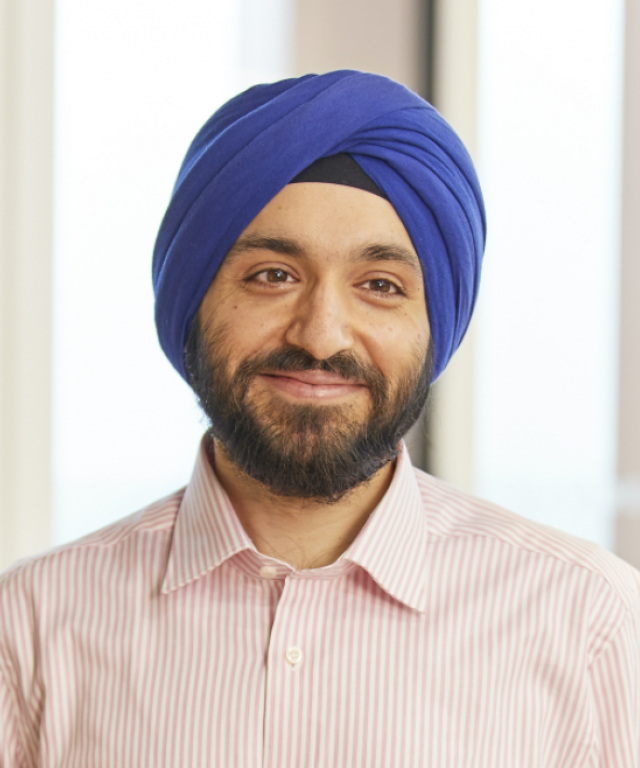
Pushmeet Kohli
British computer scientist
2
APPEARANCES
2
PODCASTS
Jun 4, 2026


Pushmeet KohliGUEST
I mean, we are seeing these systems of intelligence which are allowing us to reason about the data that we have captured at a scale that is just not possible with a single human mind.
Pushmeet KohliGUEST
They humanly cannot read at the hundreds of thousands of, uh, scientific results that are coming out, uh, each year.
Pushmeet KohliGUEST
And what, uh, uh, these scientific agents like the AI co-scientist tell- uh, allow us to do is basically explore that vast scientific literature to find the answers to the problems that, uh, scientists are interested in solving.
Pushmeet KohliGUEST
I think that thinking about what are the scientific problems that are going to change the world in a better way, that will be the role of the human scientist.

Juan Carlos GilPANELIST
So Dr. Koli- My question, what comes next with Alpha Fold 3, and what all still remains fundamentally unsolved in there?
Pushmeet KohliGUEST
So I, I think what, um, AlphaGo showed us is that we can go beyond, um, human knowledge and come up with new, uh, insights.
Pushmeet KohliGUEST
And, uh, in some sense we started the Alpha Fold, uh, project right after, um, the Lee Sedol match, because that gave us that confidence to explore this whole area.
Pushmeet KohliGUEST
Um, the first iteration of Alpha Fold, Alpha Fold 1, was built, um, as a two-step process where there was a neural network which was giving us some insights into which proteins might be close to each other, and then there was a more classical, uh, module which was trying to predict the 3D structure.
Pushmeet KohliGUEST
For Alpha Fold 2, we, uh, started from scratch and then went end to end, where, uh, one neural network starting from the amino acid sequence tried to predict the 3D structure.
Pushmeet KohliGUEST
And that elegance and that simplicity of that solution with a lot of very interesting scientific insight baked into the architecture of the, of the neural network, uh, was the key in achieving that amazing, uh, sort of milestone.
Juan Carlos GilPANELIST
My question is, um, are we moving from solving the equations to actually learning the system?