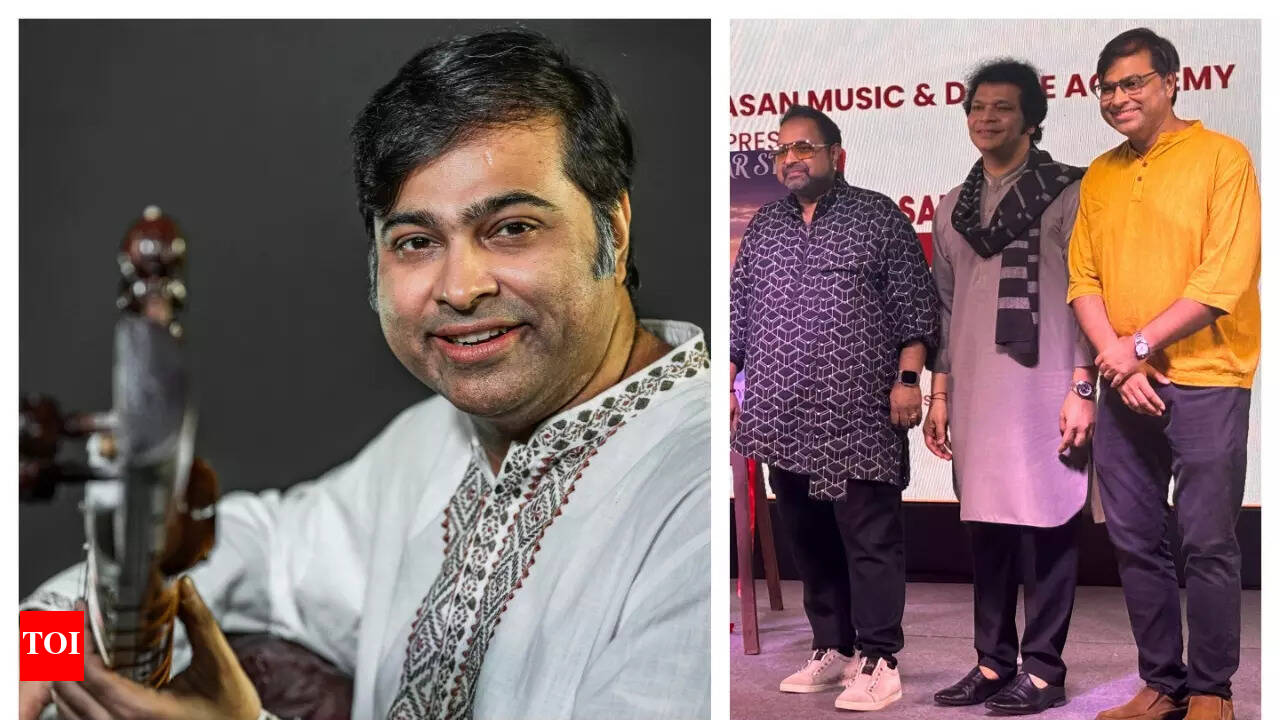
Purbayan Chatterjee
Indian musician
3
APPEARANCES
2
PODCASTS
Aug 21, 2026


Purbayan ChatterjeeGUEST
And, um, um, I started learning music at the age of three, vocal music, and then the sitar at the age of, of five.
Purbayan ChatterjeeGUEST
Um, you know, um, I always thought that, uh, I could do this and I could make a living, and I think she had her doubts about it.
Purbayan ChatterjeeGUEST
I got a lot of support from my dad, though, 'cause he, he, he was, you know, he was my guru and-

John StancorbHOST
So any, uh, any insight as y- uh, as you were younger players, how you internalized bigger chunks of how you w- were learning these phonetically or, or otherwise?
Purbayan ChatterjeeGUEST
So I think in the context of Indian music, it's very important, uh, to understand that, uh, one of the basic cultures, especially the music from northern, the northern part of India where I come from, which is called the Hindustani classical music, it's very common to have, like, uh, what we call a vilambit, uh, you know, of a rhythmic cycle.
Purbayan ChatterjeeGUEST
Vilambit meaning when instead of going one, two, three, four, two, two, you're actually zooming in and slowing it down to one, two, three.
Purbayan ChatterjeeGUEST
So almost every beat is like a bar, and it's, it's, it's co- quite common for us to do that.
Purbayan ChatterjeeGUEST
But to stay with-- So when you're saying you're, you're not just saying one, two, but you're actually going one, mm, mm, mm, two.
Purbayan ChatterjeeGUEST
Uh, so for us, and, and it's, it, it's a very interesting intersection of worlds for me especially because, you know, in the-- if I understand correctly, in the, in the world of any kind of rhythm instrument, you know, when you're playing the guitar as a rhythm instrument, you're basically creating a groove around anything, okay? So it almost comes to a point where it doesn't matter whether it's eight and a half or seven and a half.
16 MINS LATER

speaker_6UNKNOWN
Mm-hmm
Purbayan ChatterjeeGUEST
And, um, um, I started learning music at the age of three, vocal music and then the sitar at the age of, of five.
Purbayan ChatterjeeGUEST
Um, you know, um, I always thought that, um, I could do this and I could make a living, and I think she had her doubts about it.
Purbayan ChatterjeeGUEST
I got a lot of support from my dad, though, 'cause he, he, he was, you know, he was my guru and-
speaker_6UNKNOWN
What are you gonna play for us the next song? What are we gonna hear?