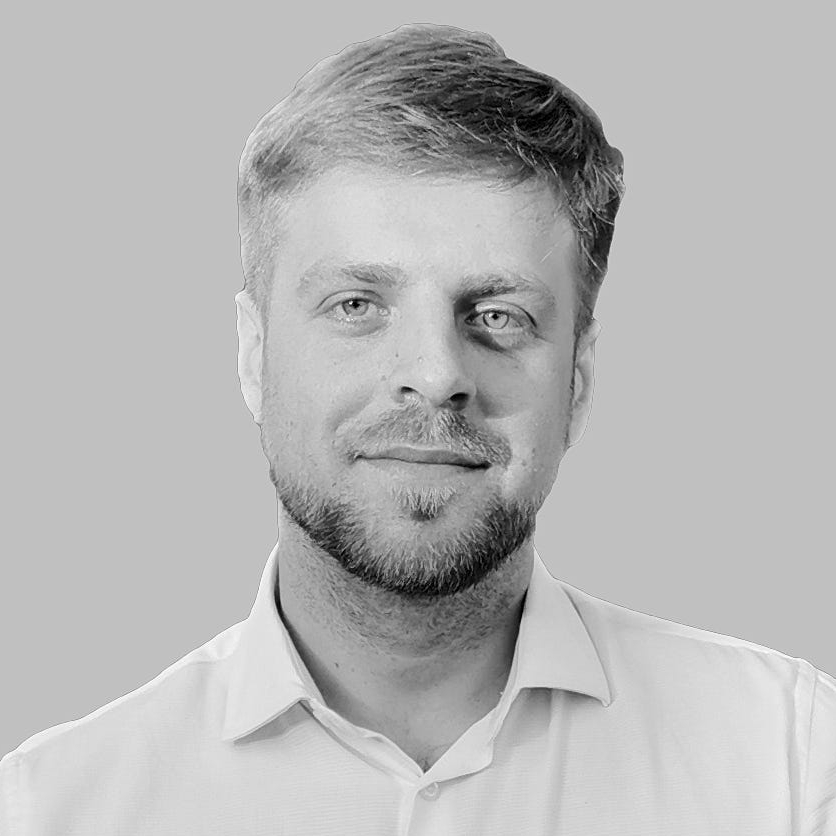
Povilas Sabaliauskas
Co-founder and CEO of Pulsetto, a Lithuanian health-tech company making a non-invasive vagus nerve stimulation wearable for stress, anxiety, and sleep.
4
APPEARANCES
2
PODCASTS
Oct 1, 2026


Abigail IrelandHOST
What inspires you? What motivates you and drives you around wanting this to be the best it can be?

Povilas SabaliauskasGUEST
I would say, you know, I like, let's say, consumer electronics and neuromodulation in general, and I would say these two fields were so part of each other and there were no good neuromodulation devices on the market which can help to solve some issues which are in some ways quite easy to solve.
Povilas SabaliauskasGUEST
But I could not find any device on the market which can help you to release stress quite easily as our device can.
Povilas SabaliauskasGUEST
So, you know, I previously worked with implantable devices, so vagus nerve stimulators, deep brain stimulators.
Povilas SabaliauskasGUEST
So I knew that technology already exists, but there is a gap from, let's say, medical to wellness.
Povilas SabaliauskasGUEST
And wellness is such a huge field where there are a lot of people who need some, let's say, small push in the right direction, not to help with serious diseases or just to help to feel better.
Povilas SabaliauskasGUEST
And that was a key thing that I would say pushed us into this direction that we need to create something which is affordable easy to use and has a quality and you know what what is happening in your body and how we are switching your let's say mental state where you are let's say getting better sleep at night or reducing stress so you know a lot of let's say trying other products seeing what is on the market and finding the right niche and when we let's say focused on stress, anxiety and sleep improvement, I would say we understand that we found the perfect market fit when we launched the first iteration of the device.
11 MINS LATER

Povilas SabaliauskasGUEST
So let's say track and field people, they're using, we have like three days of, let's say, competition.
Povilas SabaliauskasGUEST
So they try to use it before going to the start, let's say, line to lower it and to control that tunnel visual, which is needed.
Povilas SabaliauskasGUEST
And what happens after this, some people cannot go to bed, cannot go to sleep, and next day we still need to go to, let's say, semifinals or finals, and we cannot recover quite well.
Stephanie GrayHOST
What are some of the other clinical trials kind of showing us? Like what highlights are important for everyday users? Like what are we finding? Other than, or have we already mentioned it all? Is there anything else we
Povilas SabaliauskasGUEST
So we do need to drill a hole, implant some electrodes for Parkinson's or dystonia and disease, etc.
Povilas SabaliauskasGUEST
I watched some, I don't know, YouTube or something clip when I was in high school, and I saw that, you know, you can apply some electricity to a specific, let's say, place, and it feels like magic, looks like magic, because, you know, whenever, let's say, a Parkinson's patient has tremors on his right hand or left hand, And they apply a little bit of electricity, it diminishes those symptoms, and it was, you know, like eye-opening.
10 MINS LATER
Stephanie GrayHOST
Is stimulating the vagus nerve almost something that kind of like working a muscle or muscle memory, like something the more you stimulate it, the stronger it's going to be or the better it's going to work? I mean, is that where the routine and the twice a day recommendation comes from?
