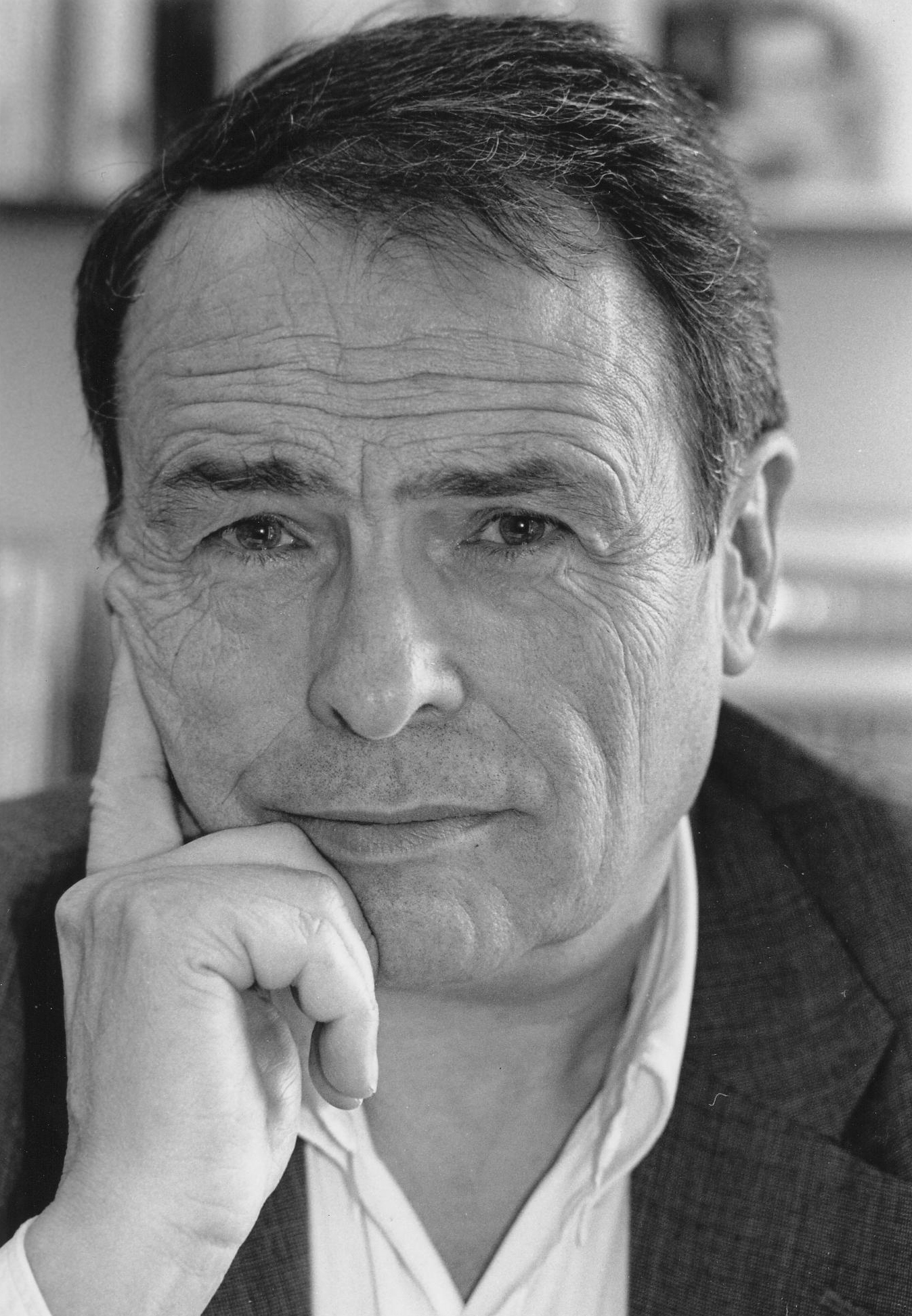
Pierre Bourdieu
French sociologistWikipedia
48
MENTIONS
35
EPISODES
31
PODCASTS
Search complete. 48 mentions across 35 episodes found for "Pierre Bourdieu".
Oct 28, 2026

Type III AudioNARRATOR
A common reaction to AI getting better at proofs is that humans need to focus more on exposition.
Type III AudioNARRATOR
This has an obvious Bourdieu-esque criticism.
Type III AudioNARRATOR
Human painters used to strongly value photorealism, but after cameras were invented they convinced everyone that, oops, photorealism isn't important, what matters is expression, which coincidentally cameras can't do.
Type III AudioNARRATOR
Isn't a shift towards exposition in math just a way for humans to move the goalposts and justify their own continued relevance? The only credible way I see to avoid that criticism seems to be to bite the bullet and say that, in fact, math should have already have focused more on exposition, even before AI.

Type 3 AudioNARRATOR
A common reaction to AI getting better at proofs is that humans need to focus more on exposition.
Type 3 AudioNARRATOR
This has an obvious Bourdieu-esque criticism.
Type 3 AudioNARRATOR
Human painters used to strongly value photorealism, but after cameras were invented they convinced everyone that, oops, photorealism isn't important, what matters is expression, which coincidentally cameras can't do.
Type 3 AudioNARRATOR
Isn't a shift towards exposition in math just a way for humans to move the goalposts and justify their own continued relevance? The only credible way I see to avoid that criticism seems to be to bite the bullet and say that, in fact, math should have already have focused more on exposition, even before AI.

Chris HaswellHOST
And you bring up a word there that I, well, two words there that also reminded me of things from having read your paper.
Chris HaswellHOST
And the idea of capital and like the Bordeaux kind of sense of that, this concept of social capital is, Do you find that it's viewed similarly in both China and in Pakistan that, you know, gaining an education has the same kind of status building capital in both societies and therefore there is this alignment?
Yingjing DuGUEST
Yeah, we think that to some extent the motivation for pursuing a higher degree, especially overseas in a very good university, has similar motivations because in China we see that if we have a good career and if we are very have a high status in the society, then that is also very honorable for our families.
Yingjing DuGUEST
And it's the same for the Pakistani girls we interviewed.

Alexander RoseHOST
Philosophers, Jean Baudrillard comes to mind with simulacra, simulation.
Alexander RoseHOST
Pierre Bourdieu, the idea of an aesthetic sensibility structuring society, structuring social class.
Alexander RoseHOST
It's not particularly contentious, I guess that's what I mean to say.
Alexander RoseHOST
And I've taught this for years.

Daniel TuttHOST
Her politics are anarchist.
Daniel TuttHOST
She and I had a brilliant conversation on class theory in Bourdieu and Marx.
Daniel TuttHOST
So she does a lot of work in sociology.
Daniel TuttHOST
She's studied history of the british working class and has written a lot about her own family's experience with the rise of thatcherism and neoliberalism and the way that has fragmented uh the british working class um and she writes and comments widely uh in british media on left-wing politics class politics and so on we're very honored to have lisa mckenzie join us welcome

Michael YoungGUEST
But it tends to neglect the fact that, in fact, students of whatever social class can actually acquire knowledge that empowers them.
Michael YoungGUEST
So that in a sense, somebody like Paulo Freire is talking about the emancipatory potential of knowledge, whereas in fact, somebody like Althusser and Bourdieu is talking about dominating power of
Will BrehmHOST
knowledge.
Michael YoungGUEST
So there are two very, very different notions of knowledge.

speaker_3HOST
Economist Van Blen famously coined the term conspicuous consumption to describe buying expensive things just to show off wealth.
speaker_3HOST
But socialist Pierre Bourdieu took it a step further when studying food.
speaker_3HOST
He realized that the ultimate status flex isn't just about spending money.
speaker_3HOST
It's training yourself to enjoy food that the working class would be disgusted at.

Paul FryHOST
In some ways, Guillory amusingly undermines his own prophecy, which by the way is on page 1477 in the upper right-hand column if you care to read it.
Paul FryHOST
Guillory's main preoccupation, which he takes largely from Pierre Bourdieu but also, as he argues in a long constructive digression, from Antonio Gramsci, is with the school as a means of establishing and proliferating what Gramsci called hegemony.
Paul FryHOST
The school, in other words, on this argument, doesn't typically send out into the world minds armed with specific bodies of knowledge or understanding.
Paul FryHOST
It sends out into the world, especially when it's a question of the humanities, which Guillory thinks are painting themselves into the corner in their obtuseness, especially when it's a matter of the humanities, the school sends out into the world people endowed with a certain quantum of cultural capital.

Eric BreaultGUEST
Uh, practice, right? That's what practice is, is it's, uh, doing something over and over again.
Eric BreaultGUEST
The habitus, Bourdieu's notion of culture is, you, you know, you're, you're, you're in it.
Eric BreaultGUEST
It, it's something that you, uh, it's, it's ritualized.
Eric BreaultGUEST
It's something that you're, that you're doing over and over and over again and acting, right? Embodying in the world.

Matthew JanneyHOST
I can't really see you.
Matthew JanneyHOST
But I want you to maybe put your sociologist's Bourdieu hat on.
Matthew JanneyHOST
And if... because obviously we're making you know we're making a compelling case you guys make a really compelling case of how when when brands get this right it can it can really pay off but of course you know it's easier said than done and so what would do you think would be the most important thing for kind of brands to really understand about these worlds so what are the different components how to get inside because you know you can't understand a world by just researching on the internet, you know, we need to have antennae.
Matthew JanneyHOST
And I wonder in your experience, if you could speak to some of the interesting ways that people have done that to really get inside a world and then actually have a perspective that feels deep rather than kind of jumping on a trend.
25 more episodes mention Pierre Bourdieu.
Create an account to see the whole feed, search across every transcript, and follow the entities you care about.