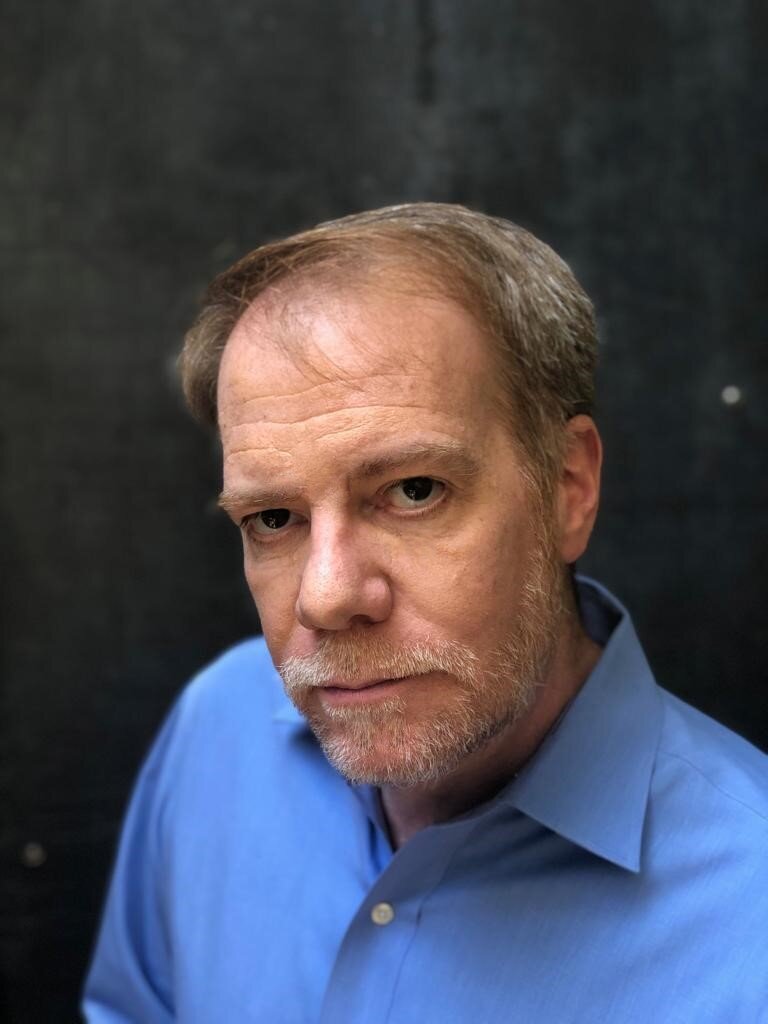
Philip Kennicott
Art critic
8
APPEARANCES
6
PODCASTS
Aug 18, 2026


Philip KennicottGUEST
connection?Yeah, you know, when, when people were talking about the, the boycott, there was a, there was a big, you know, active debate on social media and, and among, you know, people who are symphony lovers, and they kept coming back to this name, Wilhelm Furtwängler.
Philip KennicottGUEST
He was the conductor of the Berlin Philharmonic from the 1920s through the end of the, uh, Second World War, and then again for a few years later.
Philip KennicottGUEST
He did make efforts to preserve the, the ability of Jewish musicians to play.
11 MINS LATER

Philip KennicottGUEST
change.Well, at this point, if the federal government wants to develop a piece of property or make changes that would impact a federally historically protected, uh, site, they have to go through a process, and that process is essentially one of consultation.
Philip KennicottGUEST
They have to talk to the states and potentially to Native American tribes, and they also have to solicit input from the public.
Philip KennicottGUEST
What's just happened is that the federally appointed body that, that controls this process has just issued a new set of rules that essentially gut the law.
Philip KennicottGUEST
And most important, it would f- effectively cut the public entirely out of the process if the government decides they don't want to solicit your opinion and they don't want to hear it.

Philip KennicottGUEST
Well, at this point, if the federal government wants to develop a piece of property or make changes that would impact a federally historically protected site, they have to go through a process.
Philip KennicottGUEST
They have to talk to the states and potentially Native American tribes, and they also have to solicit input from the public.
Philip KennicottGUEST
What's just happened is that the federally appointed body that controls this process has just issued a new set of rules that essentially gut the law.

Philip KennicottGUEST
city?Well, I think Washingtonians are happy to have their parks and their fountains operating again.
Philip KennicottGUEST
We have a lot of federally controlled land, and so the city itself can't necessarily do this, and a lot of, uh, lot of maintenance backlog, and the federal government has really left these parks in a pretty bad state.
Philip KennicottGUEST
Um, people outside of Washington may not be so enthusiastic, however, because the, the funding for that, um, is likely being taken from other parts of the National Park Service, um, and that, you know, the impact of that may be seen farther down the line.

Melanie ZanonaHOST
And Philip, is part of the difficulty here that once construction actually begins, as we saw with the East Wing demolition, that the legal arguments for preservation are functionally mute?
Philip KennicottGUEST
Well, certainly if you tear down the East Wing, you have to put something there.

Philip KennicottGUEST
[gentle music] First of all, you know, Ame-America has fought a lot of wars, and they have not all necessarily been great wars.
Philip KennicottGUEST
But in general, we have a sense that we are-- We don't brag about victory, that victory is not something to be celebrated because wars are an unfortunate necessary thing from time to time.
Philip KennicottGUEST
Um, a victory arch seems to come out of a different, um, language, a, a different, um, vocabulary for monuments.
Philip KennicottGUEST
Uh, they've made sort of temporary ones for parades, but to create this giant one is, is to be in a slightly more celebratory m-mode when it comes to military power.

Sean RameswaramHOST
And if he has his way, and he proves by making a new arch, by literally raising the East Wing of the White House and rebuilding it in his own vision, by fundamentally altering the Kennedy Center, is he also suggesting to future presidents that you can have your way with this city and its monuments and its environs, and then thusly sort of creating some kind of, I don't know, aesthetic seesaw for the nation's capital?


Philip KennicottGUEST
It's gilded from top to bottom, there are paintings on the walls, paintings in the ceilings.
Philip KennicottGUEST
So it's a- a prototype or an inspiration in a way of some very grand and maybe more famous spaces like the Hall of Mirrors at Versailles.
Philip KennicottGUEST
The thieves gain access to this very elaborate Gallery of Apollo, and then they have these specialized tools that let them get into the cases, um, where the jewels are displayed and they grab what they can carry.
Philip KennicottGUEST
Um, maybe as a sign of the haste, um, that they're under, they actually drop one of the key pieces which is a crown.
Philip KennicottGUEST
From all of those examples, it's becoming ever more clear that the administration isn't just pursuing, uh, the older conservative idea that the government shouldn't be supporting these institutions for financial reasons, they should be out of the business of giving to the NEA or the NEH.
Philip KennicottGUEST
Um, and finally, I think we should look forward to 2026, which is a big celebration of the 250th anniversary of the country in which public history is gonna be very much in the foreground.
Philip KennicottGUEST
And my sense is this, uh, is the administration wants to control the telling of that history and they want to move it away from the sort of objective inquiry that the Smithsonian and places like Harvard have done, and more towards a celebratory hagiographic history that focuses on sort of American accomplishment and heroes.

Jeffrey BrownCORRESPONDENT
So coming back to the Smithsonian itself, what are you looking for next? I mean, what w- what do we watch for to know how this might play out?

Geoff BennettHOST
And how one of the nation's preeminent art centers in Washington, DC has been pushed into the larger partisan divide.
Philip KennicottGUEST
I think the example set at the Kennedy Center will have a chilling effect on other organizations all across the country.
44 MINS LATER
Philip KennicottGUEST
The Kennedy Center has created an environment, the current leadership, in which the producers of Hamilton feel they don't want to be associated with that.
Philip KennicottGUEST
I think the example set at the Kennedy Center will have a chilling effect on other organizations all across the country.