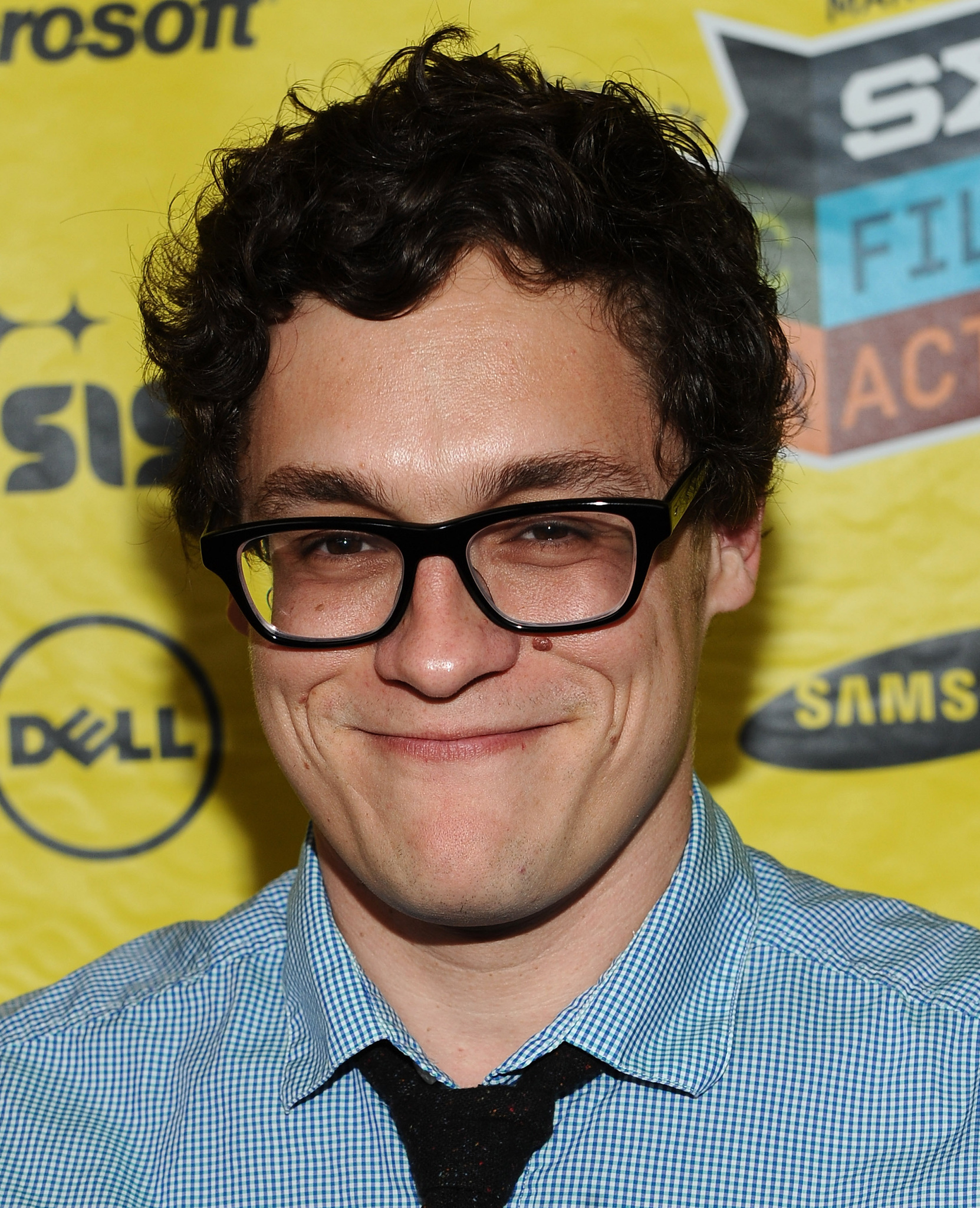
Phil Lord
Movie producer
15
APPEARANCES
14
PODCASTS
Jul 6, 2026


Phil LordGUEST
Uh, it was like su- it's funny, it's, like, surprising, and then it, and then it isn't, because, you know, you test the movie so many times and you understand.
Phil LordGUEST
We started to figure out that parts of the movie really played no matter where we played them.
Phil LordGUEST
And the thing that's so fun, and yes, we did sneak into [laughs] a few screenings, is that people laugh in the same places no matter where you show the movie.


Phil LordGUEST
There's certainly, like, a f- a feeling of wanting to deliver for the audience when they, when they show up, that, like, feeling like we want them to f- feel rewarded.
Phil LordGUEST
And certainly the compounding effect of that is they show up, they're rewarded, and they walk through the lobby, and they see the posters, and they go, "What should we see next weekend?"
Phil LordGUEST
No, we were, like, making, like, l- little cartoons in our dorm room, and then we were just from, we were...
Phil LordGUEST
We did a s- uh, we did a short, uh, film when we first got out to LA that we, that we shot at the office where we were working in the middle of the night, um, using a, a little hand puppet called Mr. Gary-

Chris MillerGUEST
And in space, there is no up and down, so it was a, it was a big idea and concept for the whole movie to be from spinning and, and upside down and on its side and, and make you feel disoriented the way the character starts, um, but understand that, that in space, you might, you have a chance to see things from a new perspective.
Phil LordGUEST
They give you a different point of view, reflect something back new about yourself, that the excitement and terror of making a new friend [laughs] i- is that you have to re- build your sense of self.
Phil LordGUEST
And so that's why, like, when Rocky's ship shows up into the story, Ryan literally does a 360 and the camera goes with him.
Phil LordGUEST
One of the things we learned on Spider-Verse 2 is that your persistence of vision is so strong.
Phil LordGUEST
Your desire, your body's desire to make two disparate things agree is so strong that I can change the color of the background every single shot, like in Spider-Verse, and you'll just...

Elvis MitchellHOST
That sort of lays on it that foundation of optimism you were talking about because, again, this not only movie asks a lot of your star, but it asks a lot of audiences as well.


Phil LordGUEST
And it meant that we had to rethink all of our writing, all of our filmmaking in terms of the e- emotional, uh, storytelling that was on screen.
Phil LordGUEST
Like, if you see our, like, the kooky Spider-Man movies that we produced, like, there's all this zipping around.
14 MINS LATER


Phil LordGUEST
yes and it makes the dime but you have to share you know and that is like sometimes counterintuitive when you have like a vision for something and you don't necessarily want to be forced to justify it, right? It's sometimes hard to justify.
Phil LordGUEST
And it means that you both have to help the other person see what you're envisioning And you also have to allow a certain amount of latitude for the other person to chase their ideas and create enough birth that the movie can have both.
Phil LordGUEST
Both the things you both agree on, which is 90% of stuff, and the things that you're chasing artistically that might be unique to you.
Phil LordGUEST
I'd much rather, you know, we have to treat each other like we would treat a crew member or, you know, or Drew, you know, which is like, oh, you find that interesting? Then I am going to, I want to know why you find that interesting and I want to chase that with you.
14 MINS LATER
Christopher MillerGUEST
And, and you, and you want to, you want to both impress them and then you can't wait to see how, what they're going to add to, to what you've done.
Phil LordGUEST
I guess for me, it has to do with how I feel about the process of witnessing art whether i'm at a museum or at a performance of a symphony or something you are getting a glimpse into the infinite you're experiencing the way your perception connects with every other person on earth who's ever lived you know and that we've been going into like dark rooms to seek revelations and mystery and grace.

Phil LordGUEST
... and finding enlightenment, and making your best friend, and then choosing to stay there.
Phil LordGUEST
And, [laughs] and basically the end of the, the end credits we told the title guys, these guys at Alma Mater, we do all our titles with, we're like, "Take me to heaven, and take me to church, and try to show me what that looks like." You know? And so it is, you know, it's called Hail Mary and his name is Grace, and so we did try to think about the spiritual side of science and outer space.
12 MINS LATER
Phil LordGUEST
And there's, [laughs] and there's, there's like these big cartoon gags where they, they turn...
Phil LordGUEST
They made a Robin Williams that is in the shape of like a big circle so that they could...
Phil LordGUEST
And then they just, like a hula hoop, [laughs] they just push him and he rolls down the, the, the cobblestone streets of the village that they built.
Phil LordGUEST
And so like it's funny sort of, and it's slapstick sort of, and then it's very captured.


Josh HorowitzHOST
Did you come close? What, was it a serious, was it a serious consideration or did it just not-

Phil LordGUEST
right? Especially if we're jumping in, if we get excited and passionate about something, it has to be something that you're comfortable spending several years on.
Phil LordGUEST
And it has to become the thing that you're thinking about Constantly when you're driving to work you hear a song you're like, oh could that song work for the movie? Or you see an interesting piece of art.
Phil LordGUEST
You're like, oh that's relevant to the thing that I'm thinking about all the time the world is Whatever it is.
23 MINS LATER
Phil LordGUEST
Of course, there's all this computer imagery that goes into Rocky, about half the shots are all CGI.
Phil LordGUEST
It was so valuable to have something that had been photographed and that had a baseline of performance to draft off of.
Phil LordGUEST
Yeah, and I think the things that made the novel maybe feel daunting for other filmmakers, for us, just felt like something that we were oddly confident that we could make a great character out of a faceless, mouthless, eyeless creature.

Chris MillerGUEST
And so it meant that the, the making of the film was going to be a way to experience the story ourselves, in that we had to solve a lot of problems by gathering a bunch of smart people and working together.
Phil LordGUEST
The ship has centrifugal gravity, uh, but it's all, all the rooms are sort of stacked like a, like a rocket ship or a lighthouse.
Phil LordGUEST
And we thought it might be interesting if, uh, it had one orientation of gravity when it was tr- uh, when it was traveling, like a lighthouse, but then when it separated and started spinning, that, uh, that it would turn on its side so that it wouldn't be vertical.
Phil LordGUEST
It would be horizontal, and the wall would become the floor, so we'd have a secondary version of gravity.
Phil LordGUEST
So what that meant, that the ship, which we built in its entirety [laughs] uh, had to have, had to be oriented vertically, and then disassembled and reassembled horizontally-
18 MINS LATER


Phil LordGUEST
someone who is so thoughtful and great at what he does, he's so collaborative and open to ideas.
Phil LordGUEST
And then one of the great things that we would do on every... every setup is that every time we were at the end of a scene, we'd save time for what we called the Greg vibes pass, which was just let him put the camera on his shoulder and find the real moments.
Phil LordGUEST
That's why it was important to have real sets for the spaceship and have a real rocky creature there so that he could find these moments that felt real and founded and authentic and not just formal and presentational.
14 MINS LATER


Phil LordGUEST
Our casting director, Jeannie McCarthy, when James left the room, said, "I told you so," 'cause she s- she told us, like, six months before, was like, "It's gonna be James Ortiz." And so y- you know, he just, while we were shooting, he was, we, he was part of the process of developing Rocky, and when we're on stage and we're shooting, it just, it, there's this thing that happens.
Phil LordGUEST
So when you start imagining other voices, it just doesn't feel right, and then the, the thing, y- you know, in animation you say, you know, you never trace a drawing.

Phil LordGUEST
So Charlie Wood is our production designer on the film, and he put his entire self into making that ship very credible and inspired by real things.
Sue NelsonCORRESPONDENT
... to people who have yet to see it and maybe haven't read the book, were the bits that you enjoyed working on the most, or that you think has come out, like, yeah, I love that bit?


Jack EdwardsHOST
Of course, things have to be cut for time in the film version, but what I wanted to ask you is were there any scenes or lines that don't necessarily move the plot forward, but you thought that's non-negotiable, that has to be in the film?
Phil LordGUEST
Interesting, we were very on the cusp of finding a way to blow up Antarctica, trying to sneak up.
Phil LordGUEST
Um, you know, it's ultimately this story about these, you know, these two people, uh, uh, Rocky and grace getting to know each other, a mechanic, you know, and, and, uh, and the scientists figuring out how their skills are complimentary and their personalities are complimentary.
Phil LordGUEST
Um, that said, you know, without giving too much away, the ending seemed like something we really wanted to honor.
6 MINS LATER

Chris MillerGUEST
I sometimes have to read the chapters like three times just to be like, I think I understand this.

Phil LordGUEST
What I love about, you know, H- uh, Ryan's relationship with Sandra Huller in the movie is she comes into his classroom and identifies him as somebody who can help, and it's very clear that he is socially so uncomfortable.
Phil LordGUEST
And w- he winds up in space, [laughs] and the only way he can do the mission that, uh, he's there for is to make a friend.