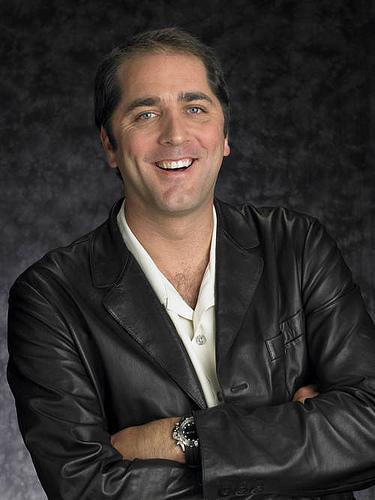
Phil Gordon
American professional poker player and commentator
4
APPEARANCES
4
PODCASTS
Jun 21, 2026


Fareed ZakariaHOST
When you look at the, the, the broader deal, uh, uh, is the big stumbling block likely to be what to do about the, uh, the 400 kilo- kilograms of enriched uranium the Iranians have?

Phil GordonGUEST
There are the 400 kilograms, which, you know, Trump talked about from the start, getting out that HEU, because as you know, that is enriched to 60%, which is a short step away from weapons grade, and they have 400 kilograms of it, uh, which is enough for more than 10 nuclear weapons.
Phil GordonGUEST
So there's that, and there's the state of Iran's enrichment program, and one of the reasons there wasn't a nuclear deal, notwithstanding all of these negotiations- before the war, is that the Trump administration was in- insisting on zero enrichment.
Phil GordonGUEST
So th- those are the two big things that would have to be agreed if there's going to be this comprehensive nuclear deal, uh, to get rid of or down-blend the highly enriched uranium, and to have some sort of cap or ban on enrichment.
Phil GordonGUEST
But once again, just like on the first part, Iran seems to have all of the leverage here.
Fareed ZakariaHOST
W- you know, what happened to their criticisms? Have any of them, uh, been in, in some way, you know, kind of, uh, uh, fulfilled? I- have, have they been able to get some traction on the issues they were concerned about?


Gideon RachmanHOST
But if we're right that he's about to pull out with a lot of problems with Iran unresolved, where does that leave Israel?
Philip GordonGUEST
Yeah, that's the other big question that, you know, analysts have been asking for the past several weeks.
Philip GordonGUEST
'Cause I think most people's base case analysis of this whole frame was that Trump would eventually declare victory and go home.
Philip GordonGUEST
You know, he would escalate, make threats, pursue war aims, but ultimately when markets were hit, he would find a way to say mission accomplished and end the conflict.
Philip GordonGUEST
When US markets get hit, there was a pattern after Liberation Day, there was a pattern after the Greenland threats, and now we're seeing it obviously with markets having been hit very hard by the Iran war.
Philip GordonGUEST
I think most people's analysis was eventually Trump would call it declare victory and say the war is over.
Gideon RachmanHOST
How does the Iran war change the background to that summit, do you think? And more broadly, do we have any sense of how China might be viewing, say, the Taiwan issue post Iran?


Tim MillerHOST
I mean, do you imagine yourself being the national security advisor for someone doing a regime change war in Iran? [laughs]
Phil GordonGUEST
And as you say, I wrote a whole book on how regime change in the Middle East always goes wrong.And that we always seem to follow these same patterns of exaggerating the threat, uh, and then overstating what we can accomplish with military force, and then finding out there are under-unintended consequences, and then declaring victory 'cause you think it's around the corner, and then finding out that the costs are...
Phil GordonGUEST
And, like, that pattern we have repeated over and over again, and lo and behold, [chuckles] it's exactly what Trump is doing, right? So suddenly Iran was an imminent threat.
Phil GordonGUEST
We couldn't survive a day longer unless we, uh, used force, and force would save protesters and get rid of the regime and deal with the nuclear issue.
Phil GordonGUEST
He said, "We've accomplished more in the first weeks than we ever imagined." But then you find unintended consequences, you know, oil price, strikes on neighbors, Russia benefiting, you know, running out of interceptors in Ukraine.
6 MINS LATER
Tim MillerHOST
How do the Democrats... assuming we get out of this, and you're sa-- you have somebody coming in twenty twenty-nine, how do they deal with, you know, those nation-states and our relationships with them and whether there needs to be accountability?


Dan Kurtz-PhelanHOST
But you did write that, "Along with the strategic landscape he inherited, Trump's unpredictable nature could give him leverage with Iran, Israel, and the Gulf states." How did you see the regional situation then, or, you know, put differently, why did you see Trump as having an opportunity in a region that has, you know, not offered a lot of them over the last, uh, the past few decades? And- and how do you see the regional situation now, both before we started this immediate crisis and as you see it developing, uh, in these past few days?
Phil GordonGUEST
Uh, yeah, no, that was- that was the very first piece I wrote after leaving government, and it emerged from...
Phil GordonGUEST
So, as I looked back after four years in the White House working on all these things and a history before that of working in the Middle East, I just sort of tried to step back and think, like, "Where are we now, and what are we leaving?" And it did strike me, a bit to my own surprise......
Phil GordonGUEST
because I said at the time, I'm not used to writing pieces with the words Middle East and opportunity both in the, in the headline.
Phil GordonGUEST
Because as you say, uh, and as I (laughs) wrote in the piece, president after president has had their moment of hope, you know, going back to Clinton and Camp David, but, uh, Bush after the Iraq War, Obama out the, uh, Arab Spring, there always seems to be a moment where now we finally have an opportunity and we can make the best of this, and alas, for a whole bunch of complicated reasons, it usually doesn't work out very well.
Phil GordonGUEST
So, I was surprised to find myself concluding, but, you know, I was just trying to be honest thinking about it, like, what are we leaving and what is Trump inheriting? And it did strike me that he was actually inheriting some real opportunities and...
Phil GordonGUEST
and, you know, you might... or it may be implied you were surprised to hear that coming from me, 'cause I'm not exactly a, a huge fan of Trump's foreign policy in general, but I had to acknowledge that there was a chance, at least, that certain particular aspects of Trump and his administration might make it even easier for them to take advantage of these.
16 MINS LATER
Dan Kurtz-PhelanHOST
What is more challenging about that than, than people appreciate? And as you look back on American policy, at least during the Biden administration since October 7th, are there moments where you thought the US had more ability to shape Israeli action, that if, you know, you could go back and run it again, you would, you would handle somewhat differently?