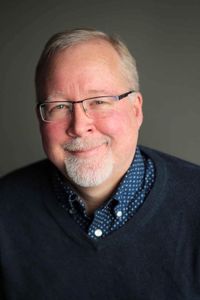
Phillip Anderson
Politician
10
APPEARANCES
8
PODCASTS
Oct 23, 2026

Jonathan BrownHOST
I just wondered for our listeners and our viewers who maybe haven't seen the video or just wanted a brief intro is what is a citizen's dividend and why is it called that?
Phil AndersonGUEST
Well, there's been a few ideas over the years to try and get a universal basic income for people.
Phil AndersonGUEST
And this topic is going to get more and more talked about, I think, with all the AI stuff coming, especially if we do start to lose jobs from AI.
Phil AndersonGUEST
The general consensus is because Those in power, they don't want their land value touched.
Phil AndersonGUEST
So they generally come out and say, yes, we should have a universal basic income.
Phil AndersonGUEST
We'll tax people a little bit more, tax the rich, do something else, and then redistribute that to those who can least afford things.
7 MINS LATER
Jonathan BrownHOST
and all the years we've been looking forward with some excitement but also with trepidation to 2026 really.
Phil AndersonGUEST
I was privileged enough to do eight years at the London School of Philosophy and Economic Science and regrettably, in that school, I found all my answers.
13 MINS LATER


David PreshaahHOST
Can you remember some of the most jolly lubricated matches you've been at, and some of those, some of those scenes, or...?
Phil AndersonGUEST
Couple of, like, couple of years against, um, against Bournemouth, was it? Which is, that was absolutely crazy.
Phil AndersonGUEST
When Leicester won the league, um, we played them, uh, we played them at the Emirates, and it was quite a close, it was quite a close thing then.
Phil AndersonGUEST
I think Leicester had got away a little bit, and we were trying to close the gap.

Phil AndersonGUEST
That's really critical to make sure that we get a, an increased pathway of new advisors into the profession, rather than having it limited to a very prescriptive set of programs that many of them have started to pull back from anyway.
Phil AndersonGUEST
I, I guess the, the big things here are commitment to simplifying the, um, statements of advice, and we know they had a, a first crack at that early last year when they put out the, um, draft legislation, including the suggestion that we would change the name to Client Advice Record.
Phil AndersonGUEST
Our pushback at the time was, "Well, it's one thing to change the name, but what we actually want is a significant reduction in complexity and cost of production," and, and that wasn't delivered at that point.
42 MINS LATER


Phil AndersonGUEST
do you think about that? It's frightening, isn't it? Again, not to belittle the figures, but if we put that, it's every other one.
Phil AndersonGUEST
And I know we're going to do some analysis on this, and there's going to be one of the papers we're going to write is going to be the focus on this.
15 MINS LATER

Ben DonaldHOST
But I guess that sort of goes to, to the other component, right? So you've got the su- sustainability, and then just touching on distribution, the, the $700 million question: How do we get 14,000 advisors back into life insurance?
Phil AndersonGUEST
Um, I don't think, uh, I don't think they're all actually authorized to provide life insurance advice.
Phil AndersonGUEST
Um, we also need to, uh, be very clear with advisors that you can't just ignore life insurance needs.


Phil AndersonGUEST
I, I do think that, um, wh- whilst real estate agents have a very important role and they, they connect people with, uh, with a passion, which is their property, financial advisors have a lifelong relationship with some of their clients, and they work with them through the, the various major life events.
Phil AndersonGUEST
They can help them with developing a plan for the future, developing, um, behaviors that are going to help them to achieve that outcome.
Phil AndersonGUEST
There's a lot of value in being an advisor, and there's a great connection they have with their clients.
5 MINS LATER


Phil AndersonGUEST
What we want to talk about today is primarily learning, as Chris has said, because if we don't protect the talent to learn and we then don't do something with it, then we're not learning and we're not improving.
Phil AndersonGUEST
What the forum is here to do and what makes a difference is not only us being completely independent, we're not here to inform, but we are here to improve standards.
Phil AndersonGUEST
And some of the things I want to talk about today will be around from the failure loop that unfortunately too many of us can relate to.
22 MINS LATER
MartinHOST
So you get an act, not only are you going to get an accurate picture, but it's probably going to change your own perception of how often it happens.

Phil AndersonGUEST
We, we, we haven't got an infinite amount of time to, to work on these cases 'cause we're not allowed to do that.
Phil AndersonGUEST
Uh, I don't know what the current statistics are, um, probably should look them up.
Phil AndersonGUEST
But the amount of caseload that's, uh, child sexual abuse material as well, um, and how that's managed with individuals as well.
Phil AndersonGUEST
And then as we've just touched on briefly right at the beginning, the fact that AI images are out there, and the fact that they can r- be replicated within seconds and created within seconds, um, how much of an impact has that had on the CSAM exposure to investigators, the time pressure to go through it.
Phil AndersonGUEST
Um, so this is what I was interested in, in, um, the fact that somebody can just download a piece of software or go onto a website, throw some images in, and just tell it what they want it, what, what they want to get out the other side.
26 MINS LATER

Phill AndersonGUEST
So I ask in the Hucklebuck Swamp ti- are time slips real? A few minutes after asking this to the Spirit Box, didn't get a response in the Spirit Box that was a, a response to the question.
Phill AndersonGUEST
I start hearing something in the, in the woods of the Hucklebuck Swamp that I just, like, can't quite make it out.
Phill AndersonGUEST
And to give you background, this is the same location as the metal sounds, same location as the, the weird stuff I was talking about last time with the metal noises, glass moving, all that stuff.
1 HR 3 MINS LATER