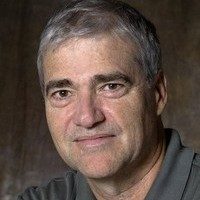
Peter Douglas Ward
American paleontologist and professor
12
APPEARANCES
9
PODCASTS
Sep 7, 2026

Peter WardGUEST
Certainly from a selection point of view, we're training our people smarter rather than harder.
Peter WardGUEST
My initial comments earlier in our discussion related to during selection members or applicants were selected out rather than selected in.
Peter WardGUEST
We've now spun that on its head and we're actually looking for those attributes that we think are aligned to our success.
Peter WardGUEST
And as you've indicated, we've sought advice from external psychologists and experts in the areas of selection and not just tactical police selection.
Peter WardGUEST
We've developed a number of tools that allow us to look at people through a different lens.
5 MINS LATER

Harry MoffittHOST
Is there any other, what are the biggest challenges facing the SOG at the moment and where do you see the kind of future of operator in what environments they're operating

Lars LarsonHOST
So I guess it's two questions, Professor Ward, and that is, number one, is there other life like us out there, complex life? And number two, will we ever hear from them? I understand the second problem, but is it likely, as the book title suggests, why complex life is uncommon in the universe? Is there a reason it's not more common than we might have thought it would be?

Peter WardGUEST
Yeah, well, one of the scary things that's happened since we wrote that book, and again, that was 25 years ago, time has gone by, something called the big filter.
Peter WardGUEST
It is that, yes, you might have animal equivalents, people that we could speak to or have conversations with perhaps, but the great filter suggests that civilizations get to a certain point and either wipe themselves out, or actually nature wipes them out.
Lars LarsonHOST
How is it that plate tectonics and the movement of those plates help to keep the temperature moderated?

speaker_6ADVERTISER
Visit subaru.com/outback to learn more
Peter WardGUEST
That's an 18-inch long skull of an animal that was probably seven or eight feet, sprawled like a lizard, probably had a head like a lion.
speaker_9ADVERTISER
Think you have what it takes? [can opening]


Paul HaywardHOST
What was it like to go through a season where everything clicked like that? What were you doing so well to enable you to get 36 goals?

Peter WardGUEST
I think it was just the players I was playing with and also the players playing against me didn't really know me.

Peter WardGUEST
represent a constituency? Well, first of all, I've always believed in a fairer world.
Peter WardGUEST
But, you know, broadly speaking, climate change is one of the issues that we do face.
Peter WardGUEST
But before the referendum, I've got to be honest, I wasn't that bothered about the EU until I watched the debates between Nigel Farage and Nick Clegg on television.
Peter WardGUEST
And Nigel Farage made the point that something like 75% of UK laws came from Brussels.

Ben ChambersHOST
Why is it that when people have been fooled, they almost so eagerly want to be fooled again? Can you give me your take on the psychology behind that?

Shane SimonsenHOST
Uh, Peter, can you tell us a bit more about yourself and the journey through life that kind of led to where you are today?
Peter WardGUEST
Well, they weren't popular enough, [laughs] 'cause I still have my day job at 76 years old.
Peter WardGUEST
I'm happily enough, I never quit being a kid, so I've been able to think about dinosaurs for all these years.
Peter WardGUEST
But dinosaurs are just the tip of the iceberg, of course, and the hothouse, and the other, many other worlds of the history of life on Earth.
Peter WardGUEST
But the fun part about it was I was lucky enough to be around really smart people that intrigued me about how could we apply the history of life on Earth to understanding the frequency of life in the cosmos.
1 HR 11 MINS LATER

Peter WardGUEST
They real- recognize that, like I think, there's an inev- inevitability to a pretty significant sea level rise, and what are we gonna do about it? So as their country goes underwater, they are already now thinking of very large, uh, living areas which are, are floating.
Peter WardGUEST
And the Museum of Modern Art in New York City, of all things, asked four different architects to come up with a New York of the 21st century, and they recognize, as I do, that right now New York is trying to...
16 MINS LATER

Art BellHOST
Is there any chance, in your opinion, uh, professor, that we would evolve to, uh, be able to survive in a changed and changing climate?
Peter WardGUEST
We certainly have-- We are, as Steve Stanley said, we are children of the Ice Age, and the Ice Age was nothing but change.
Peter WardGUEST
But to really produce a new species, if you wanna evolve, you wanna produce a new species, that's where most of the evolution takes place, we would have to separate somehow.
Peter WardGUEST
But with transportation being what it is and with social mores falling, with the taboos against breeding with other countries' people falling like crazy, the chance becomes less and less that some group of us could get isolated and have sufficient isolation, sufficient, uh, change around them to produce huge evolutionary differences.
23 MINS LATER


George NooryHOST
Let's take a few moments to talk about climate change, and regardless of how it changes or why it changes, can you say that, beyond a shadow of a doubt, climates change?
Peter WardGUEST
It's funny, the-Just as I was preparing for the show, I was looking and was surprised to see a week ago it was announced that the El Niño event, which we in Western Washington keep an eye on, is expected to be what they're calling a super El Niño.
Peter WardGUEST
El Niño is a cycle back and forth, and it's entirely related to the warming of water or the cooling of water off the western coast of South America.
Peter WardGUEST
George, I don't know about where you've been this past six months, but we out in the west have just gone through the driest, warmest winter that I can ever remember.
11 MINS LATER
George NooryHOST
Peter, if you were on the planet at the time of the collision, and you were able to witness it, what would you see? What would you-
26 MINS LATER
Peter WardGUEST
We were two parties, one from the American Museum of National History and our party, University of Washington and Caltech.
Peter WardGUEST
The American Museum team was found in a cave just barely alive after the storm blew all their tents down.
Peter WardGUEST
So if you don't have a tent in a big storm when it's below zero and you've got, we had 90 mile an hour winds, you die real fast.
39 MINS LATER

Art BellHOST
What I'm worried about is some sort of trigger that would cause a release in perhaps just one of these oceans releasing its CO2 suddenly.
Peter WardGUEST
What if it isn't CO2 that gets out, but what if it's methane? There's a guy at Northwestern named Greg Riskin, who's a chemical engineer, a couple of years ago did some calculations that the Black Sea has at its base, at its bottom, enormous quantities of methane, which could come out of solution.
1 HR 14 MINS LATER
TomAUDIENCE
It's the effect of the volcano itself.