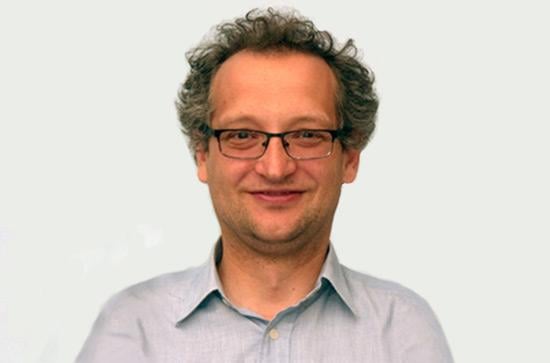
Peter Thorne
Climatologist and professor
16
APPEARANCES
12
PODCASTS
Oct 24, 2026


Áine KerrHOST
And so is this a failure of government to do ruthless prioritisation when it comes to that investment piece, the finance, the political will piece? Where are the quickest wins here, Peter Thorne, when it comes to really grappling with this, ensuring there's better preparation at a community level that they can react, but ensuring when we're in futuristic mode, we're bringing down an 11-year stat to something that probably looks much more short-termistic?

Peter ThorneGUEST
The programme for government talked about an emergency relief scheme for citizens when they are impacted.
Peter ThorneGUEST
We need to have these community hubs that were mentioned in the previous piece.
Peter ThorneGUEST
But also we need to do the hard yards of protecting our citizens, which means large investment, but it means investment in both hard infrastructure and nature-based solutions, including paying our farmers to flood much of the land to protect towns and cities.
Áine KerrHOST
What does that say to you about the level of prioritisation commitment from the current government?

John MorleyHOST
Are there simply a lot of things outside of our control, natural disasters and events and even wars that really make a lot of the progress we're making insufficient?
Peter ThorneGUEST
Well, there are certainly many, many things happening, which further 2020 scriptwriters should have done a long time ago.
Peter ThorneGUEST
And many of the things that are going on in the world, if we weren't wedded to fossil fuels, we would not be in the mess we're in right now.
Peter ThorneGUEST
Imagine a world, a different world that 20 years ago, we took the plunge and really went all in on electric vehicles like Norway did.
Peter ThorneGUEST
really went in on renewable energy like Denmark did, where today we would be powered by renewable energy.
John MorleyHOST
Yeah, what examples can you give to what could happen in that scenario, three degrees Celsius of warming?


Aisling O'RourkeHOST
We're a bit nervous heading into the winter, and, uh, we're really not prepared, are we?
Peter ThorneGUEST
We're not prepared in really important ways, and much of it, as we make clear in the report, is things that could be done, we've made clear in earlier chapters in the s- in the annual review.
Peter ThorneGUEST
For example, around the need for, um, shel- uh, shelters where people can go and be- get simple things, a warm meal, a hot cuppa, um, a warm shower.
Peter ThorneGUEST
Um, where the program for government called for provision of funding to affected individuals with minimal pa- paperwork to help them get back on their feet.
Aisling O'RourkeHOST
But that is still, despite all we've been through, that is still a battle that's being fought and people w- objecting to these developments up and down the country.


Alan CorcoranHOST
How important are these temporary measures while we wait for the long-term scheme? Do they have any effect? Well...
Peter ThorneGUEST
Well, they will protect from a, if you like, a common garden flood, a relatively ordinary flood, not the floods that are ordinary, but you know what I mean.
Peter ThorneGUEST
But then again, equally, it's important to note that even permanent flood defences will not protect from absolutely everything.
Peter ThorneGUEST
It is economically unfeasible to protect from a truly catastrophic biblical flood.
Alan CorcoranHOST
How many surveys do you need, Professor? And, I mean, Ed Murphy outlined that these could be as much as €1 million per pop I mean, how many more surveys do they need for somewhere like Enniscorthy before they actually apply the


Jonathan HealyHOST
Are you worried that we're not going to focus too much on climate change when it comes to next week's budget?
Peter ThorneGUEST
The most effective way that we can adapt is to mitigate, to reduce our emissions.
Jonathan HealyHOST
Do you think that we're going to get off the cycle from storm to storm and start dealing with it? It's hard to believe that we will when there are 288 flood prone sites proposed for rezoning by councillors are still building houses where we know there's going to be flooding and we know there's going to be more flooding as a result of climate change.
speaker_0HOST
What are you talking about?
Peter ThorneGUEST
So we know that all of these events are being made more likely, more severe due to climate change.
Peter ThorneGUEST
And we fundamentally need to wake up to the fact that these punches will keep being landed on us.
Peter ThorneGUEST
And if all we're doing is trying to stand up and not roll with them, then we're in trouble.
Peter ThorneGUEST
What kind of planning then is required? We need to get very, very serious about investing in protecting the most vulnerable communities.
Peter ThorneGUEST
And we need to get very, very serious about actually protecting them from flooding, for example.
speaker_0HOST
What's your understanding as to why that hasn't been set up yet?
speaker_0HOST
What does that mean?
Peter ThorneGUEST
So at the moment, if you emit a ton of CO2, carbon dioxide into the atmosphere, about a third of that goes into the ocean and a third of that goes into the terrestrial biosphere.
Peter ThorneGUEST
Indeed, the Intergovernmental Panel on Climate Change concluded that those sinks would weaken.
Peter ThorneGUEST
So what can be done then? What needs to be done is the same as I've said time and time again on this show and other shows.
speaker_0HOST
What are you expecting?


Pat KennyHOST
Now, the implications of this being possibly the severest El Nino ever, certainly since records began according to the WMO and no probably detailed records from the late 1800s, what are the implications of this severity?
Peter ThorneGUEST
So the implication is the largest and most predictable in the Pacific and Indian Ocean regions.
Peter ThorneGUEST
So in North America, for example, in the US, they will have a very wet winter in California and up the West Coast.
Peter ThorneGUEST
Similarly, Australia, it's very highly predictable that in El Nino they will have drought.
Peter ThorneGUEST
So in certain regions of the world, particularly surrounding the Pacific, but also in India, the Indian monsoon already has been reduced this summer.
6 MINS LATER
Pat KennyHOST
And finally, that terrible series of events in Nepal, which may have killed thousands of people, you know, is that attributable directly to climate change, melting glaciers that maybe didn't melt as precipitously heretofore?


Peter ThorneGUEST
So carbon budget one is the amount, uh, so we have a carbon budget paradigm at the moment in Ireland where we have said we will emit a certain...
Peter ThorneGUEST
We will allow the state to emit a certain amount of carbon in the period 2021 to 2025, and then a certain amount in 2026 to 2030, and then the c- council has provided a proposed budget for 2031 to 2035 that currently sits with government.
Peter ThorneGUEST
Um, and those are the amounts, and then government has taken those and divvied these out by sectors.
Peter ThorneGUEST
So the build- built environment sector has a sectorial ceiling that it must stay within, and it has managed to do that for 2021 to 2025.
Peter ThorneGUEST
But all the projections say it will not meet the second budget, which is more stringent.
Peter ThorneGUEST
The idea with these carbon budgets is we will get to a point where we have net zero emissions from, from Ireland PLC, where Ireland is no longer contributing to the problem of climate change.

Peter ThorneGUEST
And my wife, uh, they said that, well, we'd never turned anybody down, so if somebody would phone to say, "Can you ask the computer the name of an African tree starting with Z?" So she'd go off to the library and try and find it for them [laughs] because she didn't want to disappoint them, but the computer wasn't going to do that.
16 MINS LATER

Jacinta BowlerHOST
All the way down under, before the internet made it possible to share knowledge at the drop of a hat, Australia was making its own strides in computing.
Peter ThorneGUEST
It's a symbol of innovation, which I think is so important that we are an innovative nation, and we are, but it's not recognized by the media and by the public as it ought to be.
Peter ThorneGUEST
People in Australia are working on quantum computing, so who knows where that will go.


Rachael EnglishHOST
Peter Thorne is Professor in Physical Geography at Maynooth and I asked him to explain why the 1887 figure is in doubt.
Peter ThorneGUEST
So we got a class of Master's students a few years ago to look at it using the techniques of the World Meteorological Organisation used to verify records And we found a lot of doubt over it.
Peter ThorneGUEST
There's probably just insufficient evidence to be absolutely certain of that record.
Peter ThorneGUEST
Whereas the 33 degrees we experienced at Phoenix Park in 2022, that's rock solid.
Peter ThorneGUEST
So that is the prerogative absolutely of MetErin and MetErin to their great credit went and did a study after the study we did it's not been as publicised but you can find it on the records page of MetErin and they themselves said there isn't sufficient evidence to be absolutely sure of this record but they've taken a precautionary approach and said we want to keep the record But you'll notice a lovely asterisk against that value, which is pointing to their study, which builds on ours, which also says we can't be sure.
speaker_0HOST
Is there any way, in your opinion, to target those grants towards the less well off?
Peter ThorneGUEST
Well, you could make much larger grant, grants that are targeted specifically to people given s- personal circumstances, but that gets very hard.
Peter ThorneGUEST
There are also things that are done in other countries, like 0% or very low interest loans, perhaps on longer terms than typical commercial loans, which would open up EV ownership, retrofit, and other climate actions to a far broader range of society.
Peter ThorneGUEST
Basically, when you give a grant, you g- you're throwing 5,000, 10,000 to the commercial sector, never to be seen again.
Peter ThorneGUEST
And if instead you do loans, when those loans are being repaid, that's money coming back in that you can loan back out, so that money doesn't just disappear.
Peter ThorneGUEST
That is recycled time and time again, and able to be used to accelerate climate action far more effectively.
speaker_0HOST
Uh, but while he's having that engagement with you, he's also, he says, negotiating with the European Commission, uh, to avoid fines for missing targets.
Peter ThorneGUEST
So we're well, we're well off track for, for both, uh, our national commitment on carbon budgets one and two, um, our ambition for 51% reduction by 2030.

speaker_0HOST
What's your main concern about the way the current government supports are structured?
Peter ThorneGUEST
So the current government supports are effectively transferring taxpayers' money to the very richest in society.
Peter ThorneGUEST
I can afford to pay for an EV and get a private loan, so that 5,000 I don't need, fundamentally, whereas people who are on a median income, your average earner in the country, they cannot afford to access, they still cannot afford the ticket price.
Peter ThorneGUEST
The other thing is that that's just 5,000 euros being transferred to private industry.
speaker_0HOST
And yet you're still being asked, as a low-income household or a lower to middle-income household, to take on extra debt, aren't you? Even if it is a, a zero or low-cost loan that you have to pay back, a lot of people might be reluctant to do that, uh, particularly when it comes to the bigger loans that you might see for retrofitting.

Anton SavageHOST
Peter, those impacts that we are seeing, I know they are obviously wide ranging, but can you give us some of the key ones in your assessment?
Peter ThorneGUEST
so the warmest summer on record was found to be much more likely due to climate change and that has real impacts demonstrable impacts upon human health heat comfort animal animal welfare including cattle and then the flooding that we've seen over the last autumn and winter again made more likely more severe due to climate change That's one of the key new things that we have, a new tool in our toolkit for Ireland is the ability to be able to attribute these events to humans and make very, very much clearer the direct line of evidence between our burning of fossil fuels and the impacts we see on the ground.
Anton SavageHOST
And in terms of getting on top of those, the emissions of greenhouse gases and the burning of fossil fuels, what do you hope for in response to this report?
Peter ThorneGUEST
So this report is simply the first part in our series of annual review chapters that we will put out through the year.
Peter ThorneGUEST
If those recommendations had been fully enacted, We would be much less dependent upon fossil fuels today, which means we would be much more economically resilient to what is hitting us right now with the fallout of the energy crisis arising from the Iran war.


Sean MoncrieffHOST
Now, why is there a difference there? Or is that, again, just kind of a tradition?
Peter ThorneGUEST
Also, in much of the UK, traditionally, it was based upon the equinoxes and the solstices.
Peter ThorneGUEST
So in America, it's 21st of March to 21st of June, and then summer is 21st of June to 21st of September, etc., etc.
Sean MoncrieffHOST
Yeah, and given you're a climate scientist, given the fact that our climate is changing, are those definitions of what constitutes summer, what constitutes winter, are they changing slightly?

Peter ThorneGUEST
Well, what actually happened, I think, was that it was a CSIRO machine, although it was in the grounds of Sydney University.
Peter ThorneGUEST
And by about 1955, a remarkable person had appeared at Sydney University itself in the person of Harry Messel.
Peter ThorneGUEST
He decided that he would import the design of a computer for the United States.
Peter ThorneGUEST
So he started to build Celiac, which was a copy of an Iliac, an American machine.

David MarrHOST
And in 1960, where is it? In 1960, the age in Melbourne had this terrific story because the computer had been taught to sing.