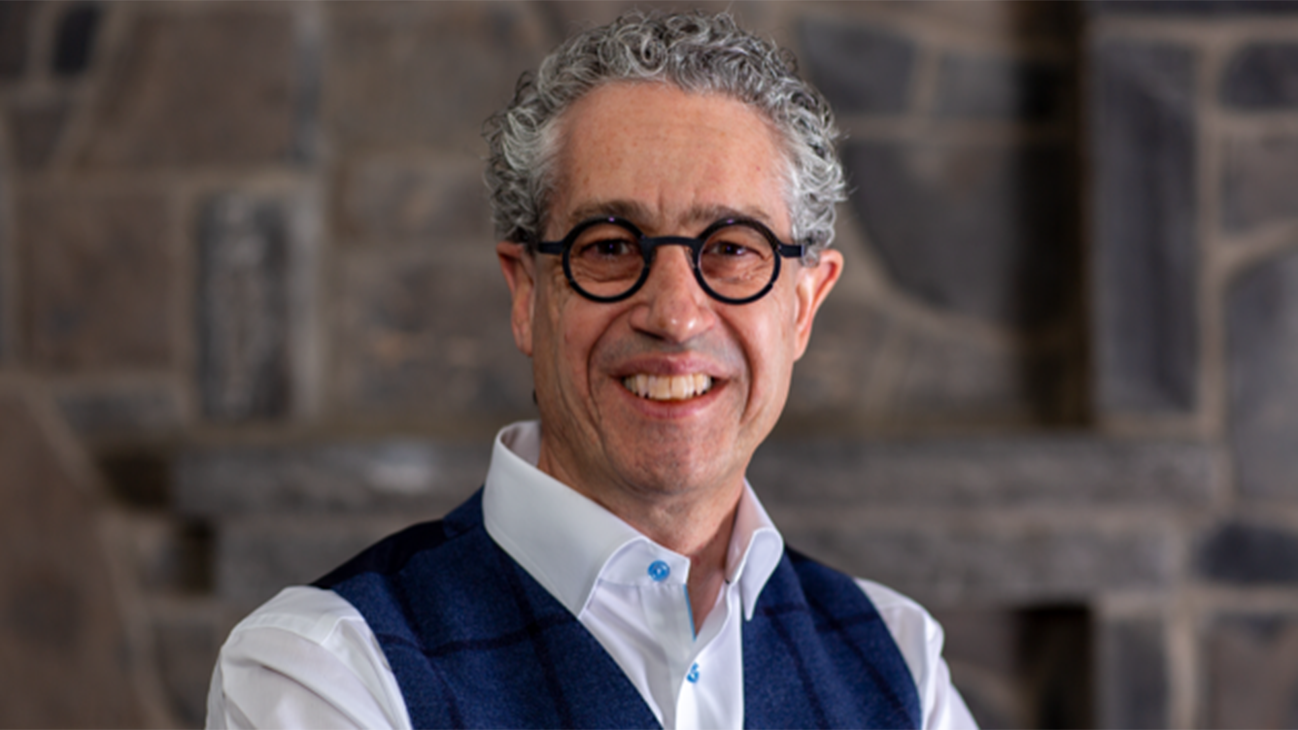
Peter Tertzakian
Canadian economist and author
4
APPEARANCES
3
PODCASTS
Oct 7, 2026


Patrick BrydenHOST
projects.What was the mood like, uh, particularly from the outsiders to our country? Uh, what, what was the-

Peter TertzakianGUEST
I spoke with people from Australia, from France, from obviously the United States, which was represented, and others, and the, the comments were, "Wow, this is great.
Peter TertzakianGUEST
I've never seen so much money in one room." I mean, we show very well, and that's step one.
Peter TertzakianGUEST
And then we move on to, okay, here's the project list, and the federal government and the provincial governments had assembled effectively deal books to basically say, "Okay, here's the various deals that we have." With respect to energy, there was about a hundred billion dollars roughly of conventional oil and gas and oil and gas infrastructure, like pipeline projects.
Peter TertzakianGUEST
Um, depending upon how you count it, uh, and also try and avoid double counting anywhere from fifty to a hundred billion dollars of power and utilities and electrification.
32 MINS LATER

Susan BellGUEST
within their borders, they're going to try and capitalize on that, particularly in the current scenario.

Peter TertzakianGUEST
And I think typically what you see in these situations, if we use history as a prologue in 73 and 79 and 80, we saw lots of legislations and policies come out in various countries that effectively said, we need to get off oil, we need to get off natural gas.
Peter TertzakianGUEST
And for the Western countries, it was also a call to ramp up nuclear power, which really ushered in the nuclear age.
Peter TertzakianGUEST
So this time around, we're seeing the same thing, an energy transition, but actually...
Peter TertzakianGUEST
As Susan points out, it's going to be largely in the near term, a regressive transition back to coal.

Falice ChinHOST
How do you think this episode might alter or change OPEC plus responses and even the relationship between members of this block? Because, you know, some of them are frenemies at best.
Peter TertzakianGUEST
I think that's an interesting question because behind the scenes over the weekend, OPEC said they're going to raise their production by another 100 and some thousand barrels a day, which is frankly trivial in the context, as I said, of what Iran produces.
Peter TertzakianGUEST
The reality is that if you look at the data, the quotas have been increased over the course of the last year for all the OPEC and OPEC Plus members, and many of them have not been able to produce to their quota even.
Peter TertzakianGUEST
It reflects that actually, notwithstanding a lot of storage of oil on tankers and places like that, which would rapidly dry up if the streets of Hormuz are closed for any extent of time.
Susan BellGUEST
So, you know, it's a challenge for Canada to really participate in this market in a big way because of its infrastructure limitations.

speaker_9UNKNOWN
What's the talent picture like right now?
Peter TertzakianGUEST
One is the downtown office workers, the geologists, geophysicists, engineers, uh, and that talent pool.
Peter TertzakianGUEST
Th- there was concern because of the retirement profile, the, the aging of the expertise, and the last decade where, again, we were talking earlier about oil and gas being perceived as a sunset industry, so why would any young person ever want-Yeah.... to go into this business.
Peter TertzakianGUEST
And so it was creating a situation whereby there could be, like, a real talent shortage.
