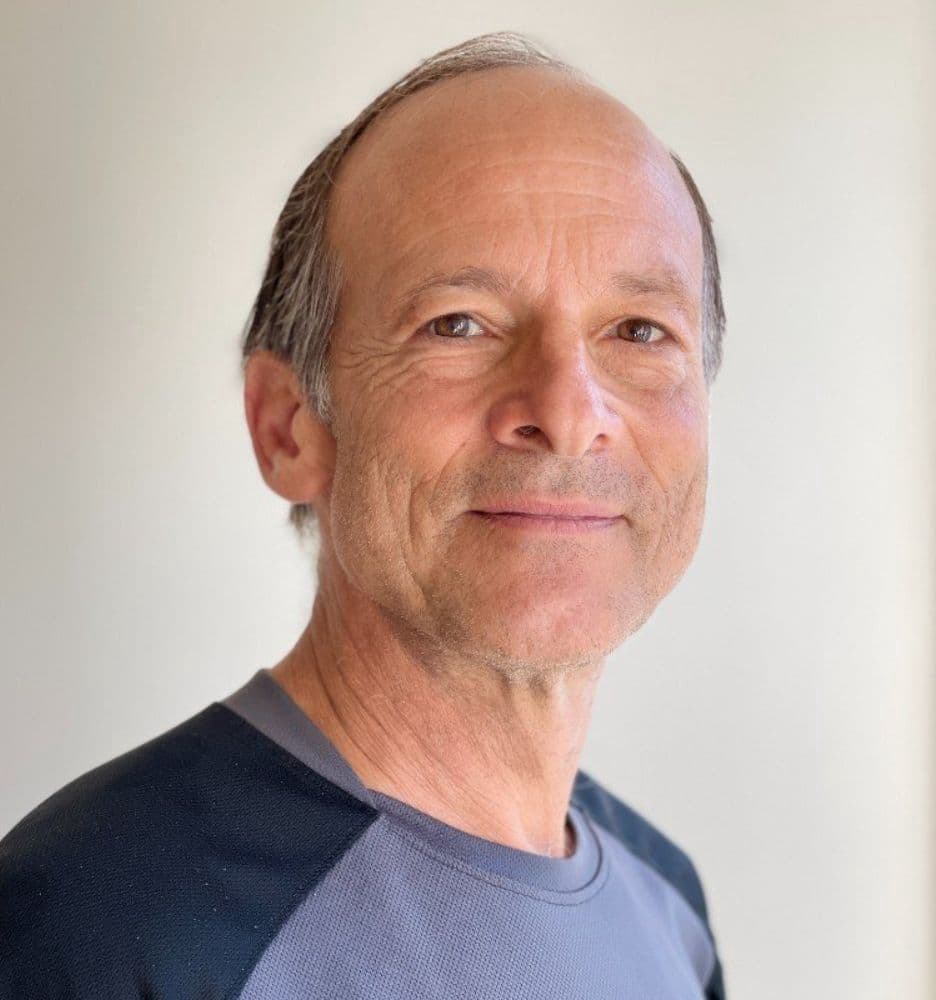
Peter Small
Award-nominated international freelance lighting designer based in London, working across theatre, opera, musicals, and live events; trained at RADA.
10
APPEARANCES
2
PODCASTS
Sep 17, 2026

Peter SmallGUEST
When was the last time you were excited about something you created? Well, I try quite hard to...
Peter SmallGUEST
Everyone always says to me, like, are you happy on a job? And I always struggle because I never know what that's supposed to mean.
Peter SmallGUEST
Like, when it wasn't going very well, what would I do? I'd be, like, a nervous ruin.

Peter SmallGUEST
I think it was the, as I said, it's the combination of being fearless around technology because as a child I was just left to take things apart.
Peter SmallGUEST
And they were like, yeah, that's fine because that's an old computer that is broken.
9 MINS LATER
Peter SmallGUEST
Well, not exclusively, but with these types of operations, it can become quite corporate, which is fine.
Peter SmallGUEST
Also, they're your friend until they bite you, and then... you know you're friends but it's also murky you can't have a hard conversation about rates of pay and counting up the days and blah if you're best mates and also it's not appropriate to have a relationship like it's just not really you know your line manager at work is your friend but you're not you know there needs to be a and even like an electrician like whoever like what you know you're all on the same team you're all fine but the director is the director and you're like you know you're not gonna you know the relationship needs to be in that way and that's good for everyone you that's not a powerful that's it's how you want it because like i say to the electrician like Yeah, OK, but if this goes wrong, they're never going to come to you and say, what's going on here? They're going to come to me.
Peter SmallGUEST
They're never going to say, what's going on with this one? It'll be me, and then I'll filter it.

Katja HamiltonGUEST
I am Katja Hamilton, and I'm a lighting designer for theater, um, musicals and some opera.
Peter SmallGUEST
I'm Peter Small, a lighting designer working across any genre, but most recently, opera, musicals, immersive and theater.
15 MINS LATER
Peter SmallGUEST
Uh, yeah, everyone always says to me, like, "Are you happy on a job?" And I always struggle because I never know what that's supposed to mean [laughs].
Peter SmallGUEST
Um, because I don't attach happiness to how it's g- 'cause then I'll, I'd be a wreck.

Nick FarmanHOST
And yes, you bring in associates and relighters and you farm work out and stuff like that, but I think that that's really hard for producers and directors to get their heads around.
Peter SmallGUEST
So if you really want to go for it, I like to imagine that where I'm headed with all this is to ascend into a kind of position of doing multiple projects at the same time and doing, I call it, I do it now, I call it project architecting.
Peter SmallGUEST
I don't call it architecting, so that's a bit much, but it's about staffing the team, the right team for the right job.
Peter SmallGUEST
Because quite often I'll come in pre-budget and be like, well, the budget should probably be something like this or something like that.
Peter SmallGUEST
So if you've got set metrics or something, you will always group things by a common denominator that you can all use.
17 MINS LATER

speaker_7UNKNOWN
So that was great.
Peter SmallGUEST
So when did they get here? They got here last year, but I had to find a time that Paul Swan and another wool scientist, Dr.
Peter SmallGUEST
Peter Howe, that they could both get here because there was no point in me looking at them.
Peter SmallGUEST
Paul, of course, he did his PhD on curvature, which, of course, curvature of wool is associated with the sort of skins that Carter was looking for.


Peter SmallGUEST
Well, or the easy way to do it, I mean, how this actually comes out is I go, you know, I want a Mac Aura slash equivalent, or I just put everything slash equivalent.

Joseph ThomasGUEST
Battery, does it work on a battery? Is it wireless? Are we going to have to put a whole run of DMX and power in to do this one unit? Is that where the dialogue changes?
Nick FarmanHOST
And because that's clearly conceptual stuff for how the lighting is going to work for a production, how are you communicating that with the rest of the creative team? Yeah, it's
Peter SmallGUEST
I never thought we'd go here, and this is actually very, yeah, you're right, you've found your way to my core very quickly.
Peter SmallGUEST
So the first thing to say is that I'm constantly out farming for information all the time.
17 MINS LATER
Katja HamiltonGUEST
Um, and I sort of knew of some directors and producers who'd gone and studied English, and I liked English, so I was like, "Great, this seems good."
Peter SmallGUEST
While she was going to get my siblings, she would leave me with my dad, who had a, a sort of, I guess you'd call it an office or something.
Peter SmallGUEST
In this office was lots of, like, electronics and stuff, um, which is irrelevant for what he was doing at the time, but it was there, uh, from a previous company he did, and I would just kind of mess around with it.
6 MINS LATER

Lucía Sánchez RoldánGUEST
But you love the, the performance and the stories and the, and all of the, like, paraphernalia around it.