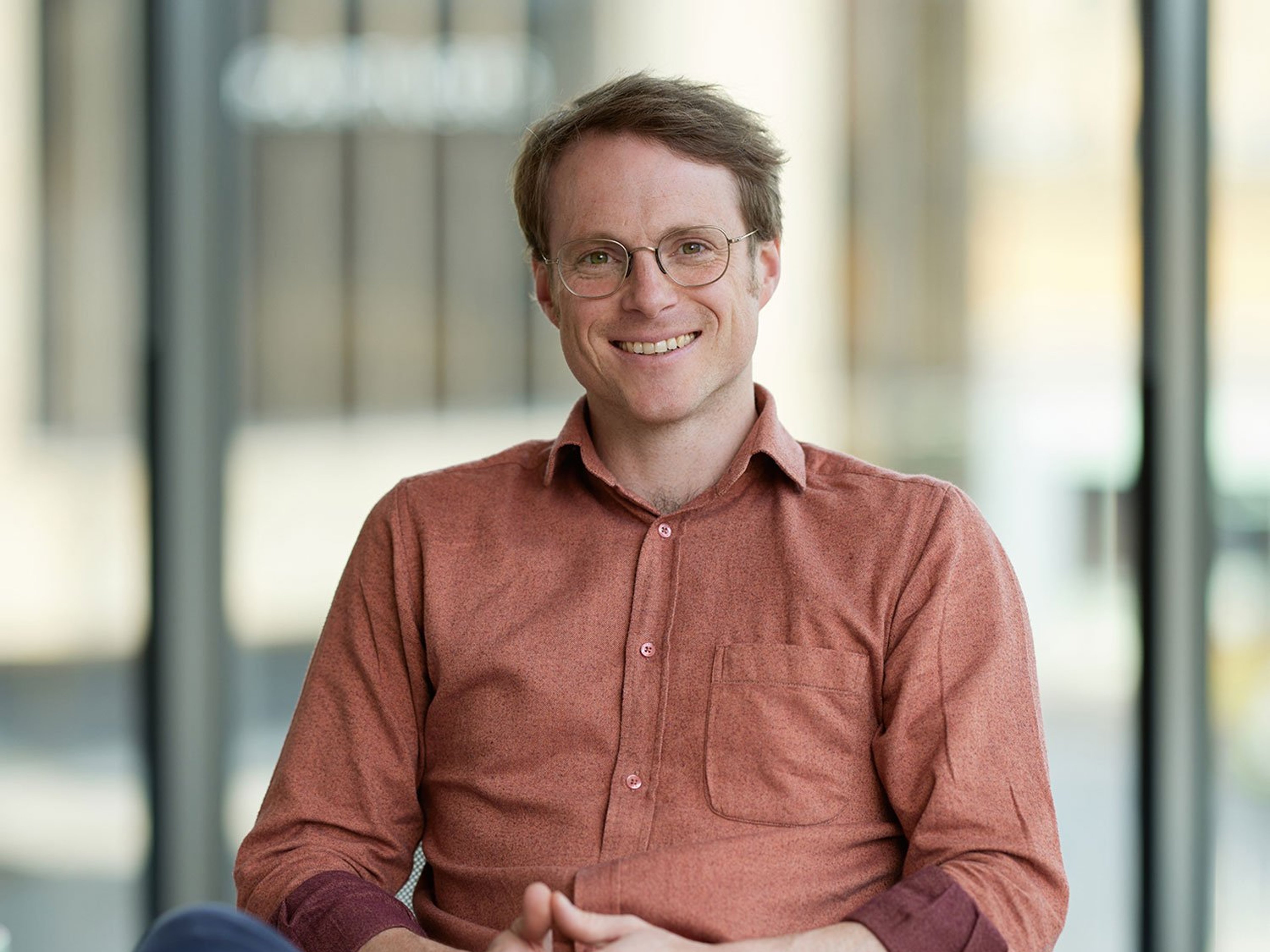
Peter Singlehurst
6
APPEARANCES
4
PODCASTS
Jun 18, 2026

0:53

I'm curious, like, how does a philosopher like yourself end up in private market?

Peter SinglehurstGUEST
Um, so, uh, so I, I studied philosophy at undergraduate, and I did a master's, uh, in philosophy.
Peter SinglehurstGUEST
And, um, I sort of came within a hair's breadth of staying on and doing a PhD, but sort of swerved that at the last minute and, um, sort of left me wondering what I should do.
Peter SinglehurstGUEST
Um, but I heard about this company called Baillie Gifford and this thing called investment management, and I thought, well, maybe that sort of sounds interesting.
Peter SinglehurstGUEST
Um, and it turns out that I was lucky enough to have stumbled across this firm that was specifically looking to hire people to be investors who sort of barely knew what investing was, who didn't have a background in finance.
21 MINS LATER
23:03
So do you think because you have this kind of like really long-term strategy, it's, uh, it's a value add for companies and a competitive advantage? Or like how do you perceive it?

Peter SinglehurstGUEST
I think what investors need to understand is that any investment is never about one single possible version of the future.
Peter SinglehurstGUEST
It's about understanding, uh, a range of scenarios that might play out for SpaceX, the probabilities that we can ascribe to those scenarios, and the payoffs in the event of those.
Peter SinglehurstGUEST
What SpaceX has been amazing at doing over the period that we've been fortunate enough to invest in it on behalf of our clients is testing and validating, uh, very, very difficult things, whether that's being a private rocket company, whether that, uh, was doing reusable rockets, uh, StarlinkStarship and orbital data centers and the AI strategy for SpaceX is the next outlandish hypothesis that they are seeking to validate.
Peter SinglehurstGUEST
Um, and the xAI acquisition, the, the orbital data center strategy widens the range of outcomes here.
Morgan BrennanHOST
Is that a competitive advantage relative to some of the others in the marketplace that's not being understood well?

Ed LudlowHOST
But y- just your, your sort of response to the model's capability, Anthropic's place in a group of five or six frontier labs that are trying to do exactly that, very big models with great capability.
Peter SinglehurstGUEST
Yeah, I mean, what we've seen with these LLMs is that the capabilities of the leading-edge models will quickly become available to the trailing-edge models, and then what separates the likes of Anthropic or OpenAI is their ability to continuously stay at the leading edge.
Peter SinglehurstGUEST
And so as a, you know, as a citizen, it does concern me that there will be these capabilities which today are in the hands of Anthropic, who, who, who we trust.
Peter SinglehurstGUEST
But I think it is inevitable that these tools, whether in the Mythos model or, uh, developed by other foundational models, will become more widely available.
Peter SinglehurstGUEST
And I think that leaves a lot of enterprises, a lot of governments, a lot of economic systems vulnerable to attacks.

Caroline HydeHOST
How are you thinking about this moment that everyone's world changes if they get access to some of these big companies, not just being private, but potential to be public as well?
Peter SinglehurstGUEST
I think it's important that everyday investors are able to access these kinds of companies, and so I think these companies coming to the public markets is overall a good thing.
Peter SinglehurstGUEST
I think what is in many ways a shame for the everyday investor is that there is so much growth that has already happened before these companies come to the public markets, and it's not just Anthropic, it's not just SpaceX.
Ed LudlowHOST
Um, and, and I guess just what's your, your reaction to that? How you guys felt about it, the interpretation of the rationale behind it?
Peter SinglehurstGUEST
I, I think when you step back and you consider what has made SpaceX such an incredible business over the last 10 years, it's their ability to drive down the cost of launch.
Peter SinglehurstGUEST
And when you look at other, um, hardware categories where we've seen that historically, such as Moore's law in transistors or Flatt's law in genomics, when you drive down cost, um, by orders of magnitude, it opens up, uh, phenomenal un- unforeseeable use cases.
Peter SinglehurstGUEST
Now, Starlink has been the first, um, application of that, and we think there's a, a stable case that, uh, data centers in space could well be the next application that opens up as you drive down that cost of launch.
Ed LudlowHOST
W- w- w-Explain, you know, what's happening in that private markets, um, in that private market th- that's supporting that, that theme.
Caroline HydeHOST
Peter, is 2026 going to be the year? And how do you think about some of your holdings ahead of that as to whether you want to be holding on to them in significant size?
Peter SinglehurstGUEST
It is unquestionable that many of these companies are of the scale and maturity, solidity, operational robustness to be public businesses.
Peter SinglehurstGUEST
And I think the real question is, when do they choose to enter the public markets? I think it's also pretty clear that public market investors are going to have real appetite for these businesses.
Peter SinglehurstGUEST
At what price, at what valuations will public market investors be willing to commit significant amounts of capital to these businesses? And how do the public markets digest IPOs of this scale? The largest tech IPO in history was Alibaba in 2014.
Peter SinglehurstGUEST
If SpaceX were to list 10% of itself, even at its current valuation, you'd be looking at an $80 billion valuation.
Ed LudlowHOST
How is that changing the market for you? And again, let's go back to valuations in that context.

speaker_3UNKNOWN
Why do you think that is?
Peter SinglehurstGUEST
Uh, focus. I mean, it's really hard to be a public company. It's really hard. It's not just the reporting requirements that you have. It's you, you can have people owning your shares for all sorts of reasons that are misaligned with what you're trying to do as a, as a company. You have to do everything in the cold light of day. All your competitors get to know pretty much everything about your business 'cause you have to tell your shareholders pretty much everything about your business. It's just really hard. And, I mean, I'd... I say this as... I have the most enormous amount of respect for companies that go public well and are, and are able to flourish as public businesses, 'cause it's really hard. So I think companies realize that they can have greater focus by remaining private for longer. Now, I think there are some, some good reasons for going public. I think it's right that employees should be able to get liquidity. But that's increasingly being served by these very large secondary private rounds. I think if you're an acquisitive business, having a public currency can be helpful. I think that if you're a business that operates in a regulated environment, I think it can be helpful for regulators to see you as a, as a, as a public company. We're shareholders in Epic Games, um, and that, that's been private since 1992. And I once asked Tim Sweeney, the, the founder of that company, like, you know, how he thinks about that. And he had quite an interesting answer. So he said that, "Well, at some point, it will be easier to be public than it is to be private." At the moment, it's much easier to be private than it is to be public. But at some point, the various forces that exist within your business mean that actually the easier option is to be public. And those forces can, can be need for liquidity. They can be, you know, if you need to be acquis- acquisitive or engaging with regulators, whatever. So these forces can, I think become good reasons for becoming public.
speaker_3UNKNOWN
... to this new IPO style, are they gonna get burned?
Peter SinglehurstGUEST
The, the trend that we've seen in growth-stage private company investing over the last 10 years looks a little bit like this, right? So, these companies, or these kinds of companies, they, they all used to be public businesses. And the natural owners of the more public market organizations, it was Baillie Gifford, it was T. Rowe, it was BlackRock. Companies started staying private longer, so the natural owners and the long-term historic owners kind of got pushed out of owning those kind of companies. This created a vacuum. Into that vacuum — and I don't mean this in a pejorative sense — but y- the opportunists came into that vacuum. So you had hedge funds, you had traditional earlier-stage investors spinning up these growth-stage funds and owning companies that they knew, but had never owned companies at that stage and scale before. Post-'21, I think a lot of those guys got pushed out, but some have remained, and some have remained at, really, scale. My hope is that they're developing real expertise of what it means to own companies at this stage and scale, because you want to have good owners of companies, right? Like, you want to be operating in a market where you have rational investors making rational decisions, doing, you know, really solid analysis on companies, because you need that market to be sort of pricing efficiently. I think there are examples of that, but I think what you're really seeing is more of, like, an institutionalization and a professionalization of this market. To give you, like, one example of what that can look like, we're shareholders in Anduril. We first invested in that company last year. The round that we took part in, there were the insiders in it, but then other than the insiders, the only new investors that came into that round were investors that were traditional public market investors, but could also do some private investing. And that's because what the company needed was investors that are used to owning companies at that stage of growth and that scale, and over time, can help them transition into the public markets.