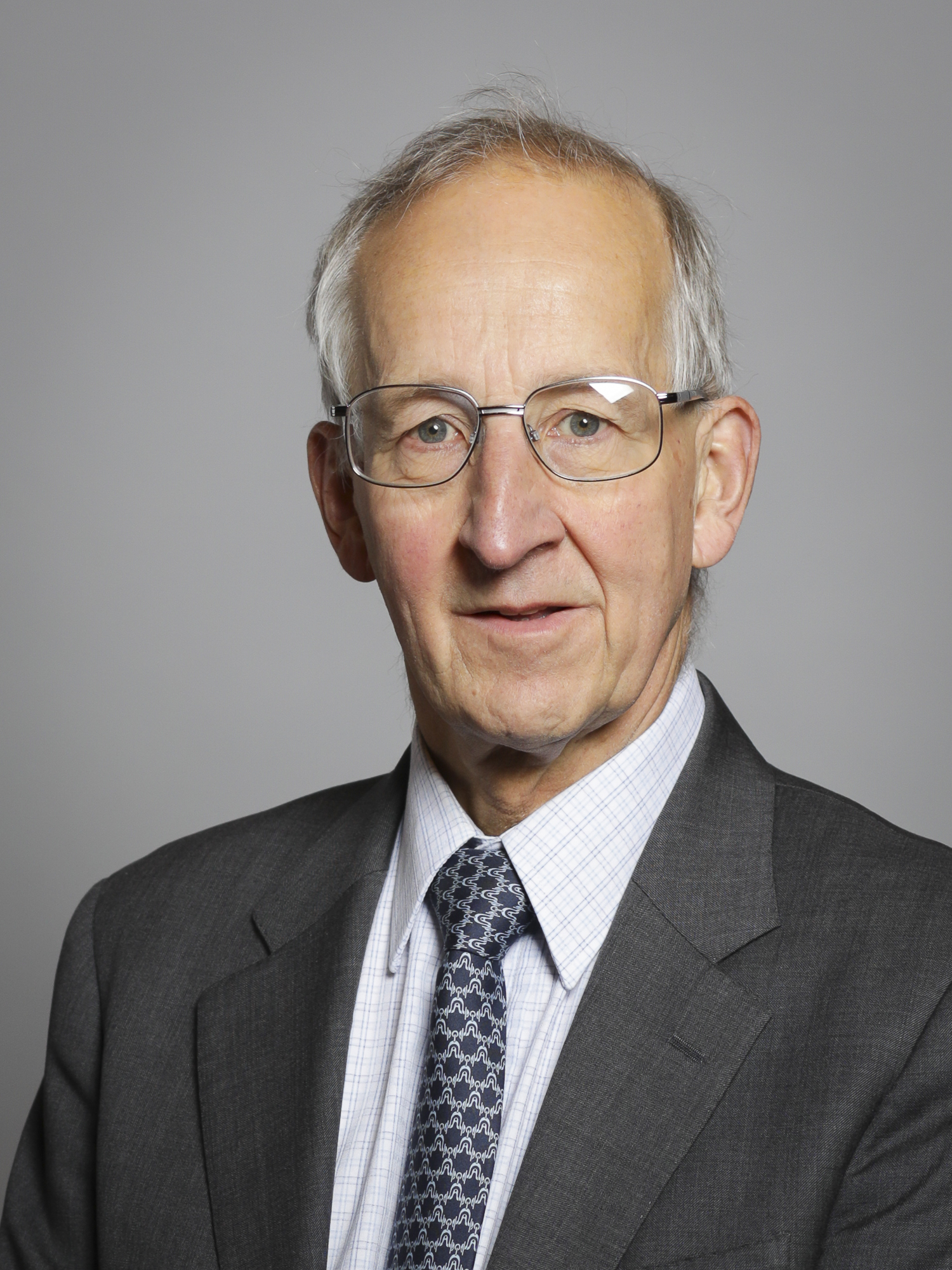
Peter Ricketts
Former British Ambassador to France
14
APPEARANCES
13
PODCASTS
Sep 19, 2026

9:15

What are your thoughts on this deal, uh, given that we don't know the details yet?

Peter RickettsGUEST
It sounds to me like a classic piece of Trump handling, um, in that it sounds like it's a face saver for Trump, which doesn't actually change things very much on the ground at all.
Peter RickettsGUEST
I mean, as your previous speaker was saying, the US has had a, uh, agreement with the US since nineteen fifty-one on Greenland, which was very permissive.
Peter RickettsGUEST
It basically allowed the Americans to deploy any number of troops they wanted.
Peter RickettsGUEST
They had ten thousand during the Cold War, uh, an early warning radar system at Thule Air Base, which is increasingly important for, um, safety of American airspace.
10:47
Uh, and I wonder to what extent the NATO Secretary General, Mark Rutte, who's really been seen as someone who has bent over backwards to keep Donald Trump on board with the alliance, to, to what extent do you think he was involved in, in striking this deal?


Philip IngramHOST
Is Moscow actually looking for a settlement? Is Putin still playing it? Is Zelensky playing a good diplomatic game here? What's going on from your perspective?
Peter RickettsGUEST
First of all, no, I don't think Putin's got the slightest interest in a settlement at this point.
Peter RickettsGUEST
I think he's convinced himself he can still win, that with one or other of the various tactics they're trying, in the end, opposition in Ukraine will crumble and either the government will fall or people will give up trying to defend against the Russians.
Peter RickettsGUEST
Of the various visits he went through, I think the visit by CIA Director Ratcliffe is the most interesting one.
10 MINS LATER
Philip IngramHOST
And certainly Xi Jinping's views are something that I'm concerned about because he's very quiet and he's always got something planned.


Audrey CarvilleHOST
And with the benefit of so much hindsight, how crucial was their role in World War II, would you say?
Peter RickettsGUEST
One of the vital things they did was from the middle of the war to start thinking ahead to the future peace.
Peter RickettsGUEST
So while every other arm of government from Churchill downwards was concentrated on winning the war, the then head of the Foreign Office, Alec Cadogan, put some of his best brains onto thinking about what kind of a peace do we want? How can we design a world order which will prevent a third world war and keep Britain in a leading position after the war? And they laid out the blueprint for what became the United Nations.
Peter RickettsGUEST
They put down the building blocks that would become NATO after the war finished.

Peter RickettsGUEST
Well, before, the Anglo-Saxons ruled, uh, in England, uh, and in other parts of the UK, other rulers.
Peter RickettsGUEST
So many of the great monuments of the cathedrals and the, and the castles around England were built by the Normans in the century after the conquest.
8 MINS LATER
32:46
Recently, one of the senior Pentagon officials, uh, Elbridge Col- Colby, has said that Europe, quote, "Must not slack in their military back- backing for Ukraine." How did you take those comments?

Peter RickettsGUEST
We'd had a big row with them about a submarine contract which they had had with Australia, which we basically took off them, the Americans, and with the Brexit tensions as well.
Peter RickettsGUEST
So it wasn't the right moment, I think, to relaunch it until things settled down in the political relationship.
6 MINS LATER
George ParkerHOST
A triumph of cultural diplomacy, with a bit of luck given renovations at the bio-museum created an opportunity to move the piece.
Peter RickettsGUEST
Risk zero would be to leave it in a box in Bayeux for two years in the dark and then put it back on exhibition.
Peter RickettsGUEST
But I think President Macron's intuition that there was something more useful that could be done with the tapestry in those two years, that was right.
Peter RickettsGUEST
And so I'm quite sure when it's on display in London, there will be hundreds of thousands of French people as well as British people who flock to see it, including large numbers of children.


Andrew RobertsHOST
How, how did it, uh, how did it work? I mean, what, what did the p- what did the, um, uh, neutral governments think of both the Germans and the British using their, their cities as, uh, intelligence gathering places?
Peter RickettsGUEST
places?I mean, I think Spain is a very interesting case in point because you would have thought that Franco as a dictator would have all kinds of affinities with Hitler and with Mussolini, and indeed he did.
Peter RickettsGUEST
Um, and part of that was because he was, um, persuaded, encouraged, corralled, uh, bribed into, um, remaining neutral because there were benefits on offer from that.
Peter RickettsGUEST
Uh, uh, Winston Churchill sent Sir Samuel Hoare, um, a former minister, you would know better, but I think not a particular friend of Churchill, very much an appeaser, sent him as ambassador, um, to Madrid.
12 MINS LATER
Andrew RobertsHOST
What, um, uh, how did it feel? What was it emotionally and psychologically like for these, for these, um, uh, highly intelligent men to adapt themselves to a new and very uncertain and much less attractive world diplomatically?


Dominic BowenHOST
How do you feel about how we're managing and how we're supporting Ukraine today?
Peter RickettsGUEST
Well, first of all, um, yeah, I think we are not doing enough to put Ukraine in position to win, whatever win means.
Peter RickettsGUEST
Um, but it is quite remarkable that after longer war than the First World War, over four years now, Ukraine is not only in the fight still, but is also pushing the Russians back, you know, kilometer by kilometer.
Peter RickettsGUEST
Um, and the UK and other Western countries have done an awful lot to support Ukraine on that, but not just for the sake of Ukraine, but for our own benefit as well.
Peter RickettsGUEST
Because if the Russians had succeeded in getting to Kiev or, uh, dislodging the Zelensky government, putting in a puppet government, I mean, that would have been terrible for European security.
Peter RickettsGUEST
Um, even now with the Russians on the back foot, we get constant messages about, you know, they're sabotaging, they're looking at subversive activities.
Peter RickettsGUEST
They might try a provocation in the Baltic States, you know, grab a piece of territory and then see how NATO reacts.
11 MINS LATER
Dominic BowenHOST
W- when researching the book and, and bringing it all together, what surprised you most? What were some of the, the secrets? What were some of the intriguing, uh, stories that you heard about the men and women who were working in foreign policy during World War II?


Bianna GolodrygaHOST
Just talk about the dynamics at play with this relationship and what's at stake here, given what we saw sort of a, a quite successful start to a relationship with Keir Starmer that, that began to fizzle out.
Peter RickettsGUEST
Yes, I mean, this is a crucial relationship for the UK, of course, and it's encouraging to see that the first international contact that the new prime minister made was with Donald Trump.
Peter RickettsGUEST
Um, and I take that as a signal of continuity with Keir Starmer's policy, uh, on the big international issues.
Peter RickettsGUEST
Of course, wanting to work, uh, with Donald Trump, inviting him to the G20 Summit next year, which is gonna be in Manchester, Andy Burnham's, um, fief, after the, uh, US G- G20 meeting in Miami this year.
Peter RickettsGUEST
Um, I think the, um, differences that have been between Britain and America on, for example, um, Donald Trump's war on Iran, will continue.
Peter RickettsGUEST
Uh, I would expect, um, Andy Burnham to be a figure of continuity on Ukraine, continuing to, uh, maintain the very strong British support for Zelensky and for, um, arming Ukraine and stepping up on European, more European work in NATO.
9 MINS LATER
Bianna GolodrygaHOST
Um, frame the policy choices there if, in fact, this is, uh, accurate a- as Donald Trump is outlining.

Peter RickettsGUEST
Yes, it was partly German, spoke fluent German, spent a lot of time in Berlin in the 30s watching the rise of the Nazis.
Peter RickettsGUEST
And she made it a speciality to understand Czechoslovakia and particularly the Sudetenland, the German-speaking part of Czechoslovakia, which became the flashpoint.
Peter RickettsGUEST
In fact, she wrote a book on the Czechs and the Germans for Chatham House, published in 1938, just before Munich.

Paul LayHOST
We've got Francis Darcy Osborne, who spent a long time, four years or so, essentially trapped in in the vatican and there's archibald clark kerr who was a very eccentric ambassador to the soviet union in moscow who was able managed to befriend stalin even i just wonder how what it is about these very very wildly different personalities that allows them to succeed perhaps where traditional diplomacy might have failed or what we associate with traditional diplomacy might have failed.

Lord Peter RickettsGUEST
I mean, yes, Trump was right to shake us hard on the fact that we've been essentially freeloading on the U.S. for defense for the last 20 or 30 years.
Lord Peter RickettsGUEST
And he was threatening, basically, unless you are prepared to up your defense spending, you're not going to get the backing of the U.S.

David BuikHOST
And also, could you possibly unravel, for want of a better expression, the so-called agenda for peace that is supposedly taking place between Iran, Israel and the United States of America? Because that looks like a sack of beans to me.

Peter RickettsGUEST
The entire British government, the entire British nation, were focused on surviving the war and then winning the war with the Americans and other allies.
Peter RickettsGUEST
But these people in the Foreign Office, these were men who had lived through two world wars in their lifetime, and they were determined that there wasn't going to be a third.
Peter RickettsGUEST
And so they did find the bandwidth and the people to step back from the day-to-day crisis managing to think much more deeply and strategically about the future.


Peter RickettsGUEST
I want to make two slightly broader points beyond all the, uh, detail that we could easily, you know, get, uh, sucked into.
Peter RickettsGUEST
One is that the Number 10 operation reflects in the end what the Prime Minister wants and how the Prime Minister wants it to behave in Whitehall.
Peter RickettsGUEST
And I can well believe that it wasn't Keir Starmer phoning up the foreign office, putting enormous pressure, you know, swearing at senior foreign office diplomats to get Mandelson's vetting over the line or not do it at all, but it came from people close to Starmer.
Peter RickettsGUEST
And I do think Prime Ministers have an obligation to make sure that Number 10 is operating in the way they want it to.
Peter RickettsGUEST
Uh, and it feels to me like people were freelancing on behalf of Starmer in a way he might not have agreed with.
Peter RickettsGUEST
But, you know, if the chief of staff or the private secretary of Number 10 phones you up, you're kind of assuming the Prime Minister is behind it.
21 MINS LATER


Paul McNamaraHOST
Peter Mandelson was a no, he was a fail, and then Olly Robbins has decided, "Now I know I've got this piece of paper that says he's a fail, but actually I'm now gonna pass him." Is that how it works? Is that what you're presented with when you get this vetting?
Peter RickettsGUEST
I mean, it turns out that for many government departments it seems that's to be the case.
Peter RickettsGUEST
Um, because the government produced that bit of paper, now famous, which had the sort of green, yellow, red markings, and Mandelson was a red and therefore he, you know, he'd failed his vetting.
Peter RickettsGUEST
Uh, and Olly explained very carefully that in the foreign office, vetting is a more nuanced process, um, that you go through all the possible risks, the professionals do, uh, the security vetting team.
Peter RickettsGUEST
Um, they come up with the problems they see, the risks that they see, and the possible mitigations, and then they discuss that, uh, with their civil service decision maker, in this case, Olly Robbins.
9 MINS LATER
Paul McNamaraHOST
But Lord Ricketts, just picking up on some of those points there, do you think there's a sit- do you think there's a, a, a case now where Keir Starmer might be slightly regretting going to war with the civil service, might be slightly regretting firing Olly Robbins?

Peter RickettsGUEST
At the heart of it, there is, I'm afraid, a complete misunderstanding about the nature of this vetting process that Peter Mandelson was put through.
Peter RickettsGUEST
Vetting process is there to establish what risks there might be in appointing someone to a job that has access to sensitive information, you know, who will be, uh, part of the confidential part of the government.
Peter RickettsGUEST
And vetting process is something which is done by special vetting advisers in the civil service, kept separate from ministers.
Peter RickettsGUEST
And Olly Robbins explained at length why it's kept separate to ministers because it, it involves disclosure of sensitive personal information by people.
Peter RickettsGUEST
Their personal life, their private life, their financial affairs, their contacts.
Peter RickettsGUEST
I mean, it requires full disclosure of a very intrusive way, and that the only thing that it's agreed ministers should see is the outcome of that, not the detail.

Niall PatersonHOST
He said that Peter Mandelson had, inverted commas, I'm quoting him directly here, "Failed the vetting process." On the basis of what Olly Robbins was saying, I mean, the only person who could have failed Peter Mandelson would have been Olly Robbins.