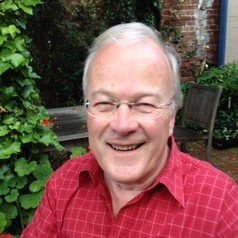
Peter McPhee
Australian academic
2
APPEARANCES
2
PODCASTS
Oct 8, 2026

Jeff KellickHOST
The Cahier, uh, and I, I've, uh, my son gets on me a little bit with my French, and I know he might be listening, uh, right now, but the, the, the Cahiers de Doléances, the book of complaints, what did the ordinary French people actually ask for? How much of it did they get?

Peter McPheeGUEST
And, uh, yes, well, two very important questions, and, uh- As you say, in referring to these boo- uh, books of grievances or cahiers, the, um, it's an extraordinary resource because, uh, part of the procedure for the coming together of the Estates General that Louis XVI had, had called to give him advice, uh, a, a representative body, was that communities across the kingdom needed to meet together to, uh, to work out their, their grievances and s- and suggestions for the monarch.
Peter McPheeGUEST
Not surprisingly, uh, what people asked for was very much a reflection of where they sat in that society, so that, of course, the, the, the nobles, the upper clergy, uh, the well-to-do middle classes of, of urban areas had very different grievances from the great mass of people who lived in the countryside.
Peter McPheeGUEST
And we need to remember that, um, maybe 85%, uh, of the French population lived in communities of 500 people or smaller, village communities, hamlets, and were peasants in the sense that they d- directly labored the soil.
Peter McPheeGUEST
Uh, their aspirations and their grievances were very much focused on local concerns, the power of the local lord, uh, the feudal system, uh, abuses within the church.
Peter McPheeGUEST
But significantly, they, uh, like, uh, the grievances of middle class educated people, they also focused on a major political question, and that was, what was to be the role of this Estates General in the future of France? Uh, Louis XVI had called this body together, uh, together for the first time in 175 years to give him advice, but the, uh, the cahiers, the books of grievances of, of, uh, ordinary people in town and country, uh, they wanted that, uh, that, uh, Estates General to effectively become a national assembly.
13 MINS LATER
Jeff KellickHOST
How much of that was Rousseau's civil religion, how much was a response to the de-Christianization campaign, and how much of it was just Robespierre's own project?

Peter McPheeGUEST
No, look, I think the difference is that it's that France five times in 1789, 1792, 1830, 1848, 1870 actually had revolutions that succeeded in overthrowing whole regimes.
Peter McPheeGUEST
But there was a very famous American sociologist named Charles Tilley who did a massive quantitative survey of Britain, France and Germany across the last few hundred years at the actual incidence of what he called collective protest and found that actually there wasn't much difference at all.
Peter McPheeGUEST
But, of course, what we tend to do when we're looking back at history is to identify the really striking events and see those as somehow typical.
Peter McPheeGUEST
But if you actually look, as you're saying, Fergus, if you actually look at the evidence of the actual incidence of collective protest, you won't find that France is so different from many other countries.
Peter McPheeGUEST
I think what is different, however, and I'm glad you mentioned this in the introduction this evening, is that there is a particular level of violence that we need to take cognizance of.
Peter McPheeGUEST
I mean, I don't think we should, it's sort of tempting to sort of sanitise the protests and say these are just senior high school students who are very frustrated with the lack of teachers, poor conditions, dirty toilets, and that's all it's about.
13 MINS LATER
Fergus MacpheeHOST
Was Robespierre, forgive me for this question, was Robespierre, could you argue he was one of the world's first culture