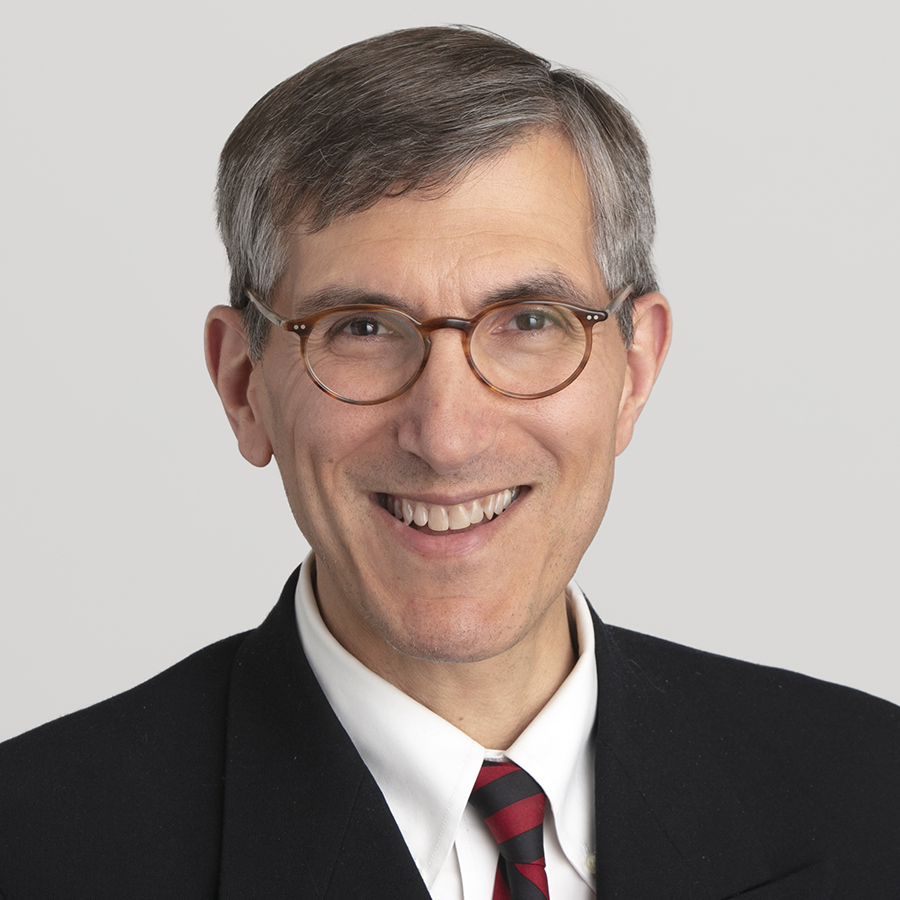
Peter Marks
Hematologist and oncologist
12
APPEARANCES
6
PODCASTS
Aug 25, 2026


Philip ClarkHOST
Sounds good, but is there a downside to having our content presented to end users by Google or Facebook or any of the other aggregators?

Peter MarksGUEST
Well, uh, one major drawback is the loss of branding and the functional dist- differentiation between the different platforms.
Peter MarksGUEST
So, you know, ABC and Guardian and all of these publishers have made... done a lot of work to make their websites or their apps work really well, and they choose the order, and they choose what stories go where.
Peter MarksGUEST
Uh, but when a story is taken from, say, ABC News and presented not only out of context but also with ads, it means the reader is less aware of the source of the story.
Peter MarksGUEST
But they'll, they'll maybe not notice as much that this actually came from, you know, the ABC, for example.
7 MINS LATER
Philip ClarkHOST
I mean, they're just an amplifier, aren't they? I mean, they're like a glorified ear trumpet.
Peter MarksGUEST
Well, they do have a little light that comes on when they're recording video, but of course some wags, some users have tried to damage or cover the light.
Peter MarksGUEST
The cameras are already quite small, so in a busy social situation, perhaps at night, you may not notice that, you know, the stylish Ray-Bans your interlocutor is wearing actually have a camera that's on.
Peter MarksGUEST
The Ray-Bans from Meta are quite expensive, but there were some that turned up in Kmart, I think, recently quite cheaply.
Peter MarksGUEST
They say there should be standards for AI, and that's already, they started thinking about that.
Peter MarksGUEST
This also needs to be the development of large data centres, and we need to make sure they don't impose on land which we need for agriculture or for building houses.
5 MINS LATER
Philip ClarkHOST
I mean, I must say, I looked at it and I thought, yeah, well, this is just marketing puff, isn't it? But I mean, maybe this is not right.
Peter MarksGUEST
So, uh, the first possibility chased enthusiastically by Facebook was a virtual reality world we'd all live in, where they called it the Metaverse.
Peter MarksGUEST
And Mark Zuckerberg was so keen on this idea that he renamed the whole company Meta.
Peter MarksGUEST
Another idea arises out of the incredible uptake of the AI chatbots, such as OpenAI's ChatGPT.
Peter MarksGUEST
People were able to learn how to use them very fast because they understand our natural language, so maybe that's a clue.
Peter MarksGUEST
I mean, you even-- Well, even though smartphones are pretty easy to use, you still have a learning curve there.
Peter MarksGUEST
You'd think that they'd be experts at technology, but interestingly, um, the result of tests run by the Australian Government's Curriculum Agency, an offshoot of NAPLAN, uh, they, they did these tests last May, but just published them this May.
Peter MarksGUEST
They found that only one in three year 10 students and one in two year 6 students reached proficiency in new, in the new National Technology Literacy Testing.
Peter MarksGUEST
They tested 10,000 students doing tasks including creating presentation, presentations, searching for information, analyzing data, and online safety.
Peter MarksGUEST
Now, that report found that digital literacy in Australia has declined to the lowest level since testing began in 2005.
Peter MarksGUEST
They said they can see that kids are using devices more, but it's not translating into the tested proficiency skills.
6 MINS LATER
Peter MarksGUEST
And the head of AI at the time, John G. Andrea, subsequently left Apple, early retirement apparently.
Peter MarksGUEST
The big feature that did ship was called liquid glass, where user elements like buttons look and behave like realistic pieces of curved glass.
8 MINS LATER


Peter MarksGUEST
yeah, it's clunky, but we have these things in the United States that people also hold dear called privacy.
Peter MarksGUEST
And it's a concept that we want transparency, but we also want individual privacy.
8 MINS LATER


Rae JohnstonHOST
What exactly does this new report claim about AI's potential impact on the Australian economy, and, and how is this being measured and proven? Peter?
Peter MarksGUEST
Well, they estimate that expanding the use of AI in Australia, as you said, could add $60 billion to our gross domestic product over the next decade.
Peter MarksGUEST
Now, our, uh, GDP at the moment, I looked it up, is 1.8 trillion, so I make that about 3.5%, which is a pretty impressive jump.
Peter MarksGUEST
The Reserve Bank's chief economist, Sarah Hunter, doesn't see any impact in the data yet, so this is all speculation.
Peter MarksGUEST
But looking back, um, I remember the introduction of computers into the workplace, which probably started about the '80s, and at that time, there were typing pools, so there was a huge impact on business, you would think.
17 MINS LATER

Peter MarksGUEST
So this is not gonna be able to be applied immediately to every, uh, uh, genetic disease.
Peter MarksGUEST
Getting these kind of gene editors into the brain where there are any number of diseases which we'd like to approach, things like Huntingts' disease, uh, et cetera, um, they may be a little bit more difficult, but I think we will get there.
Peter MarksGUEST
Uh, I think the scale-up, the technology, uh, will be, uh, uh, important, and, but, uh, another piece will be the education that's necessary so that people can have the acceptance of the fact that these are remarkably good technologies which can really, uh, potentially positively benefit human health in a way that we just haven't seen previously.

Geoff BennettHOST
Are there ethical questions or are there potential questions about, you know, these kind of treatment being available to people who are affluent or people who have good private insurance while others would have to be left to fend for themselves?


Peter MarksGUEST
A forceful response involves going into the various states, working with the states to find the best way to get across the message for vaccination in that particular state because this particular vaccine has benefits that so greatly outweigh the risks.
Peter MarksGUEST
I need to say it as many times as I can, the, the vaccine doesn't kill children, the vaccine doesn't cause encephalitis, and the vaccine doesn't cause autism.
Peter MarksGUEST
Okay? The vaccine has some transient s- short-lived, uh, adverse effects in about 15 to 20 per 100,000, but compare that to 100 to 120 deaths per 100,000 children who get measles and this is a remarkably, uh, uh, good vaccine.
Peter MarksGUEST
So if we wanna go back to a time when we got our drinking water from the same place that we put our sewage, we can go ahead and do that, but we have made tremendous public health advances.

Peter MarksGUEST
So I'm not gonna comment that, but I'm gonna tell you as a public health professional, I'm gonna tell you what an endorsement of the measles vaccine sounds like right now.
Peter MarksGUEST
If you can hear my voice right now and you have a child that is unvaccinated against measles, we have measles spreading in this country very significantly.
Peter MarksGUEST
You wouldn't put your child in a backseat of a car without being strapped into their car seat.
Peter MarksGUEST
You want to get your child vaccinated against measles so that they don't have a one in a thousand chance of dying from measles if they contract it.
Peter MarksGUEST
There's no reason to put your child at that risk because the vaccine does not cause death.
6 MINS LATER

Nicole KillianSOUNDBITE_SPEAKER
Mm-hmm.
Peter MarksGUEST
You know, science is the pursuit of objective truth for the benefit of mankind.
Peter MarksGUEST
And it hurts us deeply when there are those who would undercut the name of science undercut the very name of science because it's convenient for them to purvey lies.
Peter MarksGUEST
And that's just, it's not okay, because at the end of the day, I was so strongly affected by what happened last week with the death of a second child that I actually used profanity with a reporter while I was on the record without realizing it, which is something I've never done.
Peter MarksGUEST
I really, I don't believe that we should be saying, well, these are people who believe that they shouldn't be vaccinated because my experience, the Mennonite community, my experience is that if you meet people on their level, they generally will eventually come around.
Peter MarksGUEST
I know a minimal amount of effort that's going on to try to re-look at prior autism research, but I'm not aware of what is being discussed there.