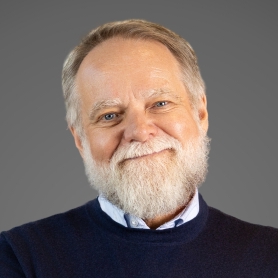
Peter Loewen
Peter John Loewen is a political scientist and Harold Tanner Dean of the College of Arts and Sciences at Cornell University, formerly Director of the Munk School of Global Affairs & Public Policy.
2
APPEARANCES
2
PODCASTS
Jul 18, 2026

2:35
So in thinking about the legacies of America's unique founding and how that has shaped democratic institutions and the practice of democracy, what strikes you in your reflections as particularly important, either because it's a distinct feature of the United States or because it's a model that's been replicated elsewhere that has had global influence and varied trajectories?

Peter LoewenGUEST
Yeah, I think it's a, it's a g- it's a great question, and I think it's a good moment to, to reflect on it and to ask what the significance of that set of moments were, you know, two hundred and fifty years ago and in the decade or so that followed as they moved towards designing and ratifying a constitution for the United States, and then what it means, um, what it means today.
Peter LoewenGUEST
And I think it's, it's, um, just for myself, you know, as a person who does some work in American politics but is not a scholar of American history, I've actually found it quite, um, enjoyable but also really enlightening to think about the American founding, um, and to, and to do some reading, uh, about it, uh, over the last number of weeks, including spending time, uh, on the Fourth of July reading the, the Declaration of Independence.
Peter LoewenGUEST
I'd forgotten as a Canadian, uh, that one of the things that gets noted in there was that the British were already using essentially British North America as a, as a test run for what they wanted to do in America, uh, in terms of reducing the rule of law, et cetera, et cetera, and increasing King George's tyranny and all that stuff.
Peter LoewenGUEST
But, uh, more seriously, when you, when, when you read through that, that declaration, and then you kind of read about the struggles they went through for the Constitution afterwards, you, you get a sense of, of the richness of the vision that the founders had for American democracy.
Peter LoewenGUEST
Elections were a part of it, a wide enfranchisement of people where ordinary people and common people would have a role in that, in that democracy, um, representation that would be as local as possible.
25 MINS LATER


Edward GreensponHOST
Peter, what are the levers that you see that we have to negotiate with and get perhaps a
Peter LoewenGUEST
better deal if there are any? I think that to know that, we have to get a sense of what the status quo is right now in some sense, right? What is it exactly that we're negotiating against, right? And I think what we're negotiating against is the last NAFTA in some sense, that there are still things in there.
Peter LoewenGUEST
My sense is that President Trump is upset about, that he didn't have fixed in the last trade deal or that he maybe thought would be fixed.
Peter LoewenGUEST
Like we would have a perfect balance of imports and exports between countries, which Kuzma was not designed to achieve and has not achieved.
Peter LoewenGUEST
One is that Mark is right on the money here, right? That whatever you think the long-term implications of tariffs are going to be, the short-term implications are massive disruption.
14 MINS LATER
Edward GreensponHOST
What is it you think is going through Pierre Polyev's mind at this point? And if he were prime minister, how would you see him playing this?