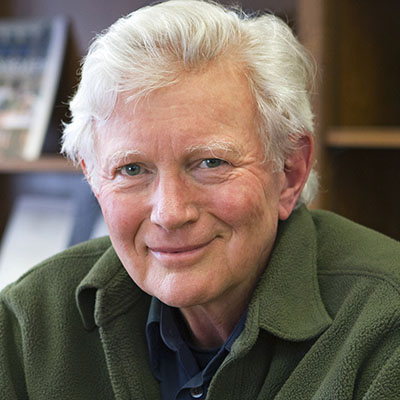
Peter Gray
American psychology researcher
23
APPEARANCES
23
PODCASTS
Oct 27, 2026


Peter GrayGUEST
what is causing this increase? What I have been arguing for some time, and I present, I believe, a very full case for it in my new book, is that, first of all, this is largely a United States phenomenon.
Peter GrayGUEST
This big increase that occurred beginning around 2010, between 2010 and 2012, and sort of peaked around 2018 in anxiety, depression, suicide maintains.
Peter GrayGUEST
The whole European Union Over that same period of time, there was actually a decline, a slight decline in suicides among teenagers and rates of anxiety, depression by various measures held steady over that period of time while they were increasing dramatically in the United States.
30 MINS LATER
Cam CaswellHOST
So this is another thing where parents are like, if I don't step in and nag them all the time, they won't do them.


Peter GrayGUEST
I use suicide as the common measure of poor mental health, simply because that's a measure that has been consistent over the decades.
Peter GrayGUEST
There are various standardized assessments of anxiety and depression, but they haven't always been the same from year to year.
Peter GrayGUEST
But to the degree that we could put together a graph showing anxiety and depression, it would show the same shape as that suicide graph.
Peter GrayGUEST
So the first half of the 20th century, and I'm not the first to say this, historians of children's play have reported this.


Peter GrayGUEST
So there begins to be a lot of achievement pressure on children that has two effects regarding mental health.
Peter GrayGUEST
One is the more time is spent on these things, the less opportunity there is to play and explore and learn what you need to learn to have an internal locus of control, a sense of agency.
Peter GrayGUEST
You're experiencing this message that may or may not be stated overtly that somehow if you don't succeed in school, if you don't get all As, you don't make the honors group, if you-- or if you don't make the traveling team on the sports, that you are in some sense a failure in life.
Peter GrayGUEST
There are a lot of young people, a lot of kids suffering, feeling like they're failures because they're not living up to what they perceive to be the achievement expectations on them.
Peter GrayGUEST
The most recent sharp increase in anxiety, depression, and suicide among young people beginning in 2010 coincided with a radical change in schooling in the United States called Common Core.
6 MINS LATER

Peter GrayGUEST
So another change is the substitution of free play, taking away f- opportunities for free play and substituting adult-directed sports.
Peter GrayGUEST
So in the 1950s and even into the 1960s, and to a lesser degree in the 1970s, if you wanted to play baseball, let's say, you'd go out to the vacant lot or a park and there'd be other kids who you, who are your friends who would regularly show up.
Peter GrayGUEST
Some of them would be new, you never met 'em before, and you'd make up your own game.
Peter GrayGUEST
[laughs] So you show up, uh, there'd be kids there from age five on through high school age often, and usually a little bit more restricted than that.
34 MINS LATER
Michael RameyHOST
Um, why are these laws important? They're not gonna fix the schools, but, but why are these laws important for parents and for kids?


Peter GrayGUEST
So all mammals are born totally dependent upon their parents or other caregivers for their survival.
Peter GrayGUEST
And the task of the, what is called the juvenile period for other mammals and childhood for us, is to become increasingly independent.
22 MINS LATER

Peter GrayGUEST
And somewhat similar things happened in England, not the whole UK, but England accounts for most of the UK, a few, a couple y- a few years later than in the United States.
Peter GrayGUEST
So what happened in the United States was the, the, the federal government had long been threatening [chuckles] in a way to withhold federal support for schools unless the schools can prove that the children are learning the curriculum.
Peter GrayGUEST
And the way that schools had to prove it was through standard exams, that schools needed to show that exam scores in these standard exams were increasing.
Peter GrayGUEST
Now, around the-- somewhat before 2010, it became, uh, clear that, uh, the federal government was now actually going to follow through on this.
Peter GrayGUEST
And so the states got together, most of the states in the United States got together, the education authorities in the states, and set up a common core curriculum.
Peter GrayGUEST
So all of the states that were involved in this, which is most of the fifty states, uh, would have a similar common core.

Jesse MulliganHOST
"We still love and care for children, but societal changes have led us to love and care for them too often in ways that interfere with the biologically normal course of their development." Does that-- Can you unpack that a bit for us, and, and how does that play into what we're talking about?

AlexHOST
Maybe you can talk a bit about what led you to write that book and what you experienced in your research that led you to, okay, I need to write it down so everyone can have access to that.
Peter GrayGUEST
Well, you know, as I explained at the beginning of the book, Free to Learn, that you're referring to, I was really led into it by my son.
Peter GrayGUEST
I was, I'm actually a professor of psychology and neuroscience at Boston College, and I was then.
Peter GrayGUEST
And the, and I was doing laboratory research, very different from what that book is about.
Peter GrayGUEST
Laboratory research on the brains of rats and mice and the binding of certain hormones there and happily doing that research.
14 MINS LATER
AlexHOST
[laughs] So just keep on doing what you're doing and support them in every possible way." What would you say how to start self-directed learning, unschooling, whatever you wanna call it?


John R. MilesHOST
How does that model, compared to what's happening today, influence childhood development?
Peter GrayGUEST
I had a normal childhood also a couple decades earlier than yours, and, and this is what the way children throughout the world, except in times of slavery or times of intensive child labor, this is the way children have more or less always grown up.
Peter GrayGUEST
Ex- exactly the way they play varies from culture to culture, and so on and so forth, but children historically have always been free to get away from adults, to play with other children, and it's through that kind of play that young people learn how, children learn how to take charge of their own activities.
Peter GrayGUEST
When you're playing out there with other kids, no adults around, think of the problems you have to solve.
27 MINS LATER
speaker_3UNKNOWN
[chuckles]


Edward PlimptonHOST
And, you know, it's fascinating, and I wondered if you could kind of just talk about why That dip in what was previously a linear curve from 1950 up should take a dip in 1990 through 2010.
Peter GrayGUEST
Yes, isn't that interesting? And as far as I've been able to tell, nobody else has really written about this.
Peter GrayGUEST
It gives a theory about it that I looked into and decided couldn't possibly be correct for reasons I actually give in the book.
15 MINS LATER

20 MINS LATER


Casey EhrlichHOST
So from your perspective, how do you know that's true and what is causing the challenges that our children and teens are having right now?
Peter GrayGUEST
So there's several points to be made here, which I deal with in different chapters in the book.
Peter GrayGUEST
So the first point is that we had a mental health crisis long before we had smartphones and social media.
Peter GrayGUEST
The entire second half of the 20th century, beginning from 1950 to 1990, there was a huge steady increase in anxiety, depression, and suicide among school-aged kids.
22 MINS LATER


Ned JohnsonHOST
that if it's not social media that has contributed to the massive increase of mental health issues of anxiety and depression, really starting in 2010, you know, building on the work of Gene Twenge, what else happened around 2010 that was so significant for the erosion of mental health in young people in America today?
Peter GrayGUEST
So the significant thing that happened around 2010 in the United States was the beginning of the Common Core State Standards in schools.
Peter GrayGUEST
So it had been many years since the No Child Left Behind bill was passed by Congress, which basically said that states had the responsibility to prove that children were And the way to prove that would be through scores on standardized tests.
Peter GrayGUEST
So that idea had been around for a long time, had already affected schools, made them, in my mind, worse in some ways before 2010.
Peter GrayGUEST
But this bill as acted, which had gone on through a couple of changes after that, really took teeth beginning in 2010 because that's when states got together.
Peter GrayGUEST
Most of the 50 states, the education leaders in the states got together and decided that they would develop a common way of meeting the federal requirement.
19 MINS LATER


Nick GillespieHOST
What should schools be doing differently, you know, in the most concise way possible in order to help kids, you know, restore childhood, but also get out of this mental health problem?
Peter GrayGUEST
Usually they hold one meeting with the staff and the principal and the administrators in which I talk with them and another one with parents.


Lauren FeinerHOST
So could you walk me briefly through what you believe led to the rise and fall of, um, depression and anxiety since the nineteen fifties for teens?
Peter GrayGUEST
If you look at suicide rates for teenagers, they were-- they increased steadily between 1950 and 1990.
Peter GrayGUEST
The advantage of looking at suicide rates is it's a consistent measure over time.
Peter GrayGUEST
But to the degree that you can piece together the measures that have been done, you would find the same chart, you would find the same kind of an increase.
Peter GrayGUEST
In fact, by at least some estimates are that the increase in rates of what today would be called major depressive disorder or clinically significant anxiety disorder are somewhere between five and tenfold increases over that time.
11 MINS LATER

Diane BodenHOST
What have you seen in the research after observing contributed to, uh, the kids not playing outside? That this-- You said they started, parents started taking that away.
Peter GrayGUEST
First, I should say I'm not the first person to say that the second half of the 20th century was a period of declining opportunities for children to play.
Peter GrayGUEST
There are at least two historians of, of American children who have talked about this.
Peter GrayGUEST
One of them is Howard Chudacoff, who wrote a book on the history of children and play in America, and he described the second half of the 20th century.
Peter GrayGUEST
He described the first half of the 20th century as the golden age of children's play in America, and talked about many of the things that I also talk about in my new book, and I add some other things, that changed, changed the world for kids gradually beginning in the 1950s.
18 MINS LATER


Robert GlazerHOST
So what kind of what is the evidence of why that it does seem like an interesting blip? So
Peter GrayGUEST
first of all, as you point out, so for example, in Jonathan Haidt's book, it's as if history begins in 2010.
Peter GrayGUEST
But if we go back and we look, we'll see that at 1990, the rates of anxiety, depression, and suicide were just as high as they were in 2018, which was the peak of Jonathan Haidt's graph, right? Yeah.
Peter GrayGUEST
This had been building up for all the reasons that I have already partly described as we've been talking.
Peter GrayGUEST
So what happened? So, you know, almost nobody writes about, you never saw news stories, you never saw clinicians or journalists or scientists talking about the fact that mental health improved.
8 MINS LATER

Debbie ReberHOST
So could you touch upon one of your core premises of the book about that relationship?
Peter GrayGUEST
First of all, there was a huge increase in anxiety, depression, and even suicide among kids in the 20th century, well before we had digital technology.
Peter GrayGUEST
And in the book, I describe twelve or thirteen different societal changes that occurred over that second half of the 20th century that reduced children's opportunities and inducements to go out and play with other kids away from adults, a whole set of changes.
Peter GrayGUEST
And I present reasons to believe that there's a cause-effect relationship there.
Peter GrayGUEST
Taking away that freedom reduces children's ability to develop a sense of competence, a sense of agency, the kind of c-courage that it takes to face the bumps in the road of life, that that was already occurring well before we had digital technology.
Peter GrayGUEST
Interestingly, there was a period of improvement in mental health beginning around 1990 until the early 21st century, and in the book, I attribute that to the computer revolution.
11 MINS LATER
Debbie ReberHOST
So tell us what you found in your research and what you're presenting in the book.

Ginny YurichHOST
Visit ixl.com/1000hours to get the most effective learning program out there at the best price.
Peter GrayGUEST
So as we've just talked about, over time, between the nineteen fifties and nineteen ninety, we were in- gradually interfering with children's natural drives to play and explore independent of adult control.
Peter GrayGUEST
So for example, um, in the, in the book Huck's Raft, Stephen Mintz talks about the second half of the twentieth century as a period in which adults colonized [chuckles] the world of child- of children.
Peter GrayGUEST
So children had their own world in the early part of the twentieth century, and over time, adults took over that world.
Peter GrayGUEST
[chuckles] And, um, but that world is extraordinarily important to children's development, and without it, they're not developing the courage and agency and so on.
14 MINS LATER

McGraw MilhavenHOST
So you, as a research professor of psychology and neuroscience, you have data that shows social media is not as big of a mental health issue as people claim it to be?
Peter GrayGUEST
I haven't been doing the research, but I've been reviewing the research, reading it, talking to the researchers, reading the review articles of the research, the meta-analyses, and so on, and, um, and the evidence is simply not there.
Peter GrayGUEST
Social media, smartphones can have harmful effects, as almost anything can have har- And it can have beneficial effects.
Peter GrayGUEST
So what the research shows is there's not even a meaningful correlation overall between how much time kids are on social media or how much time they're on their smartphones and, uh, indices of their mental health.
McGraw MilhavenHOST
Uh, are you saying that, that, that that's okay to let a six-year-old go down the street and play in a park?


Peter GrayGUEST
Like, I was, like, out of all the films that I just didn't think that this would be the one that would make people go insane.
36 MINS LATER

GrahamHOST
... and the doing the Crowley stuff and, you know, for Babylon Working maybe, just really quick summary of that for people that
Peter GrayGUEST
Um, so Jack Parsons was a, uh, was a rocket scientist and an occultist, um, living in a mansion in, uh, Pasadena, and he was both the man who started the American space program.
Peter GrayGUEST
When people were skeptical about the fact that we could land man on the moon, Jack was one of the early rocketeers who was convinced that, that this could be done.
Peter GrayGUEST
So his kind of reading of science fiction fed into the way that he was, um, he was pursuing his science career.
Peter GrayGUEST
So he would, he would literally read the Astounding Magazine, which was the, the pulp sci-fi magazine of the time, and, and he'd find stories in there that seemed to be telling the future to him.
Peter GrayGUEST
So he read a book-- He read a story by a guy called Jack Williamson, um, called Crucible of Power, and having read that, Jack had the realization that he could make a solid rocket fuel, and the solid rocket fuel that Jack developed is the critical element that put man on the moon.
speaker_5UNKNOWN
[laughs]

Peter GrayGUEST
And so I sort of had always wanted to play, you know, Shinnecock, Maidstone, National, um, you know, Fr- Friars Head, uh, The Creek, all of these incredible golf courses, but also the others.
8 MINS LATER


Peter GrayGUEST
times?Yeah, so I began to get interested in, in how children historically have acquired the culture that they're growing up in, learning from others what you need to know to, um, succeed in that culture eventually as an adult.
Peter GrayGUEST
And I'm a, uh, an evolutionary psychologist, so I look at human nature from the perspective of Darwinian evolution.
Peter GrayGUEST
If you look at human nature from that perspective, you automatically become interested in hunter-gatherers because we, um, were all hunter-gatherers during, uh, the 99% or so of our biological evolution.
Peter GrayGUEST
And, um, as you undoubtedly know, there have been hunter-gatherers in isolated parts of the world who, uh, at least into the middle to even late, uh, 20th century, uh, were still living in a rather pristine hunter-gatherer way of life, and there were anthropologists who had trekked out into those areas to make contact with them and study them, and, and I began to read what I could, uh, of such work, and ultimately, along with a graduate student, uh, surveyed, uh, a group of anthropologists who had, uh, studied, uh, various different groups of hunter-gatherers in different parts of the world to find out from them, what are children's lives like in, in the culture that they observe? What's the relationship between adults and children? And what I found in every case, seven different cultures on three different continents, was, uh, that the children were free to play and explore pretty much all day long.
Peter GrayGUEST
Um, they might be asked to do a little, little chores, but, um, no such thing as school, you know? The adults might say, you know, "Don't eat these mushrooms.
53 MINS LATER