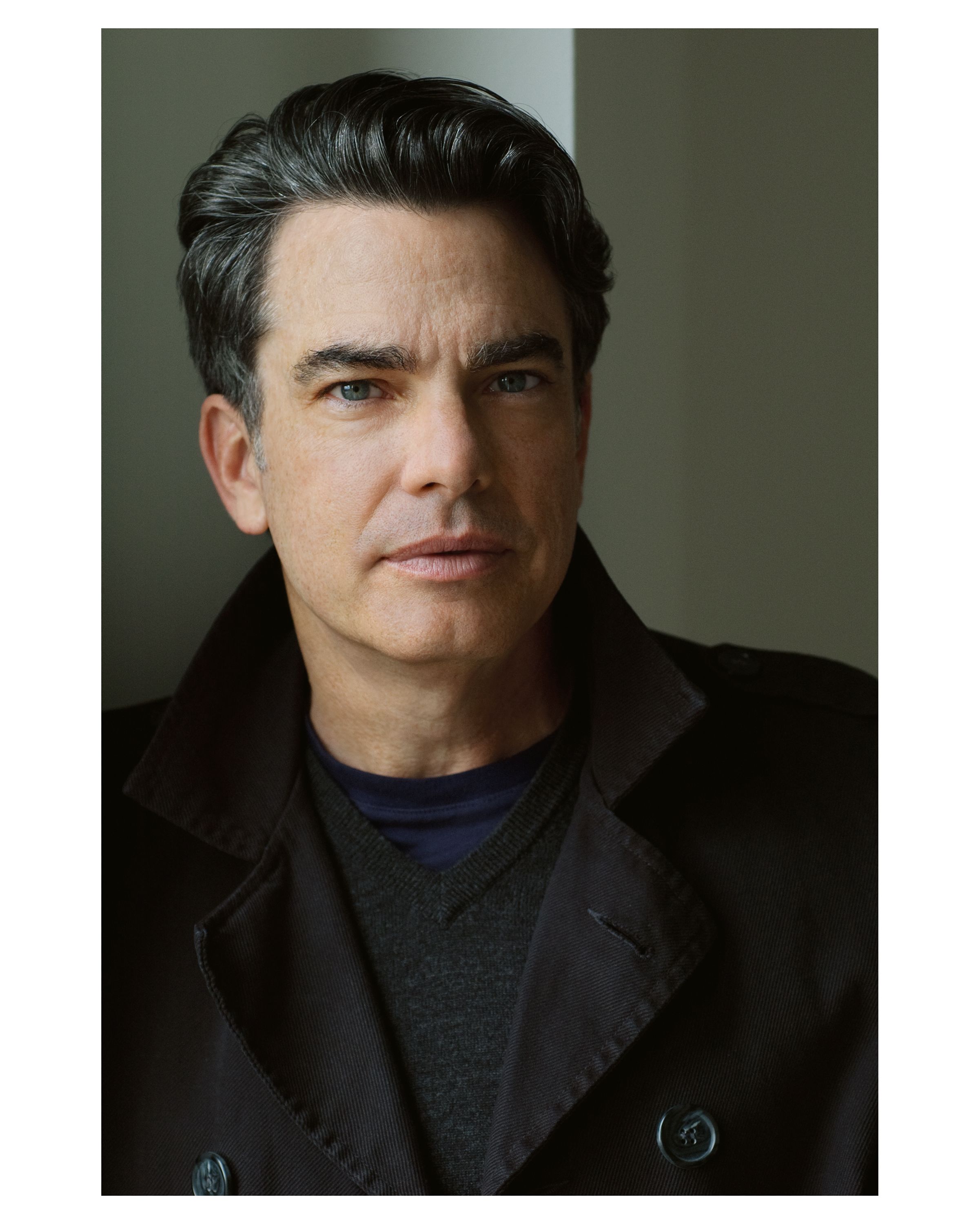
Peter Gallagher
American actor
8
APPEARANCES
7
PODCASTS
Aug 13, 2026

speaker_0HOST
Where exactly were you when the eclipse reached near totality, and what was the view like?
Peter GallagherGUEST
Yeah, we flew from, uh, from, from Dublin, and we flew off about 600 kilometers off the west coast of Ireland, and then once we got to about 10,000 feet, we were really lucky.
Peter GallagherGUEST
Um, we flew through clouds betw- from the west coast, uh, uh, out across the ocean, and then the skies, uh, a, a gap in the clouds opened up, and we got a clear view of the sun.
Peter GallagherGUEST
And the reason we went out there was because we could open the window of the aircraft once we got to 10,000 feet, and then we could get this absolutely spectacular, clear view of the total solar eclipse.
Peter GallagherGUEST
And there's a big difference between the partial eclipse that we all saw here in, in, in, in Ireland 'cause you couldn't see the solar atmosphere, the corona, but once you're on the aircraft and you're along the path of totality-
speaker_0HOST
Why, why is it that solar eclipses in particular, they continue to capture people's imagination in a way that few other astronomical events do?


Peter GallagherGUEST
So these have a special, uh, lens in them, and that stops, uh, blocks out the harmful radiation.
Peter GallagherGUEST
So the safest thing to do is to just get a card, a stiff piece of card, like from a Cornflakes box or, or, or from a, just a box, and put a little hole in it, a little pinhole in it, and then you can project an image of the, of the sun safely onto the ground or onto a white card.

Peter GallagherGUEST
I mean, AI is really coming into our field for writing papers, for reviewing papers, for analysing data.
Peter GallagherGUEST
You know, I see my postdocs who I'll say, can we plot X versus Y of something at the sun? And, you know, within a day, they have a GUI that allows you to take the transform of the data and do all complicated things to it.
Peter GallagherGUEST
But I think the thing about the students, you know, the cool thing about solar physics is we're working with the European Space Agency, we're working with NASA, we're working with state-of-the-art instrumentation, we're doing cool software, and we're learning about the way the sun works.
Peter GallagherGUEST
And there's the basic physics of how the sun works, but it's also how it affects us.

Jonathan McCraeHOST
Do we talk up the game quite a lot, but are we just really not at the table? I mean, I know it's important to inspire young researchers and try and build momentum, but actually, where are we in Europe when it comes to space science?


Peter GallagherGUEST
Yeah, well, the point is that a total solar eclipse can really only be seen in the Atlantic, because unfortunately for us on the mainland in Ireland, we're just not going to be able to see the total solar eclipse.
Peter GallagherGUEST
And the total solar eclipse means that the sun is completely blocked out by the moon and it reveals the atmosphere, the solar corona, for just a few minutes.
Peter GallagherGUEST
And we have cameras that the Italian National Institute for Astrophysics has produced and we're going to fly them on an Irish Air Corps plane with the window open at 10,000 feet and be able to get a really, really clear view of this total solar eclipse.


Peter GallagherGUEST
Yeah, so I went and saw it in IMAX at Bridgeport, my local theater, one of many local theaters that we're lucky to have here in Portland.
Peter GallagherGUEST
I mean, I think first off, the theater was packed, which is always an exciting environment in which to see one of these movies.
10 MINS LATER

Alex WardHOST
Where is Christopher Nolan now? now in the spectrum of of directors uh as far as our generation or even just historical directors the run he's on of putting out massive marquee movies is feels unprecedented um yeah what do you got on this


Carrie JanisseHOST
But Father Gary, do you have, you work a lot with young adults and do you have any thoughts on the movement of the church at this time and why so many young adults are really seeking the Catholic faith?
Peter GallagherGUEST
Yeah, Carrie, that's such a good question to kind of understand the why, especially if we want this trend to continue.
Peter GallagherGUEST
I think belonging is very important to know that there's someone who loves them more than anyone else, a father in heaven, and a people to receive that love with and to grow in faith with.
Peter GallagherGUEST
So not trying to believe by themselves, but to have others in support of them.
Peter GallagherGUEST
So like Theo said, having life questions, why is this happening? What is life all about? And how am I supposed to live out my life, make life choices? A third is, I think, structure and stability in the midst of, you know, how many changes there are in the world.
14 MINS LATER


Peter GallagherGUEST
So it's the US State Department and NASA are the ones who've been driving this.
Peter GallagherGUEST
And actually all members of the European Space Agency, all member states have signed up and we're the last one to join.
Peter GallagherGUEST
As to the reason why we're the last one, I'm not entirely sure why we're the last one to sign up, but we're in there now.
SeanHOST
I remember reading that the old computers they used for the Apollo missions are about as powerful as the average phone now.
Peter GallagherGUEST
You've got solid rocket boosters and then you've got a hydrogen based rocket as well.
SeanHOST
And when they finally, hopefully, get people on the moon, will the missions be similar, at least at first? Yeah.