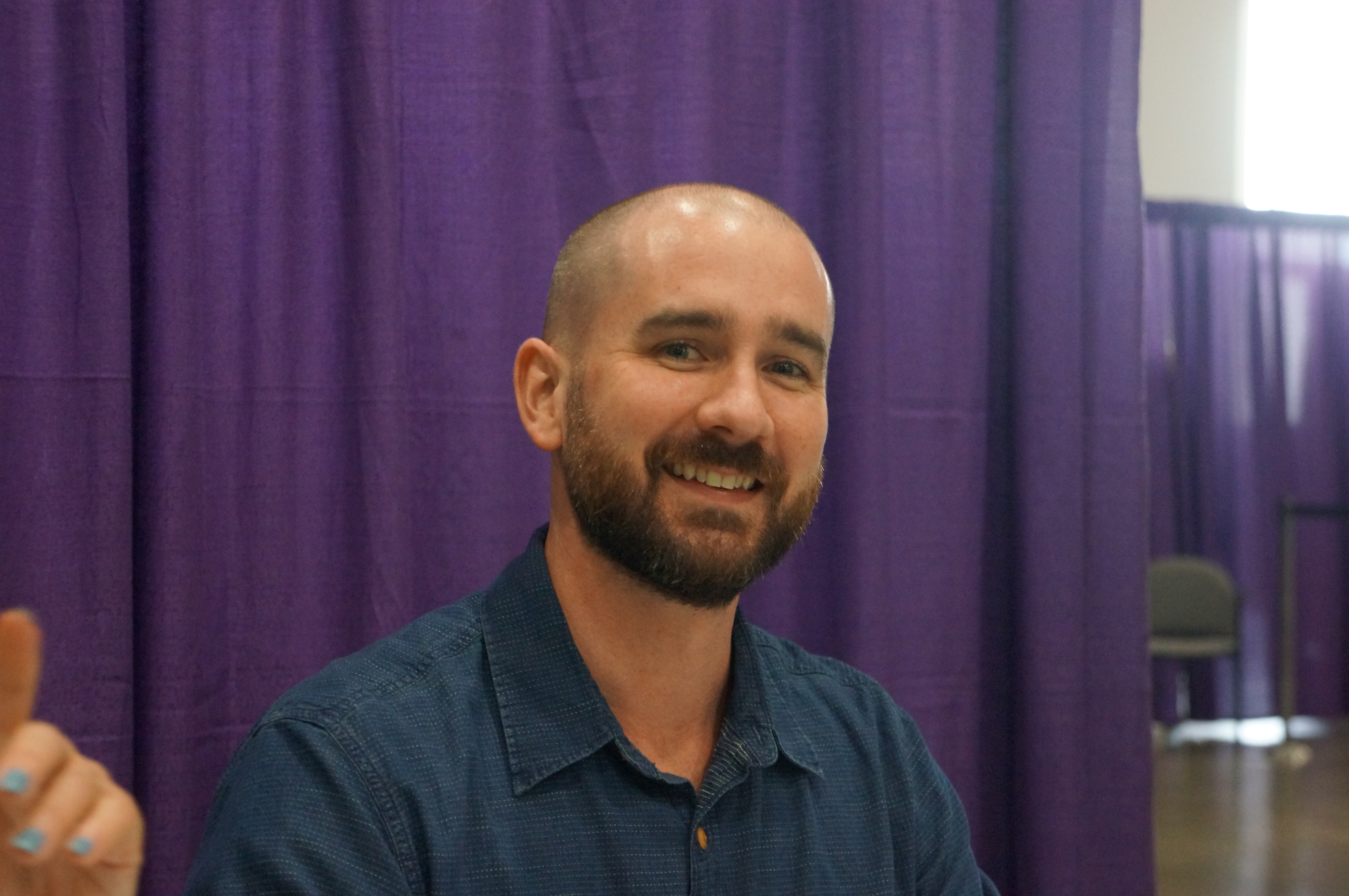
Peter Brown
American writer and illustrator
14
APPEARANCES
12
PODCASTS
Sep 28, 2026

Peter BrownGUEST
One of the few things that people usually forget about and don't really take into consideration.
Peter BrownGUEST
And I look at chickens being the same way, especially if you have a lot of breeders and you're hatching a lot of chicks.
Peter BrownGUEST
So supplementation of them with vitamins and with minerals usually leads to healthier chicks and stronger eggshells and bones and so on and so forth.
19 MINS LATER
Kenny TroianoHOST
water-soluble vitamins and the fat-soluble? You want to start with water-soluble? Yeah.


Peter BrownGUEST
And then you've got the situation in the stock market where... that to keep this momentum going, you have to find continuous buyers.
Peter BrownGUEST
And the minute that stops, and the financial markets have this ability to actually change in a second.
22 MINS LATER

Peter BrownGUEST
Yeah, it is a symbolic level, but we've seen steady increase now for a number of weeks.
Peter BrownGUEST
I mean, in reality, what was surprising was the level that oil fell to after the initial cessation of hostilities, because we add into huge levels of global reserves of oil, and they have to be built back, right? Plus, you've got the issue now of security of energy supply.
Peter BrownGUEST
So, you know, stockpiling energy in Europe and Japan – All of these things have huge pressure on the supply of oil.
Peter BrownGUEST
Now, the increase in hostilities we're just seeing now has spiked the price back to 100.
Peter BrownGUEST
But our view is that oil's got quite a way to go yet, another 20%, maybe even more.

Rachael EnglishHOST
So will there be pressure on Donald Trump to do something to try and bring the price back down again? Because this is becoming an issue in America.
Peter BrownGUEST
Venezuela's very large oil reserves to kind of contracted U.S. or U.S. affiliated companies.
Peter BrownGUEST
And that will help ensure that there's investment and responsible investment in Venezuelan oil infrastructure.
Peter BrownGUEST
And it also ensures that a significant percentage of the offtake will then go to American refineries to be refined.
Peter BrownGUEST
And that will not only boost employment and in the oil industry here in the United States, but will also, you know, by its very nature, increase the supply and the availability of supply here in the United States and drive down prices in the long term.


Peter BrownGUEST
I think pretty much all of them went to some sort of formal college or conservatory for music.
Peter BrownGUEST
A lot of Berkeley, some I think NYU, some went to Juilliard and just kind of getting exposure and asking them questions like what was school like and learning about there's an audition process and you have to prepare for that and depending on the school and this is 2005 2006 programs at that time I remember were fairly limited at least with Berklee if you were going for guitar, it was like you went for jazz guitar or you went for classical guitar.
Peter BrownGUEST
And there were other avenues like composition, orchestration, but I was like narrow focus.
Peter BrownGUEST
And a lot of the teachers who had done that, they teach on some days, they gig at night.
19 MINS LATER
speaker_4NARRATOR
Love that.
Kenny TroianoHOST
So when we're talking about heat stress, what in particular are we going to see in the chickens when it comes to the heat stress?
Peter BrownGUEST
And then it goes from there to, it's hard to describe, but that panting where you can actually see the throat moving back and forth, drooping their wings and holding their wings away from their body.
Peter BrownGUEST
They're going to try to use their feathers and their wings to bring the temperature under control.
Peter BrownGUEST
We all know that a hundred degree dry day is not near as bad as a hundred degree day with extreme high humidity.
17 MINS LATER
Kenny TroianoHOST
And once they're fully feathered, then I start picking them up and filling them out and then see if there's something I need to do.


Peter BrownGUEST
Typically, there's really three different types of disputes that we talk about when we have a post-acquisition dispute.
Peter BrownGUEST
The first is a networking capital true-up, and we'll define and explain what that is.
Peter BrownGUEST
The next is an earn-out dispute, and the last category would be representations and warranties disputes.
16 MINS LATER

Katarina GordichukCORRESPONDENT
Why is that the case? Why is it that we are thinking of them as a separate category, that, that group of people who are just trying to get their first job?
Peter BrownGUEST
Well, I don't actually think of them as a s- separate category w- w- in relation to AI.
Peter BrownGUEST
I think AI is changing the nature of work at, at all levels, whether you're entry level or somebody approaching retirement.
Peter BrownGUEST
But I think if you think-- the debate is often around AI and impact on jobs, and I think what our AI jobs barometer, um, which we released last week, is showing is actually the story is actually much more around productivity and skills.
Peter BrownGUEST
So in those sectors most exposed to AI, what we're seeing there, the organizations that are getting ahead are seeing a three times growth in productivity.
Peter BrownGUEST
So w- why is that happening? When, when people talk about redesign work, one thing they're not doing is just layering AI on, bolting AI onto existing ways of working, okay? Some organizations have done that, you know, in the chase of efficiencies, and you might get some in-incremental efficiencies.
Katarina GordichukCORRESPONDENT
You're the co-author of the new report that we published with the World Economic Forum, uh, and PwC, and I was wondering what are some of the findings that surprised you the most in that report?


Peter BrownGUEST
And even just the previous piece you had on the House Select Committee on China is instructive here.
Peter BrownGUEST
I had the opportunity just a couple of weeks ago to brief staff of that committee on some of China's nefarious activities here in the Western Hemisphere.
Peter BrownGUEST
And I think what we should read out of what's happening here is that China has chosen, the People's Republic of China Central Committee, President Xi, have chosen war with the United States, but indirectly, which is classic Chinese military strategy, is to fight their battles indirectly and in a fashion that encircles the adversary geographically and encircles them conceptually.
Peter BrownGUEST
So they are fighting against us on multiple fronts, essentially all but direct military.
Peter BrownGUEST
And these confrontations in the South China Sea over territorial claims, fisheries rights and other activities are just one example of China using the shielding itself behind the restraint that other nations show under international law, while themselves pushing the boundaries and the limits of their own and international law at the same time.

Peter BrownGUEST
So in the aftermath of Big Brother Canada season one, which would have been the summer of 2013, essentially, a good friend of mine from film school whose gimmick name is Peter Chow, he was a big YouTuber at the time and was collaborating with Colt Cabana on some videos.
Peter BrownGUEST
And Cole Cabana was coming in to Vancouver to do two shows for the promotion ECCW, Elite Canadian Championship Wrestling.
Peter BrownGUEST
And so to be a supportive friend, I went with him to those shows and had a great time.
Peter BrownGUEST
And backstage, we were all just chatting after the first show, and the wrestler Scotty Mac came up to me.
Peter BrownGUEST
um and basically said oh like hey you took my spot on big brother and i was like wait what what are you talking about and so apparently scotty had um applied as well and made it pretty far in the process but uh unfortunately didn't make it into the game uh but we kind of laughed about our mutual love of big brother and uh pro wrestling and uh struck up a pretty quick uh friendship And not long after, Scotty recognized both the value and passion that I could bring and Peter Chow could bring to ECCW and brought us both in as characters.
15 MINS LATER

Blair PachecoHOST
And when you can see the finished product happening in front of you, it is such a great feeling.

Kevin McCulloughHOST
What do we know about how many more options the Iranians have in terms of weaponry and things that we need to take out?
Peter BrownGUEST
Yeah, and that's one of the challenges of dealing with an authoritarian regime, whether it's Iran, China, or elsewhere, that the state purports to speak for all of the people when we know that it doesn't.
Peter BrownGUEST
And so it's very difficult for the the good actors here, the United States and others, to maintain that clear distinction between the regime, its military arms, its intel arms, and its proxies, and the people who we generally want to see achieve a level of freedom and prosperity that they haven't had for more than 40 years now.
Peter BrownGUEST
And so the military options for the United States remain the full range of options, air, land, sea, space, undersea.
Peter BrownGUEST
And I think that you'll see an active coalition growing over the next couple of weeks as the NATO countries have also seen how badly they're affected by this economically.
Peter BrownGUEST
And very often, a few times that I've been on with you and in other venues where I bemoan the lack of a robust U.S. merchant marine fleet.

SharonHOST
But if the issue with the Strait of Hormuz is not resolved, can that happen?
Peter BrownGUEST
Obviously, kind of, you know, the Strait of Hormuz is, is key, but there is an awful lot of, uh, effort here going to bypass the Strait of Hormuz, right? And there's a, there's a-- I mean, the, the reality of what's happening here is it's, it's not, going forward, it's not a factor of the price of oil.
Peter BrownGUEST
The whole of Europe, Japan, right, needs now to move to a situation where they've got security of energy supply.
SharonHOST
And, uh, will the IMF, uh, WTO, IEA, and the World Bank, the joint statement, will that have any effect, do you think?


Peter BrownGUEST
Ritual, we'll go to the pub lunchtime today, have a few Forex beers, then settle into the games room and have a few rums.

Peter BrownGUEST
Well, it remains Raul Castro, Fidel's brother, though in his 90s now, remains significantly in power, though notionally behind the scenes.
Peter BrownGUEST
And he is under investigation now, prompted in part by the attorney general here in the great state of Florida, but also the U.S. Department of Justice for possible indictment for the brothers to the rescue civilian aircraft shoot down back in 1996.
Peter BrownGUEST
There's also a generation of Cuban generals and other officials who operate the commercial, the corrupt commercial network that supports the Cuban military and regime.
Peter BrownGUEST
GAESA is kind of like their general services administration run through the Cuban military.
Peter BrownGUEST
And it siphons off so much of the income of Cuba, both the business income and the remittances from Cuban Americans in the U.S. And the grandson, Raulito, is, though not in an official government position, appears to be a significant player behind the scenes and has met with U.S. officials.
Kerry DunstCORRESPONDENT
In that respect, what was the significance on Cuba of the extraction of Maduro and his loss of grip on power in Venezuela?